The Obama Presidential Center is preparing to throw open its doors, and former President Barack Obama’s fingerprints are all over it. From its location on Chicago’s South Side to the textured stone wrapping its dramatic tower, and even the striped reading chairs modeled on ones in his own home, the nearly 20-acre campus reflects deeply personal choices.
The center officially opens to the public on Juneteenth, following a celebratory dedication attended by dignitaries. Ahead of that debut, tens of thousands of people, including museum staff’s friends and family, students, and journalists, have already gotten a preview while crews put the finishing touches on art installations and landscaping.
The roughly $850 million project spans both the political and personal sides of the nation’s first Black president. The admission-based museum tower houses campaign memorabilia and presidential artifacts, while the broader campus offers a new library, a basketball court, and a picnic area complete with grills. Organizers expect it to draw as many as one million visitors a year. Here are four things worth knowing before you go.
A Fully Digital Museum Where You Can Be President for a Day
One of the most distinctive features is what you won’t find: official papers on display. The center is being billed as the first fully digital museum of its kind, trading traditional archival documents for high-tech, hands-on exhibits that trace Obama’s campaigns, key presidential moments, and life inside the White House.
A standout attraction is a replica of the Resolute Desk, where visitors can sit and pose for photos. During a recent visit, a steady stream of guests, including schoolchildren, took their turn behind it. The top drawer holds a copy of a handwritten letter from Obama’s predecessor, George W. Bush, alongside Obama’s well-known BlackBerry. As Josh Harris, the Obama Foundation’s vice president of public engagement, put it, the goal is to let people from all walks of life imagine the possibilities, so that a young organizer from the South Side might see that they, too, could become president.
Other exhibits delve into the Affordable Care Act, immigration policy, and quieter moments, such as the unexpected instant in 2015 when Obama broke into song during a eulogy for victims of a South Carolina church shooting. A large screen replays the clip of him singing “Amazing Grace.” Throughout the museum, designers have woven in spaces for personal reflection, an element they consider central to the experience. Museum director Louise Bernard described it as passing the baton, inviting visitors to bring change home in whatever form that takes.
The Gowns Obama Predicted Everyone Would Want to See
Back at the 2021 groundbreaking, Obama joked that the center would be more than a static museum or a collection of campaign memorabilia, teasing that everyone would inevitably come to see Michelle’s ballgowns. He may have been right.
About a dozen outfits stand behind glass on mannequins, including the black and red Narciso Rodriguez dress the former first lady wore on Election Night in Chicago in 2008. In a tactile twist, visitors can also touch fabric swatches, among them the rose gold chain mail Atelier Versace evening gown she wore at her final state dinner in 2016.
A Campus Full of Personal Touches
The location itself is steeped in personal history. The center sits near where Obama launched his political career, taught law at the University of Chicago, and where the family lived. Michelle Obama also grew up on the South Side.
That intimacy carries into the design. A lifelong basketball enthusiast, Obama requested a glass-paneled, professional-grade court for community programming. The former first lady designed a garden where lettuce and strawberries are already sprouting, and charcoal grills are available for public use, a feature Obama envisioned years ago during community meetings, inspired by fond memories of grilling in the park.
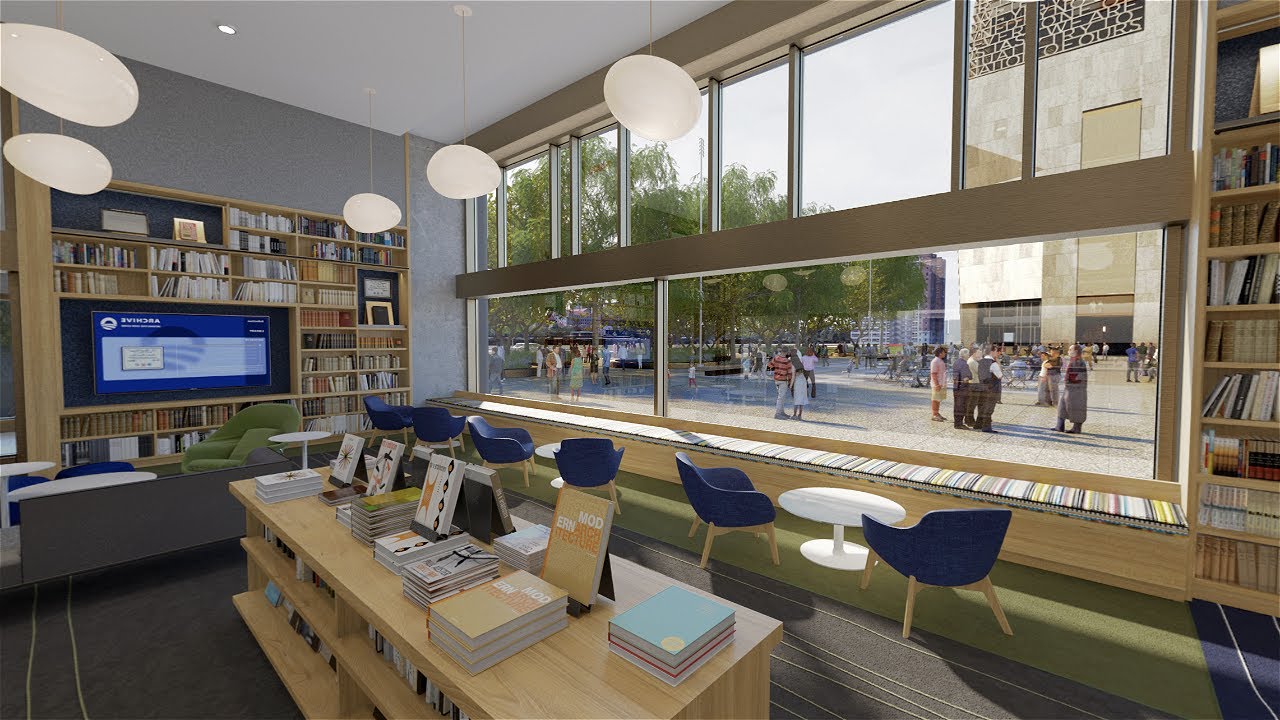
The couple’s love of art and history shows everywhere. The campus features dozens of commissioned works, with sections named after prominent figures, including the central John Lewis Plaza, designed as a public gathering space in honor of the late congressman and civil rights leader. Inside a new Chicago Public Library branch, a 70-foot mural depicts literary giants such as Walt Whitman and James Baldwin, with Toni Morrison at its center reading to a boy in an orange shirt who represents a young Obama. The presidential reading room holds thousands of books chosen by the Obamas, from presidential biographies to bestselling fiction, and Obama’s favorite detail may be two high-backed striped reading chairs he picked because they resemble ones at home.
Premium Admission, but Plenty of Free Options
There is a catch for those wanting the full museum experience. Tickets run $30, the highest of any U.S. presidential museum or library, edging out the Richard Nixon Presidential Library in California at $29. By comparison, the nearby Griffin Museum of Science and Industry charges $25.95, while the Abraham Lincoln Presidential Library in Springfield costs $15.
Foundation leaders defend the price as fair for a state-of-the-art facility, and they stress that affordability hasn’t been ignored. The center offers free days and discounts for Illinois residents, and importantly, most of the campus costs nothing to enjoy. Only four floors of the museum tower require tickets.
Anyone can wander the grounds, use the playground, visit the library, sled down the hill, or fire up a grill. Even the tower’s top floor, which boasts panoramic views of the country’s third-largest city, is free. The guiding idea, Harris explained, was to make the institution accessible to as many people as possible, ensuring that the center serves not just as a monument to one presidency but as a living space for the surrounding community.
Author