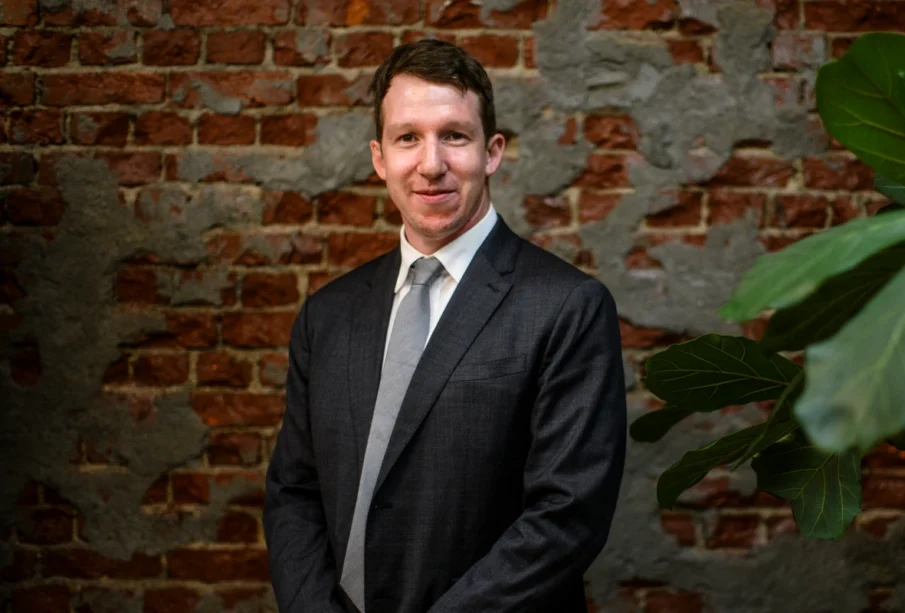
One of the people closest to the frontier of artificial intelligence is sounding an alarm. Jack Clark, co-founder of Anthropic, has called for society to develop the ability to slow AI’s advance, warning that the technology is approaching a threshold where it could begin developing without human involvement.
A Gas Pedal Without a Brake
Clark’s central metaphor was striking in its simplicity. Speaking to BBC Newsnight, he argued that people need the option to ease off and apply the brakes when necessary. As he put it, the AI industry currently has a gas pedal but no brake pedal.
He stressed that humans, through government policy, must retain control over AI systems that will only grow more powerful and reach deeper into society. The world, he said, needs to do some serious thinking and eventually craft new regulations capable of giving people genuine confidence in these systems.
When Code Writes Itself
Part of what makes Clark’s warning so pointed is what is already happening inside Anthropic. The company’s popular chatbot, Claude, now operates on code that the system wrote itself to the tune of 80 percent. Clark suggested reaching 100 percent is plausible within two years, a development he said would carry huge implications.
The prospect of AI systems building themselves with minimal human authorship sits at the heart of his concern, illustrating just how quickly the line between human-directed and self-directed technology could blur.
Lessons From the Oil Era
Clark did not spell out exactly how a brake pedal for AI research and development might be engineered. Instead, he reached for a historical parallel, comparing today’s moment to the oil boom and the barons who dominated it around the turn of the last century.
Society’s answer back then, he noted, was to build a sensible policy and regulatory framework that gave people confidence in oil and its benefits, while removing the need to worry about the personalities running the companies. That, he argued, is clearly where AI needs to end up.
A Tension at the Core
There is an apparent contradiction worth noting. Even as Clark urges caution, Anthropic this week welcomed an executive order on AI from President Donald Trump that took a relatively hands-off approach toward companies. Notably, the order did not require AI firms to submit to government safety testing, which remains a voluntary effort.
Nor have the major players, including Anthropic, OpenAI, and Google, committed to pausing their own research. Anthropic itself has grown so rapidly since its founding five years ago that it is preparing to debut on the public stock market. The listing is poised to be one of the first by a newer AI firm and among the most valuable in history, with private investors estimating the company’s valuation at nearly $1 trillion.
Clark insisted his motivation for speaking publicly is not to polish Anthropic’s image with paying customers. He simply wants to tell the world what insiders are seeing with this unusual technology. Founded by chief executive Dario Amodei, Clark, and a small group of other executives, Anthropic has long positioned itself as outspoken about AI’s potential dangers, even clashing publicly with the U.S. Department of Defense over fears its tools could be used for mass surveillance of Americans and autonomous warfare.
Worries About Jobs and the Economy
Clark framed the stakes in personal terms, saying he worries for his children if society fails to have a serious conversation about what AI’s continued advances mean. He acknowledged the technology offers potentially great benefits, but insisted the risks are equally real.
One of those risks is economic disruption. He pointed to fears surrounding AI agents, individual bots that carry out routine tasks somewhat autonomously and could displace certain jobs. The concern is not hypothetical. Over the past year, major tech companies have carried out mass layoffs, frequently citing the growing capacity of AI tools to perform the work of hundreds or even thousands of software engineers.
Where Humans Still Have the Edge
Yet Clark offered a more hopeful note about where people retain an advantage. He suggested that those who are more creative and generate better ideas may actually outpace the technology. Whether AI systems can be truly creative remains an open question, he said, and there is little evidence for it so far. At Anthropic, he noted, the bottleneck is now less about engineering capacity and more about the ability to generate good ideas in the first place.
His advice to a young person worried that an AI-driven economy holds no place for them was perhaps surprising: develop a hobby and pursue a liberal arts education. People who are creative, who think broadly, who read widely and cultivate genuine interests, he argued, stand to benefit most. Indulging curiosity, in his view, pays dividends in how effectively someone can wield the technology.
The broader message threads a careful needle. Clark is neither a doomsayer nor a cheerleader but something closer to a witness, urging the world to look clearly at a technology racing ahead and to build the means to steer it before that capacity slips away.
Author