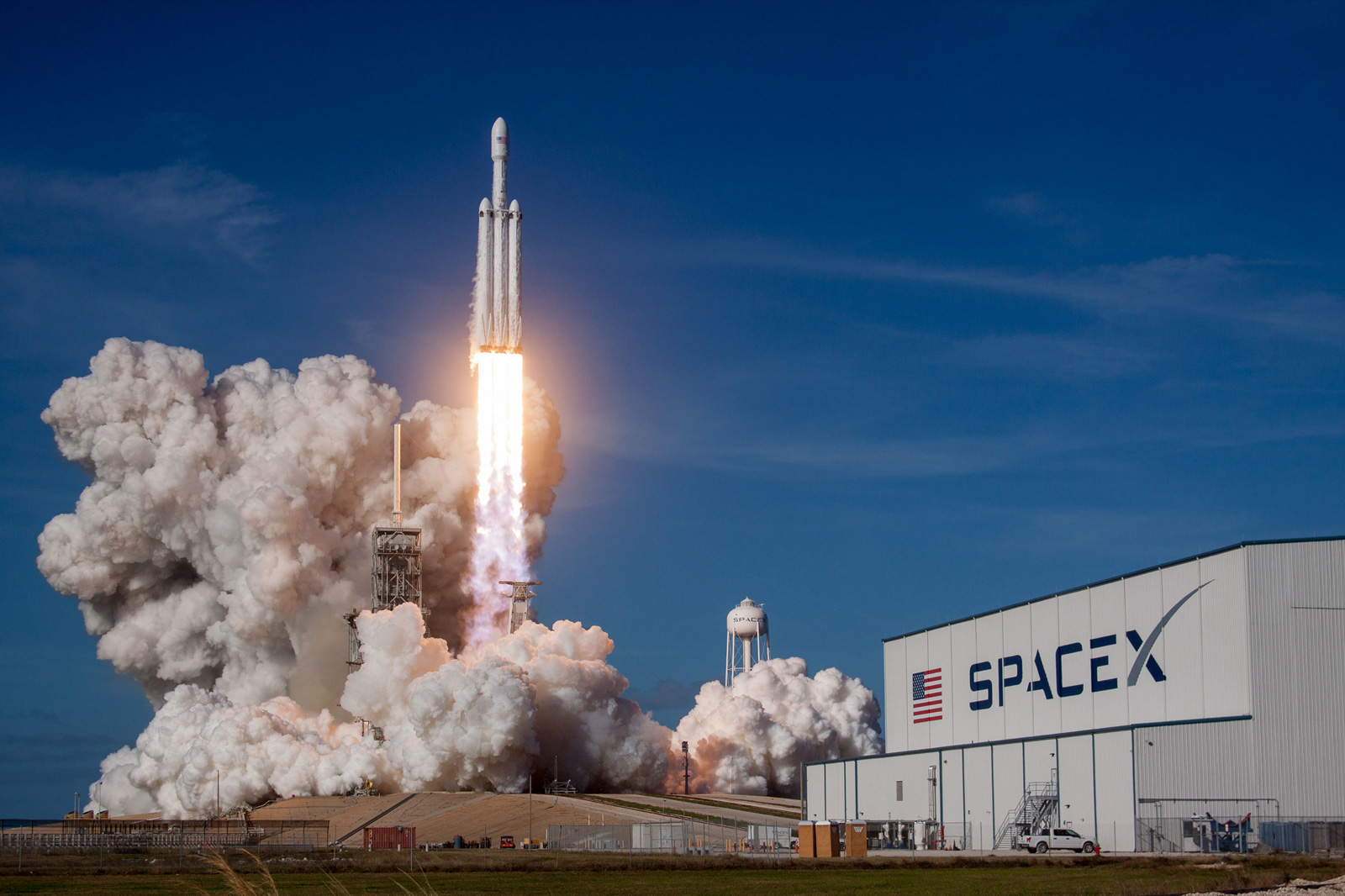
SpaceX’s upcoming initial public offering this month marks a milestone, handing investors their first major chance to bet on the fast-growing space economy. Yet the listing does more than spotlight Elon Musk’s rocket empire. It also draws fresh attention to a wider field of publicly traded space companies, several of which lack his star power but may offer more room to grow.
Rocket Lab Steps Into the Spotlight
A prime example is Rocket Lab, a Nasdaq-listed firm that ranks among the small handful of companies worldwide capable of launching rockets into orbit, even if at a smaller scale than SpaceX. That capability alone confers a meaningful advantage, because reaching orbit is genuinely hard. Numerous publicly traded contenders, from Virgin Orbital to Astra, have faltered trying. Even deep-pocketed private players, including Jeff Bezos’ Blue Origin, have stumbled along the way.
Founded two decades ago in New Zealand and now headquartered in California, Rocket Lab has carried out 88 small-payload launches, mostly into low-Earth orbit. Only four have failed, the most recent back in 2023, a track record that speaks to its reliability.
Aiming for Bigger Rockets
Rocket Lab has no intention of remaining SpaceX’s little brother. Led by self-taught engineer Peter Beck, the company plans to launch its first medium-lift rocket this year, a vehicle capable of hauling payloads up to 13 metric tons.
The leap matters because it sharpens the company’s ability to compete on cost. For perspective, larger rockets like SpaceX’s Falcon Heavy can loft nearly 64 metric tons into low-Earth orbit while keeping costs around $1,500 per kilogram. Rocket Lab’s new Neutron rocket is expected to come in around $4,000 per kilogram. That is not the cheapest option on the market, but it places Rocket Lab roughly on par with some versions of SpaceX’s workhorse Falcon 9.
Crucially, demand exists even at those higher price points.
Carving Out a Defense Niche
Rather than competing head-on across the board, Rocket Lab has leveraged its smaller rockets to win over defense customers who prefer not to share rides with other SpaceX clients. The compact size of its vehicles also allows for greater scheduling flexibility, an appealing trait for militaries that occasionally need to rush spy satellites into orbit.
The company has already built real momentum in this arena. Among its recent wins:
- A $190 million Pentagon contract secured in March to help test hypersonic flight conditions using its Electron rockets.
- A collaboration with defense contractor RTX on the U.S. Golden Dome, a space-based missile-defense shield.
Beck told analysts after the company’s latest quarterly report that Rocket Lab now holds more than 70 launches in its backlog. Revenue is climbing too, rising 38 percent to over $600 million last year, while the revenue backlog stood at $2.2 billion at the end of the first quarter.
Betting on the Future of Orbit
That backlog looks poised to expand, given the intensifying militarization of space and the early traction of ambitious ventures like AI data centers in orbit. Finance chief Adam Spice noted that Rocket Lab could build even larger rockets if space-based artificial intelligence takes off and demand shifts toward moving greater volumes of cargo skyward, a development that would make it an even closer rival to SpaceX.
The company is also eyeing vertical integration. Spice indicated Rocket Lab would prefer to build and operate its own space data centers, leasing that capacity to customers rather than simply constructing facilities on their behalf.
None of this comes cheap for investors. Rocket Lab’s shares have surged more than 50 percent this year, leaving it roughly level with SpaceX on a price-to-sales basis at SpaceX’s targeted valuation. Still, growing into lofty expectations is arguably easier from a smaller base than it would be for a giant like SpaceX to expand fast enough to justify its own price tag.
A Murkier Picture for Others
The investment case grows less clear-cut beyond Rocket Lab. Some firms, such as lunar-exploration specialist Intuitive Machines, are chasing a market that may or may not materialize. Others, including communications-satellite operators like AST SpaceMobile, Viasat, and Iridium, have more concrete growth prospects but operate in an increasingly crowded field.
Their fortunes hinge on rising demand for services such as mobile-phone connections beamed from space and, in Iridium’s case, linking satellites to internet-of-things devices on Earth. Satellite operators collectively brought in $24 billion in revenue last year, according to New Street Research, a figure all but certain to grow even if it never approaches the $1.6 trillion potential market SpaceX cited in its IPO filing.
The Shadow of Dominant Players
A central question hangs over the smaller players: can they capture a meaningful slice of the pie? SpaceX already dominates through its Starlink internet service, which New Street estimates accounted for half of the industry’s revenue last year. Amazon is emerging as another well-funded rival, launching satellites and preparing to deliver space-based internet through its Amazon Leo subsidiary.
Yet that competitive pressure is not entirely bad news for incumbents like AST, Viasat, and Iridium. Even if they fail to build thriving businesses of their own, they hold valuable spectrum, the rights to transmit data and voice over specific frequencies. That makes them potential acquisition targets, offering investors a possible exit if the companies cannot compete. Amazon underscored the point in April when it agreed to acquire satellite operator Globalstar, citing its network and spectrum assets.
The takeaway is straightforward. For many investors, SpaceX is practically synonymous with space itself. But as Rocket Lab and a roster of other listed companies demonstrate, Musk’s venture does not have the cosmos to itself.
As a final reminder, this is a summary of one publication’s analysis, not investment advice. Stock prices and company prospects can change quickly, and anyone considering these names would do well to research thoroughly and consult a qualified financial professional before making decisions.
Author