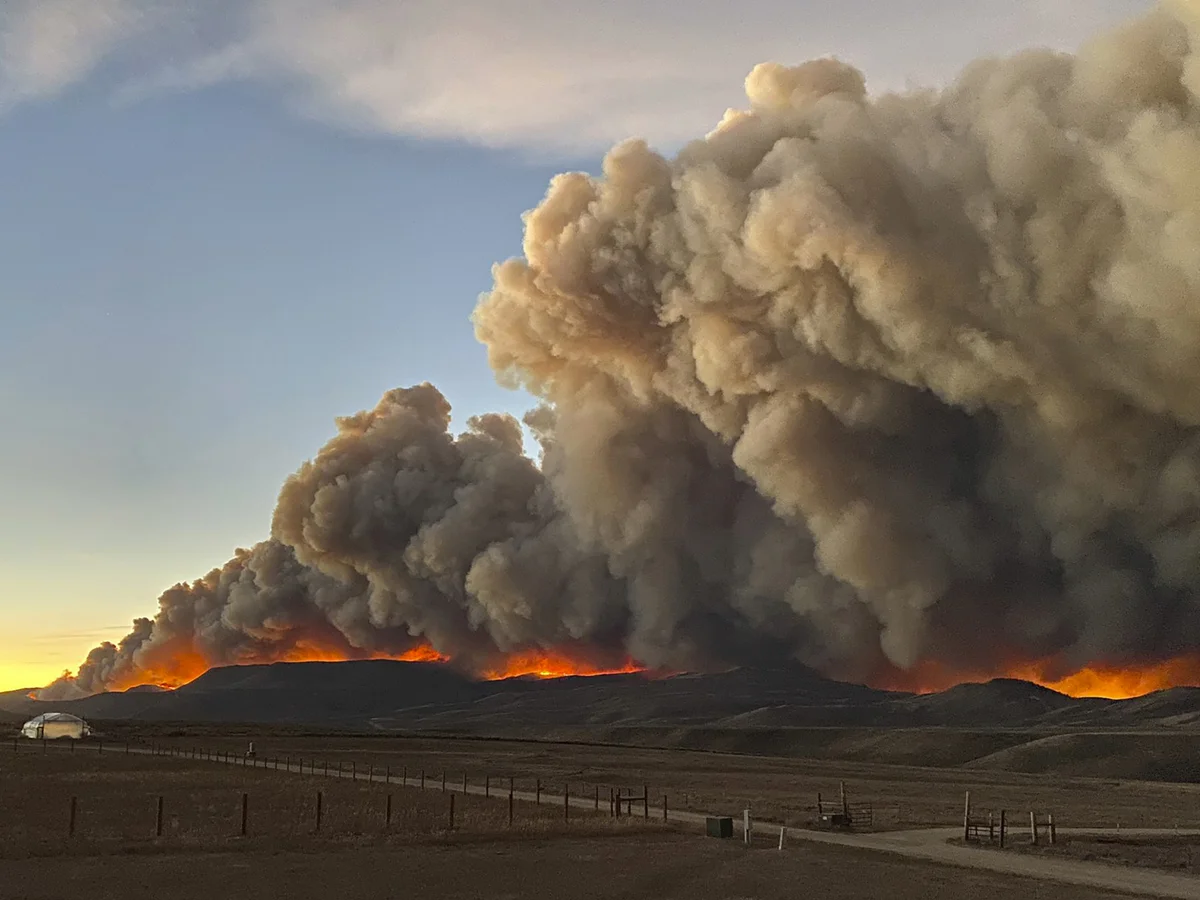
Colorado wildfire evacuations are unfolding at a frightening pace this week as a rapidly expanding blaze southwest of Denver drives thousands of residents from their homes. Powerful winds continue to fan the flames across southern Colorado, turning what began as a manageable situation into a dangerous emergency that has captured national attention.
One Fire Among Dozens
The blaze, known as the Aspen Acres Fire, is far from an isolated event. It stands as just one of roughly 40 large wildfires currently scorching the western United States, part of a broader crisis stretching across multiple states during one of the region’s most volatile fire seasons in recent memory.
What sets this particular fire apart is how quickly it grew. Overnight, the flames expanded by about 17 square miles, ballooning to a total of 105 square miles by Friday. That kind of explosive growth left little time for anyone in its path to react calmly.
Homes Lost and Lives Uprooted
The destruction has already been severe. More than 160 structures have been reduced to ruins as the fire pushes through communities, leaving families to confront the loss of homes and belongings.
Experts point to a troubling combination of factors driving these conditions. Months of unusually dry weather, paired with record-low snowfall in parts of the region, have created a tinderbox environment. Many specialists note that climate change has intensified these patterns, making destructive fires more likely and harder to control.
In response to the mounting threat, authorities ordered roughly 2,200 people in Colorado City to evacuate. Residents in the neighboring communities of Beulah, Rye, and San Isabel were also told to leave, as officials scrambled to move people out of harm’s way before conditions worsened.
Smoke Chokes Roads and Travel
Beyond the flames themselves, thick smoke has created hazardous conditions well beyond the fire’s edge. Travel across the region has been disrupted, with emergency officials issuing stark warnings about dangerously low visibility.
Along parts of Interstate 25, visibility reportedly dropped to as little as half a mile, making driving treacherous. For a major roadway, that kind of reduction poses serious risks for anyone attempting to travel through the affected areas.
The response effort has ramped up accordingly. Around 50 Colorado National Guard soldiers were deployed to assist, taking on several key roles:
- Staffing road checkpoints throughout Pueblo and Custer counties
- Keeping boats clear of the Pueblo Reservoir
- Supporting crews who were scooping water from the reservoir to fight the fire
Investigators have determined that the Aspen Acres Fire was human-caused, though they have not yet shared further details about exactly how it started.
A Wider Wildfire Crisis
The Aspen Acres Fire may be dominating headlines, but it’s only one piece of a much larger emergency spreading across Colorado and its neighboring states. Firefighters are stretched thin as multiple blazes demand attention at once.
On the western side of the Rocky Mountains, near the Colorado-Utah border, crews have managed to contain only about 65 percent of the Snyder Fire. Progress there has been hard-won and remains incomplete.
Across the state line in Utah, the situation is equally alarming. Two major fires have grown to enormous sizes:
- The Cottonwood Fire had spread to more than 147 square miles by Friday
- The Babylon Fire had reached roughly 133 square miles around the same time
A Deadly Season
These latest fires arrive on the heels of tragedy. Less than a week earlier, three firefighters lost their lives and two others were injured after being overtaken by flames while battling blazes connected to the Snyder complex.
That devastating loss underscores just how dangerous conditions have become for the crews on the front lines. Firefighters are facing extreme, fast-changing situations where a shift in wind or terrain can turn deadly in moments.
Holiday Celebrations Reshaped
The wildfire threat is now bleeding into everyday life, including the way communities mark the Fourth of July. Smoke advisories remain in effect across parts of Colorado, prompting officials to rethink traditional holiday plans.
Colorado’s Division of Fire Prevention and Control confirmed that several professional fireworks displays have already been called off due to the extreme fire risk. Many counties have imposed fire restrictions, recognizing that a single stray spark could ignite yet another disaster during such dry conditions.
The caution is understandable. With so much dry vegetation ready to burn, even celebratory fireworks pose a genuine hazard this year.
Warnings Remain in Force
Forecasters have kept the pressure on residents to stay alert. The National Weather Service maintained Red Flag Warnings across much of the state on Friday, cautioning that a mix of hot temperatures, dry air, low humidity, and gusty winds would continue fueling critical fire conditions.
There is a glimmer of hope on the horizon, however. Meteorologists suggested that moister weather moving in over the weekend could help ease some of the danger, offering firefighters a much-needed break.
Still, relief comes with its own complications. Forecasters warned that heavier rainfall, while helpful against flames, could raise the risk of flash flooding in areas recently stripped bare by fire. Burned landscapes struggle to absorb water, making them especially vulnerable to sudden runoff.
Looking Ahead
As southern Colorado braces against the ongoing threat, the coming days will test the resilience of both residents and emergency crews. Thousands have already been displaced, homes have been lost, and lives have been forever changed by fires that showed little mercy.
The situation remains fluid, and much depends on the weather in the days ahead. For now, communities across the region are holding their breath, hoping the worst has passed while remaining ready for whatever comes next. The combination of human vigilance, coordinated emergency response, and a possible turn in the weather offers cautious hope that these fires can finally be brought under control.
Author