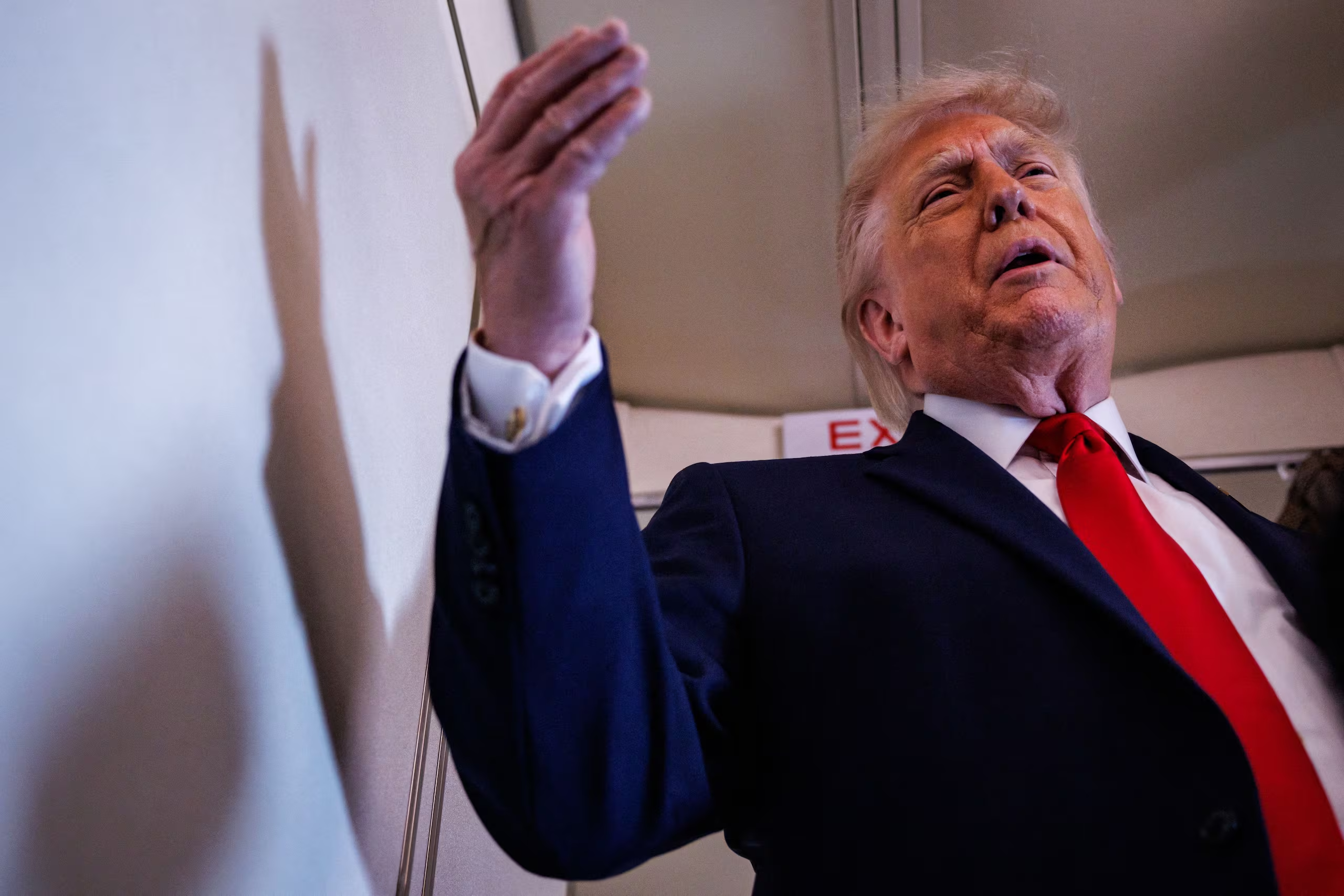
The Trump Meet the Press interview ended in dramatic fashion this weekend after President Donald Trump abruptly walked off camera during a tense exchange with NBC moderator Kristen Welker. The confrontation, which centered on Trump’s unsubstantiated claims about election fraud and his controversial January 6 compensation fund, quickly devolved into a personal back-and-forth before the president pulled off his microphone and left.
How the Interview Fell Apart
The Trump Meet the Press interview was taped Friday during the president’s visit to Wisconsin and aired Sunday. Notably, the dustup between Trump and Welker took place during a rain-heavy sitdown – full of weather-related interruptions – amid the president’s visit to Wisconsin, a crucial swing state in the midterms for both parties that he won in 2024. The Detroit News
What began as a discussion of current events soon turned combative. The flashpoint came when Welker fact-checked Trump’s assertions, prompting the president to lash out at both her and the network before cutting the conversation short.
Disputed Claims About California’s Election
A major source of friction was the ongoing vote count in California’s recent primary. Trump insisted the gubernatorial race was “rigged,” complaining that ballots still weren’t fully counted four days after the election. Welker countered that the lengthy tallying process is simply standard practice in California.
The state operates what’s known as a “jungle primary,” in which candidates from all parties compete on a single ballot and the top two advance to the general election. As Welker explained how California handles its vote counting, Trump pushed back sharply. Trump responded, asking, “Do you know why they’re doing that? Because they’re cheating on the election.” The Detroit News
When Welker repeatedly asked for proof, the president offered none. Welker then asked Trump if he had evidence to support his claims, and the president responded that “all I have to do is look” and “I listen to people.” The Detroit News
The backdrop to Trump’s complaints is a set of tightening races. Democratic candidates have gained ground as more votes are tallied, with the governor’s contest shaping up as a competitive matchup between the Democratic frontrunner and Trump’s endorsed Republican candidate.
Insults and an Abrupt Exit
As Welker continued to press for evidence, the exchange grew personal. Trump accused her and her network of bias, declaring that the press, NBC, and the program itself were all “crooked.” Welker calmly defended herself, replying that she was not.
Trump didn’t relent. He told the veteran reporter she was “either crooked or stupid” and accused her of playing into the hands of those he claimed were rigging elections. He then revived his long-debunked assertion that he had actually won the 2020 presidential election — a claim no court has upheld.
When Welker attempted to ask follow-up questions, Trump decided he was finished. He removed his microphone and announced he’d had enough, thanking her dismissively and telling her to “have a good time.” When she reminded him she had traveled to Wisconsin specifically for the interview, Trump shot back that he’d already given her plenty of time, even sitting through the rain, and suggested she “straighten out” her press.
The January 6 Fund Controversy
Before the interview collapsed, another contentious topic had already raised the temperature: Trump’s proposed “anti-weaponization” fund. Welker pressed him on whether individuals who pleaded guilty to assaulting police officers during the January 6 Capitol riot would be eligible for money from the fund.
Trump grew irritated and declined to give a direct answer. Instead, he made an evidence-free claim that the rioters had been ushered into the Capitol by FBI agents. He further argued that many took plea deals not out of genuine guilt, but out of fear of lengthy prison sentences. As Welker noted, there was no evidence to support these assertions.
The fund itself remains a flashpoint. Trump has continued to champion the multibillion-dollar initiative even as his own administration has reportedly stepped back from efforts to launch it. When asked directly whether he was abandoning the fund or seeking another way to revive it, Trump launched into a defense of the concept rather than offering a clear answer.
A Pattern of Confrontation with the Press
This isn’t the first high-profile sit-down between Trump and Welker, who has interviewed him on multiple occasions over the years. However, the abrupt walkout marks an unusually combative end to a network interview, underscoring the president’s increasingly adversarial relationship with mainstream media outlets.
Welker, for her part, repeatedly held her ground throughout the exchange. Each time Trump made a sweeping claim, she returned to a simple request: evidence. That persistence appeared to be precisely what prompted the president’s frustration to boil over.
Several recurring themes emerged from the encounter:
- Trump’s continued promotion of false claims about the 2020 election
- His characterization of unfavorable vote counts as proof of fraud
- His hostility toward reporters who fact-check him in real time
- His unwillingness to provide evidence when directly challenged
What It Means Going Forward
The fallout from the Trump Meet the Press interview highlights the ongoing tension between the president and journalists who push back on his statements. NBC News did not immediately respond to requests for comment about Trump’s exit.
For viewers, the episode offered a vivid snapshot of how quickly a televised conversation can unravel when claims go unsupported and questions go unanswered. While Trump framed his departure as having simply run out of patience, the moment is likely to fuel continued debate about how political leaders engage with — or disengage from — scrutiny.
As the midterm season heats up and contested races continue to be decided, exchanges like this one are a reminder that the relationship between political power and a questioning press remains as charged as ever.
Author