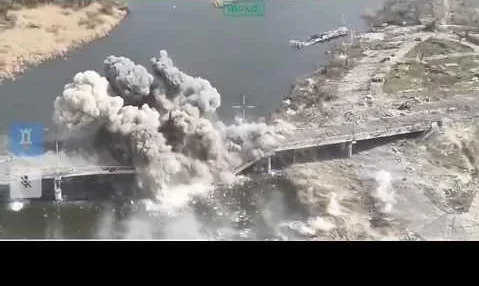
Ukraine mid-range drones have become a punishing new weapon against the Kremlin’s logistics network, with Kyiv repeatedly crashing these aircraft into the asphalt of critical bridges that keep Russia’s southern forces supplied. Recent battlefield footage suggests the tactic is doing real damage, hammering chokepoints that Moscow depends on to move troops and equipment.
Striking the Lifelines to Crimea
The campaign has zeroed in on three key crossings that connect Crimea to the southern front: Armyansk, Henichesk, and Chonhar. Ukraine’s 1st Separate Assault Regiment said it carried out a wave of strikes on these areas over the past week, targeting bridges that serve as essential arteries for Russian supply lines.
These crossings aren’t random targets. Sitting between roughly 50 and 75 miles from the front lines, the bridges in this region have been vital to the Kremlin’s ability to funnel reinforcements and resources into the Zaporizhzhia and Kherson regions. Cutting them off threatens to choke the flow of men, ammunition, and fuel moving northward from occupied Crimea.
Footage Shows Drones Diving Into the Asphalt
Over a span of about five days, the 1st Separate Assault Regiment shared a series of social media posts featuring first-person-view drone footage. The clips show uncrewed systems being flown directly down into the surface of the bridges, striking the same structures again and again from above.
According to the regiment, some of these operations were coordinated with other units, including the 475th Assault Regiment and the Security Service of Ukraine’s elite Alpha unit. In one post, the brigade described how it had targeted what amounted to the only route Russia had for delivering soldiers, ammunition, and fuel out of temporarily occupied Crimea.
The Drones Behind the Damage
A big part of the story is the technology Kyiv is now putting to use. The regiment said it relied on two distinct types of Ukraine mid-range drones, each bringing serious firepower to the fight:
- FirePoint FP-2: This larger drone features an 18-foot wingspan and carries a hefty 220-pound explosive payload, making it capable of inflicting major structural damage.
- Hippo: Smaller but still potent, the Hippo has a 7.5-foot wingspan and combines a 77-pound thermobaric payload with an additional 88 pounds of explosives.
Together, these aircraft give Ukraine the reach and destructive power needed to hit hardened targets like reinforced bridges. Several of the released clips appeared to show at least two bridges in flames, with portions of their structures heavily damaged. Business Insider noted it could not independently verify the authenticity of the footage.
Russian Officials Confirm the Attacks
While verifying battlefield claims is always difficult, in this case pro-Russian authorities in the region have acknowledged that the strikes took place. Vladimir Saldo, the Kremlin-appointed governor of Kherson, said on Thursday that bridges in the Armyansk area had been hit by at least 45 separate drone attacks.
Saldo offered a cautious assessment, stating that early reports pointed to some damage, and that experts were inspecting the structures to evaluate their condition. His comments lend weight to Ukraine’s claims, suggesting the assault was both large in scale and effective enough to draw official concern.
Disruption Spreads Across the Region
The impact didn’t stop at the bridges themselves. On Tuesday, Saldo had already warned of roughly 20 drone attacks targeting the crossing that serves Chonhar, adding that traffic there had been shut down entirely.
In the aftermath, his office began pointing residents toward alternative routes to avoid the affected zones. Officials also announced that civilian passenger buses across the region would be halted, citing a fuel shortage. These ripple effects show how a focused campaign against key infrastructure can quickly spill over into everyday life, disrupting movement and supply far beyond the immediate strike sites.
A Shift in Ukraine’s Tactics
The growing reliance on Ukraine mid-range drones marks a notable evolution in how Kyiv approaches Russia’s rear areas. These weapons let Ukrainian forces reach deep behind the lines and harass the Kremlin’s critical supply routes in ways that weren’t easily possible before.
In earlier phases of the war, Ukraine leaned heavily on other methods to damage Russian supply bridges. Sabotage operations played a role, as did artillery systems like the US-made HIMARS, which Kyiv used to take out key crossings. The arrival of capable mid-range drones adds a flexible new option to that toolkit.
Why Mid-Range Drones Matter
What makes these systems so valuable is the balance they strike between reach, power, and cost. Compared with the small grenade-carrying quadcopters that have become a familiar feature of the conflict, mid-range drones fly considerably farther and hit with much greater force.
At the same time, they remain cheaper to produce than the long-distance drones Ukraine deploys against Russia’s military-industrial base deep inside the country. That combination of affordability and effectiveness makes them especially well suited for sustained campaigns against logistics targets, where repeated strikes can wear down infrastructure over time.
The Bigger Picture
The recent strikes on the Armyansk, Henichesk, and Chonhar crossings highlight a clear strategy: keep Russia’s southern supply lines under constant pressure. By degrading the bridges that link Crimea to the front, Ukraine aims to make it harder and costlier for Moscow to sustain its forces in the south.
As Ukraine mid-range drones continue to prove their worth, they are likely to feature even more prominently in Kyiv’s operations. For now, the burning bridges and disrupted traffic stand as visible signs of a tactic that is reshaping how the war is being fought behind the front lines.
Author