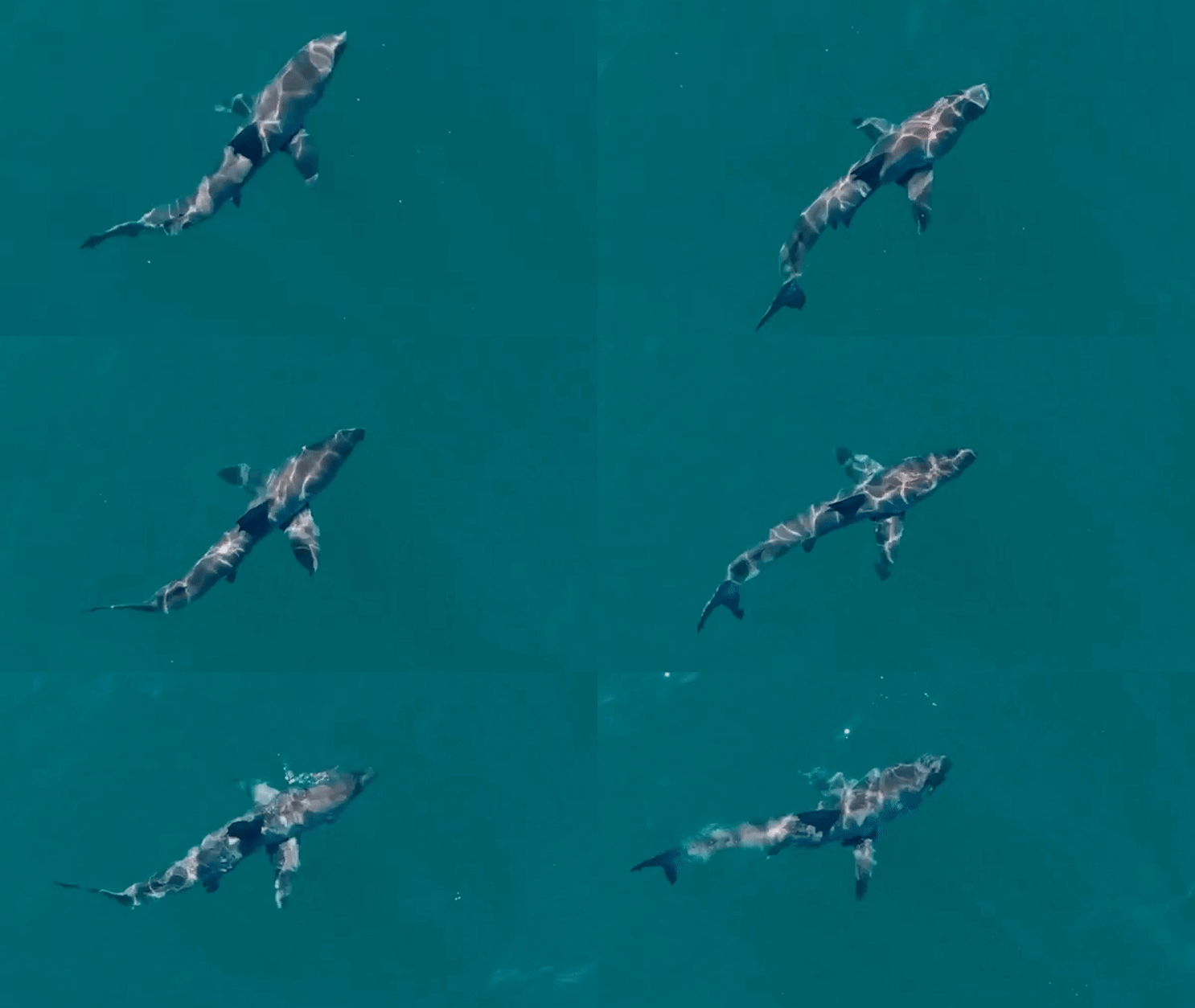
A Coogee Beach shark attack that left a woman critically injured has prompted Australian authorities to reconsider drone restrictions over the popular Sydney swimming spot, in hopes of giving rescuers a better tool to watch for sharks. The incident has reignited concerns about a summer marked by unusually high shark activity along the New South Wales coast.
What Happened at Coogee
Emergency services rushed to Coogee Beach in eastern Sydney on Saturday morning after reports that a 35-year-old woman had been bitten by a large shark roughly 30 metres from shore.
The woman suffered serious injuries to her lower left leg and arms. By Sunday, a spokesperson at St Vincent’s Hospital said she was in a critical but stable condition.
In the aftermath, Coogee Beach and several others in the city’s Randwick Council area were closed for 24 hours. During that window, drones flew overhead under special emergency provisions to scan the water for any lingering threat.
The Drone Restriction Problem
The attack exposed a peculiar gap in the area’s shark-monitoring capabilities. While Australian lifesavers routinely rely on drones to spot sharks from above, Coogee Beach has operated under restrictions on commercial drone use because it sits directly beneath the flight path of Sydney Kingsford Smith Airport.
That limitation is now under review. Following the attack, a spokesman for the Civil Aviation Safety Authority said the regulator would examine adapting the current rules, potentially clearing the way for more consistent aerial surveillance at one of Sydney’s busiest beaches.
A Government Under Pressure
State officials have signaled they are treating the issue with urgency. Tara Moriarty, the New South Wales minister for agriculture, acknowledged that the season had been especially difficult.
She described it as a really tough summer of shark activity and attacks in Sydney, emphasizing that the government was taking the situation very seriously. Moriarty added that authorities would consider fresh measures to protect swimmers, including expanded use of drones and other technology.
A Dramatic Rescue
The woman’s survival owed much to the quick actions of a bystander. Paddleboard champion and off-duty lifeguard Charlie Verco, 25, rescued her and brought her to shore.
Verco described the harrowing scene to the Australian Broadcasting Corporation, recalling how frightened he was when he spotted the three-to-four-metre shark near a group of swimmers. He said he immediately tried to alert the lifeguards with a “code X” signal, urging them to understand the danger, clear the water, and get the powered rescue craft into the surf.
The moment of the attack was terrifying. Verco recounted that the woman was briefly pulled underwater and that he lost sight of her amid the blood in the water. Fortunately, she resurfaced after the shark released her, allowing him to reach her and bring her back to shore, where lifeguards, police, and medical experts were waiting before she was taken to hospital by ambulance.
A Troubling Pattern
The Coogee incident is part of a wider surge in shark encounters around Australia this year. The country has experienced a spate of attacks, putting coastal communities and the beach tourism industry on edge.
The broader context underscores why officials are so focused on prevention:
- Most shark attacks in Australia occur along the east and southeast seaboard.
- That region averages around 20 such incidents each year, according to the Australian Institute of Health and Welfare.
- Sydney’s beaches have seen several serious and even fatal encounters in recent years, intensifying public anxiety.
Looking Ahead
For now, the immediate priority remains the recovery of the injured woman and the safety of swimmers as beaches reopen. But the attack has clearly accelerated a policy conversation that was already simmering.
If the Civil Aviation Safety Authority moves to relax the drone rules over Coogee, it could mark a meaningful shift in how authorities balance aviation safety with beach protection. Combined with the government’s openness to new technology, the response suggests that this latest attack may leave a lasting mark on how Sydney guards its shoreline against an unusually active shark season.
Author