Typhoon Bavi has weakened to a tropical storm — a downgrade that offers considerably less comfort than the word suggests.
Hours after making landfall in eastern China’s Zhejiang province on Sunday, the system lost intensity as it pushed northwest into Anhui. But it continues to deliver punishing winds and torrential rain across a vast stretch of the country.
The storm spans roughly 620 miles at its widest point. Weakening does not shrink it.
The Scale of the Evacuation
The numbers are staggering.
- Zhejiang province: more than 2.2 million people evacuated
- Shanghai: over 290,000 people moved from at-risk areas
- Fujian province: more than 180,000 evacuated
According to state media, that represents one of the larger precautionary displacements China has undertaken for a single storm.
Those figures are worth sitting with. The population evacuated from Zhejiang alone exceeds that of many entire cities.
What It Has Already Done
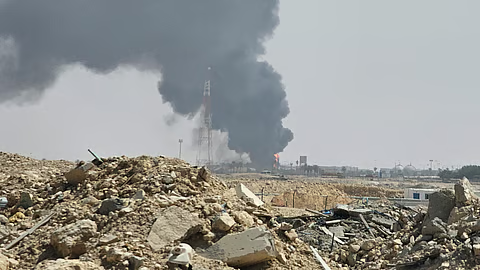
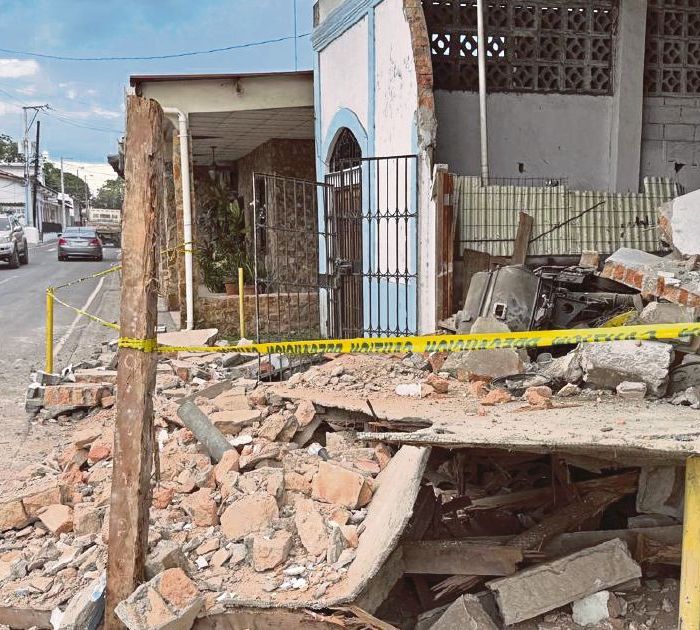
In the coastal city of Yueqing, in Zhejiang, the wind stripped the streets.
State broadcaster CCTV reported more than 1,300 trees toppled, with at least 700 completely uprooted.
Shanghai’s two major airports — Pudong International and Hongqiao International — were expected to cancel around 653 inbound and outbound flights, according to the official Xinhua News Agency.
Where the Danger Sits Now
China’s National Meteorological Center warned that strong winds and heavy rain would affect numerous eastern and northeastern cities through Sunday and Monday.
Heavy to torrential rain was already recorded Sunday afternoon in provinces including Anhui.
The threat has shifted. A weakening storm moving inland is no longer primarily a wind event. It becomes a water event.
Why Downgrading Means Little Here
As BBC News reported, Bavi’s sheer size is the problem.
A system spanning 620 miles carries an enormous volume of moisture. That moisture has to go somewhere, and as the storm tracks over land, it falls.
The consequences for inland areas are predictable:
- Flash flooding in low-lying regions
- River systems overwhelmed
- Landslides in hilly terrain
- Saturated ground bringing down trees and power lines
Classifications like “typhoon” and “tropical storm” measure wind speed. They say nothing about rainfall totals, which are frequently what kill people.
Taiwan’s Glancing Blow
Bavi passed north of Taiwan on Saturday without making direct landfall.
Even so, Taiwan’s fire department reported at least 134 people injured across the island.
Many of the injuries were unremarkable in nature but revealing in cause — people riding motorcycles or bicycles in strong winds, or losing control on slippery roads.
A storm does not need to hit you directly to hurt you.
Where This Started
Bavi’s origins were considerably more violent.
When it first made landfall on Monday over a small US island territory in the western Pacific near Guam, it was classified as a super typhoon by the National Weather Service.
It brought extreme winds and torrential rain to the Northern Mariana Islands — a region that was still recovering from another powerful super typhoon that struck in the spring.
For those communities, Bavi arrived before the previous repairs were finished.
The Pattern Worth Noticing
Two super typhoons striking the same remote Pacific islands within months of each other is not a statistical curiosity. It is the kind of frequency that makes recovery structurally impossible.
Rebuilding assumes a gap between disasters. When that gap closes, communities never return to baseline.
What Comes Next
Bavi will continue to weaken as it moves inland across China. Its winds will fade.
Its water will not.
The immediate risks over the coming days center on rainfall accumulation in Anhui and neighboring provinces, where saturated ground has limited capacity to absorb more.
For the millions evacuated in Zhejiang, Shanghai and Fujian, the question now is when it becomes safe to go home — and what they will find when they do.
Author