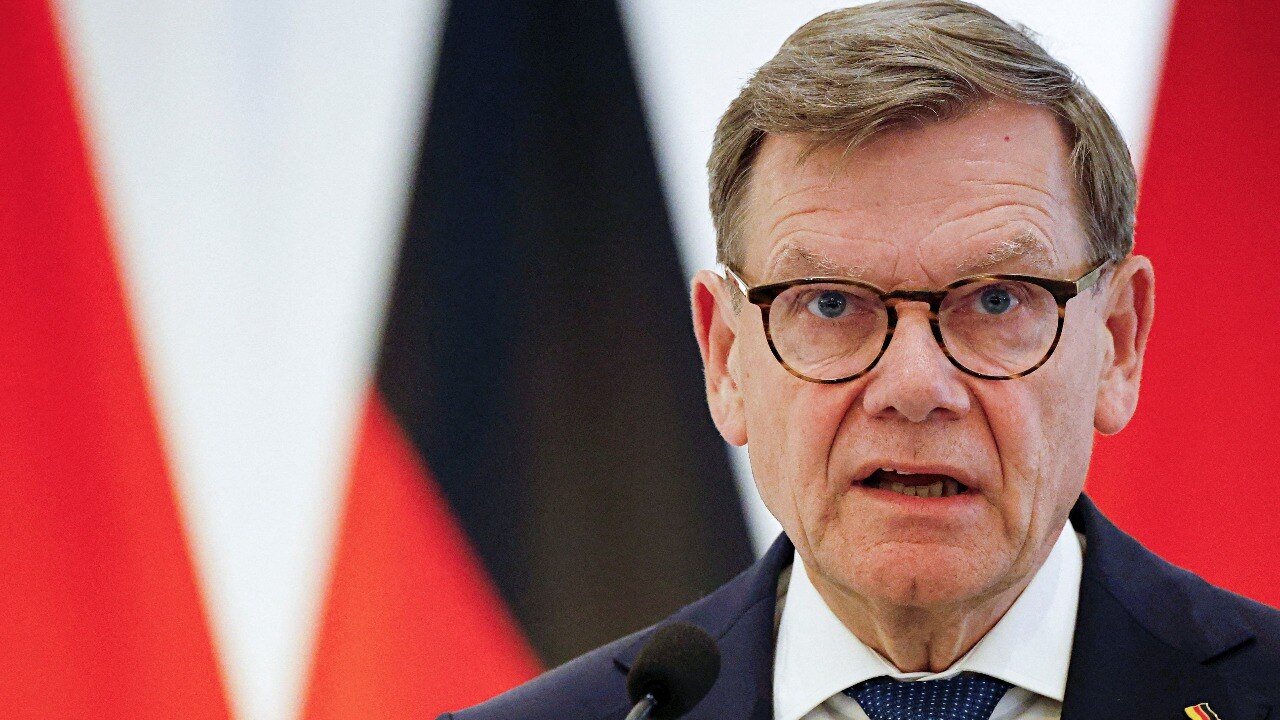
The German foreign minister European unity message took center stage in a recent interview, as Johann Wadephul laid out his vision for a continent facing shifting alliances and persistent threats. Speaking with DW, Germany’s top diplomat emphasized the enduring trans-Atlantic partnership, unwavering support for Ukraine, and above all, the decisive importance of keeping Europe together.
A Diplomat Shaped by Eastern Europe
Wadephul’s priorities didn’t emerge by accident, they reflect a long-standing personal and political engagement.
Even before assuming office, he was deeply involved in trans-Atlantic relations and kept a close watch on Central and Eastern Europe. Within the German government, he is widely regarded as a leading advocate for supporting Ukraine in its war against Russia.
His connection to the region runs deeper still. With family roots near Bydgoszcz in Poland, Wadephul maintains a warm, friendly relationship with Polish Foreign Minister Radoslaw Sikorski, ties that clearly inform his outlook.
The Trans-Atlantic Relationship Evolves
When the conversation turned to relations with the United States, Wadephul offered a candid assessment.
He acknowledged that the partnership is “no longer as straightforward as it used to be,” signaling an awareness of recent strains. Yet he was careful to affirm that the United States remains a partner despite these complications.
Still, his greatest concern lay elsewhere. What weighs on him most, he said, is the cohesion of Europe itself, which he described as being of decisive importance.
A Firm Commitment to NATO
The interview coincided with the signing of the German-Polish defense agreement, a moment Wadephul used to underscore Germany’s commitment to its allies.
He framed the agreement as a clear reinforcement of mutual defense obligations within NATO. His language left no room for ambiguity.
Wadephul declared that Germany “won’t hesitate for a second” if NATO territory comes under attack, an aggression he made clear could only come from Russia. In such an event, he vowed, German soldiers would immediately defend “every centimeter” of allied territory.
Ukraine at the Heart of European Security
For Wadephul, supporting Ukraine isn’t a peripheral issue, it’s central to Europe’s entire security framework.
The depth of his commitment is visible even in his office, where a Ukrainian flag hangs. “We need to support Ukraine together,” he stressed, framing the cause as a shared European responsibility rather than an isolated effort.
This conviction reflects his broader belief that Ukraine’s fight is inseparable from the continent’s own safety.
No Illusions About Russia
Perhaps the most striking part of the interview was Wadephul’s blunt assessment of Russia.
When asked whether Vladimir Putin might ultimately have more endurance than the West, his answer was immediate and resolute: “Definitely not. We will always have more staying power.”
He argued that Russia’s war of aggression has fundamentally transformed the European landscape. Any lingering hopes of reaching an understanding with Moscow, he said, have been shattered by the invasion. His key points included:
- Russia’s aggression has destroyed remaining illusions about cooperation
- Diplomacy remains possible, but only “without any illusions”
- For the foreseeable future, European security must be organized against Russia
Poland’s Crucial Role
Throughout the conversation, Wadephul repeatedly highlighted Poland’s importance to European security.
He openly acknowledged Warsaw’s occasional frustration that key coordination formats, such as the E3 cooperation between Germany, France, and Italy on Ukraine, don’t always include sufficient Polish involvement.
Rather than dismiss those concerns, he validated them. “We could not support Ukraine without Poland,” he insisted, adding pointedly that the E3 format “will not set a single comma without Poland agreeing.” It was a clear signal of Poland’s growing centrality in European decision-making.
Confronting a Difficult History
Wadephul also addressed the complex historical relationship between Germany and Poland with notable candor.
He pushed back against common assumptions, arguing that relations between the two countries are significantly better than many believe. “We are on an equal footing,” he said, underscoring Poland’s considerable importance to both Germany and Europe.
At the same time, he didn’t shy away from Germany’s historical responsibility. Acknowledging the weight of the past, he stated plainly that “Germans bear an immense amount of guilt” for crimes committed during the Second World War occupation. He also argued that the remaining survivors of those German wartime crimes should receive compensation.
A Wish for “Boring Normality”
Despite the heavy historical themes, Wadephul expressed a hopeful vision for the future.
He spoke with regret about recurring anti-German sentiment in Poland, admitting it troubled him, while urging both nations to focus on building a shared European future together.
When asked what he most wanted for German-Polish relations, his answer was refreshingly modest. Above all, he wished for normality, or as he put it, “boring normality.” If the two countries could simply achieve that, he suggested, everything would be fine.
A Personal Touch
The interview closed on a lighter, more personal note.
Asked about Poland as a travel destination, Wadephul smiled and observed that things often run more smoothly there. Then, with characteristic candor, he added a humorous admission: the food in Poland, he confessed, usually tastes better to him than the food in Germany.
The Bottom Line
The German foreign minister European unity message comes at a pivotal moment for the continent. Through his remarks, Wadephul painted a picture of a Europe that must stand together, support Ukraine, strengthen NATO, and confront Russia without naivety, all while deepening crucial partnerships like the one with Poland.
His blend of firm resolve on security, honest reckoning with history, and genuine warmth toward Poland reflects a diplomat who sees European cohesion not as an abstract ideal, but as an absolute necessity. In a time of uncertainty, his message is clear: unity is not optional, it is decisive.
Author