





In a significant move towards reckoning with its repressive past, Hungary has released communist-era secret police files, identifying up to 60,000 informants who operated during the country’s communist rule from 1949 to 1989. The decision to grant unrestricted public access to these records for the first time was spearheaded by Prime Minister Peter Magyar, who introduced a bill in September to end decades of stalled efforts to disclose the archives.
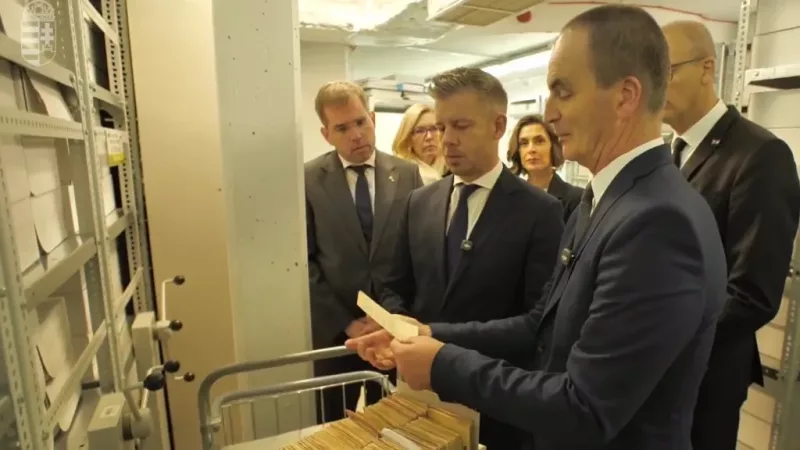
The released files include four types of state security records dating from before 1990, three of which became accessible on the nyitottaktak.hu website on Wednesday morning. These documents include the “6 card,” a registration sheet for network members containing their identifying data and main details of their activities, as well as a register of recruitment between 1957 and 1962 and a database of former agents’ personal data and code names.
Estimates suggest that the communist regime employed around 150,000 agents over the four decades of the Mátyás Rákosi (1952-1953) and János Kádár (1956-1988) regimes. These individuals, often recruited through coercion, were tasked with reporting on colleagues, friends, and even relatives for signs of disloyalty towards the regime.
The released files feature the names of politicians, clergy members, and TV personalities, but according to Bendeguz Gergo Cseh, the head of the archive, a “large proportion” of the informants were “people who did not make their mark on national public life.” The government has set up hotlines to offer emotional support and counseling for those affected by the revelations.
While the release of these files is seen as a significant step towards transparency, historians caution against judging individuals solely based on their presence in the informant registry. Laszlo Eorsi from the 1956 Institute Foundation noted that some individuals who were recruited as informants did not actually make reports and even took risks by turning against the authorities, with some being considered “proper heroes.”
The release of the communist-era secret police files in Hungary marks a crucial moment in the country’s efforts to confront its repressive past and promote political transparency. As the public gains access to these historical records, it is essential to approach the revelations with “dignity and humanity,” as Prime Minister Magyar urged, and to consider the complex circumstances surrounding the actions of those named in the files.
Author