The Elle Legally Blonde prequel arrives with an irresistible pedigree and a clear ambition: to bottle the pink-hued magic that made Reese Witherspoon a household name a quarter century ago. Yet despite a winning lead and moments of genuine warmth, this Prime Video series struggles to recapture the effervescent spark that made the original film a cult classic.
The result is a show that gets by on charm but leaves you wishing it had reached higher.
The Witherspoon Playbook
Twenty-five years after Legally Blonde turned her into a bona fide film star, Reese Witherspoon has evolved into both a respected actor and a formidable producer. With audiences hungry for teen-led dramas that tug at the nostalgia of older generations, revisiting one of her most beloved properties makes perfect commercial sense.
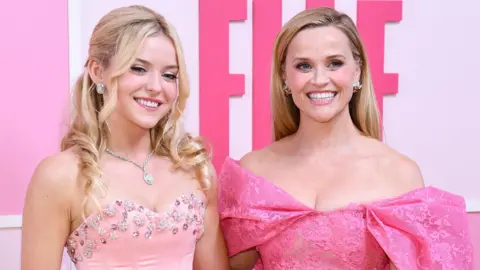
So Witherspoon dusts off the Legally Blonde name and delivers a small-screen prequel. To anchor it, she casts Lexi Minetree as a younger Elle Woods, a charismatic mini-me tasked with channeling the sass, sweetness, and un-self-aware charm that defined the original character without ever tipping into caricature. On that front, the casting largely succeeds.
Reinventing the Fish-Out-of-Water Tale
Rather than following Elle to Harvard, the series reimagines her as a high school student and reworks the familiar fish-out-of-water premise. This time, Elle is yanked out of her Bel Air bubble after her father botches a celebrity nose job, forcing the family to flee town.
Their destination is grungy mid-90s Seattle, and as the show gleefully reminds us, there was nowhere grungier at the time. There, Elle must navigate a new school packed with mean girls and dismissive boys who insist that pink is not a personality. The setup clearly hopes to feel fresh enough to stand on its own while familiar enough to draw longtime fans back into the fold.
A Promising Start
To its credit, Elle opens on a high note. The first episode centers on Elle’s 16th birthday celebration at the family mansion, surrounded by friends and buzzing with excitement about the year ahead.
Her ambitions are endearingly specific: managing the delicate social politics of junior year, securing the perfect first kiss with Hot Josh, and keeping up with every twist on Days of Our Lives. It’s a bright, cheerful beginning that captures a flicker of the original’s spirit.
But the nose-job disaster upends everything, and the Woods family relocates to the rainiest city in the country.
Where the Sparkle Fades
Unfortunately, the move marks the point where the show begins to lose its footing. The camp effervescence that fueled so much of the film’s success quickly evaporates once the family settles into their gloomy new surroundings.
The visual palette shifts to sludgy browns, greys, and camo-plaid layered over band T-shirts, a look that grows genuinely dispiriting. Since television is a visual medium, that drabness matters more than it might seem. The new supporting characters fare little better, landing somewhere between bland and, in the worst cases, so humorlessly self-serious that they become instantly grating.
Elle herself keeps trying, of course. Her irrepressible optimism shines through in lines that showcase her quirky enthusiasm, but her attempts to win over her new peers repeatedly fall flat, both for the character and, sadly, for the viewer.
A Script Leaning on Familiar Tropes
The writing takes a noticeable hit as the series settles in. Before long, Elle leans heavily on the most well-worn high school comedy staples, cycling through:
- The mean girl harboring a secret
- The obligatory love triangle
- The mismatched new best friend
- Good deeds that inevitably backfire
- The humiliating social faux pas, including a callback where Elle shows up badly underdressed to an event
- Anonymous insults scrawled across a locker
The problem isn’t the tropes themselves but the absence of fresh twists or enough sharp dialogue to elevate them. Still, the script does land the occasional gem. One standout moment comes when Elle’s LA friend Madison advises that the best way to recover from social death is to have a kid or land a spot on SNL, prompting Elle to wail that she’s a virgin and can’t wait until Saturday.
Saved by Its Heart
What ultimately keeps Elle afloat is the warmth at its center. The closeness of the Woods family gives the show an emotional anchor, bolstered by two generous and impeccably timed comic performances from the adults flanking Minetree, with Tom Everett Scott as father Wyatt and June Diane Raphael as mother Eva.
Together, they supply enough charm to carry the series through its weaker stretches. In a world that could always use more harmless escapism, Elle does the job it sets out to do.
The Verdict
And yet the nagging sense of missed potential lingers. Given its pedigree and the genuine highs of its best writing, Elle could have been so much more than a pleasant, forgettable diversion.
Like Elle Woods herself, the show has the tools to dazzle. It simply never fully commits to the bend and snap, settling instead for something that charms in the moment but fades from memory once the credits roll.
Author