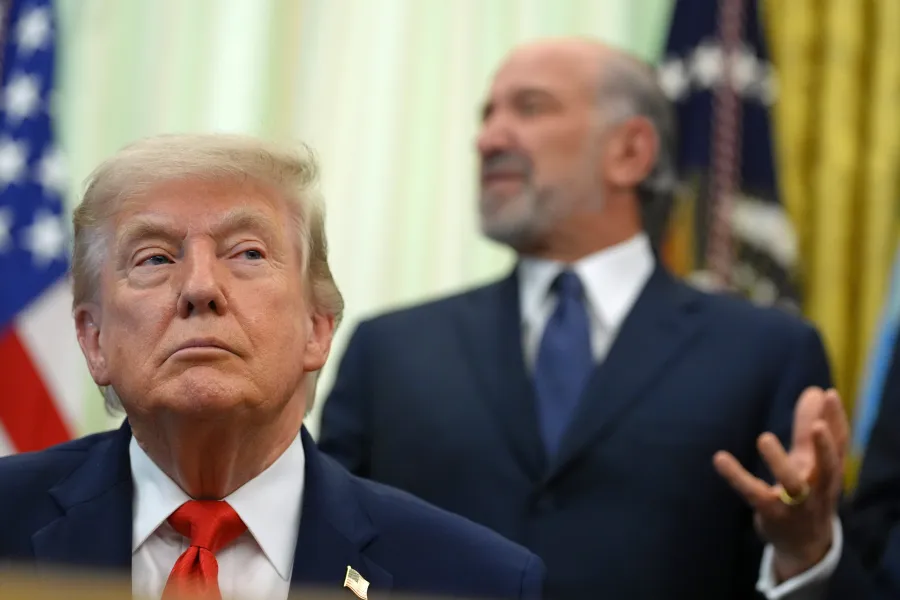
Trump’s Iran ceasefire deal took the spotlight as the President closed out the G-7 summit in France with a wide-ranging, nearly 70-minute news conference. In a performance that mixed self-congratulation with sharp criticism of allies, Trump defended the agreement, warned of the economic dangers of continued war, and stunned some observers by suggesting a major break with longstanding U.S. opposition to Iran’s ballistic missile program.
A Freewheeling Defense in France
Speaking in Évian-les-Bains as the summit wrapped up, Trump delivered what could best be described as an unscripted, sprawling defense of his Iran policy.
The President bounced between topics, touting the economic upside of peace one moment and rebuking Israel’s military conduct the next. The lengthy appearance highlighted a familiar pattern of his presidency: seizing major global moments to claim vindication, revisit old grievances, and define the narrative on his own terms before anyone else could.
A Surprising Stance on Missiles
One of the most striking takeaways was Trump’s apparent willingness to let Iran keep ballistic missiles, a position that broke sharply with decades of U.S. policy.
His logic rested on fairness and regional balance. Trump questioned why Iran should be denied weapons that its neighbors already possess.
“They have to have some, because other people have some,” he said, openly acknowledging that his own advisers disagreed with him. He pointed to Saudi Arabia as an example, arguing it made no sense to allow one country missiles while barring another.
Trump also drew a clear distinction between conventional and nuclear threats, insisting that missiles cause limited, localized damage, unlike nuclear weapons capable of catastrophic destruction.
The Economic Case for Peace
Much of Trump’s argument centered on money, markets, and the cost of prolonged conflict.
He repeatedly tied the deal to economic relief, claiming it would lower prices both in the United States and around the world while easing the inflationary pressures that have shadowed much of his second term.
Key economic points he emphasized included:
- Falling oil prices leading to cheaper energy across the board
- A stock market that surged whenever peace seemed within reach
- Reduced inflationary headwinds heading into the upcoming midterm elections
In his words, every time peace was discussed, the market shot up “like a rocket ship.” He predicted that as oil costs declined, everything else would follow, ultimately giving the U.S. some of the lowest energy prices in the world.
What the Agreement Actually Contains
While Trump spoke onstage, senior U.S. officials briefed reporters separately, laying out the terms of the memorandum of understanding in detail.
The agreement, in effect for 60 days with the option to extend, includes several significant provisions:
- The Strait of Hormuz would open immediately, allowing Iran to sell oil free of sanctions.
- Iranian assets would gradually be unfrozen and transferred to Iran’s Central Bank as negotiations progress.
- Remaining sanctions would be lifted, contingent on Iran’s compliance.
- A $300 billion investment fund, largely financed by Persian Gulf states, would be established.
One official notably described the memorandum as committing the U.S. “quite literally” to nothing, framing it instead as a framework to reward Iranian good behavior and reshape its relationship with the region and the world.
A Notable Shift on Sanctions and Sovereignty
The deal also marked a striking departure from Trump’s earlier rhetoric on Iran.
Though he once floated the idea of regime change, the current agreement explicitly rules that out. Both sides committed to respecting each other’s sovereignty and territorial integrity, and to refraining from interfering in each other’s internal affairs.
There was also an irony in the sanctions approach. Republicans, including Trump, had long criticized the Obama-era nuclear deal precisely for offering sanctions relief, arguing it funneled cash toward Iranian proxies and terrorism. Now, the White House planned to lift oil sanctions while negotiations were still ongoing, easing economic pressure on Tehran at the very moment the U.S. hoped to extract nuclear concessions.
Criticism of a Longtime Ally
In an unusual move, Trump turned some of his sharpest words toward Israel, a key U.S. ally.
While affirming Israel’s right to defend itself, he suggested its military actions, particularly against Hezbollah in Lebanon, had at times been excessive.
He argued that a proportional response mattered, contending that when a couple of drones fall harmlessly in the desert, it doesn’t justify leveling buildings in Beirut. In his view, Israel “could behave better” and “do a better job” in how it conducts its operations.
Enforcement Through Threats, Not Courts
When pressed on how the deal would actually be enforced, Trump was characteristically blunt. He admitted the agreement contained few formal enforcement mechanisms, but didn’t seem concerned.
His message to Iran was simple: comply, or face military consequences. He made clear he had no intention of pursuing legal avenues, dismissing the idea of taking Iran to court. Instead, he warned that any violation would be met with overwhelming force, expressing confidence that Tehran would not stray from the agreement.
Vintage Trump on the World Stage
The news conference itself was classic Trump theater. Before taking questions, he spoke for roughly 41 minutes, frequently veering off topic.
Along the way, he hurled insults at political rivals, mused openly about the possibility of an economic depression, and described several Middle Eastern nations and populations in crude terms. He also credited his negotiating counterparts in unusual language, while insisting he had single-handedly prevented a nuclear-armed Iran from triggering catastrophe.
When asked whether Iran had “won” the negotiation, Trump shrugged off the framing, noting that he would be blamed no matter the outcome, whether for continuing the war or for striking a deal that angered parts of his own base.
The Bottom Line
Trump’s Iran ceasefire deal, as presented at the G-7, reflects a foreign policy approach defined by flexibility, showmanship, and the constant threat of force. By emphasizing economic relief, softening on missiles and sovereignty, and openly criticizing Israel, the President signaled a willingness to rewrite long-held U.S. positions on his own terms.
Yet with enforcement resting largely on the threat to “bomb the hell out of” Iran and many of the toughest issues pushed into a 60-day negotiating window, the durability of the agreement remains uncertain. For now, Trump has claimed his moment of vindication, leaving the world to watch whether the deal holds or unravels in the months ahead.
Author