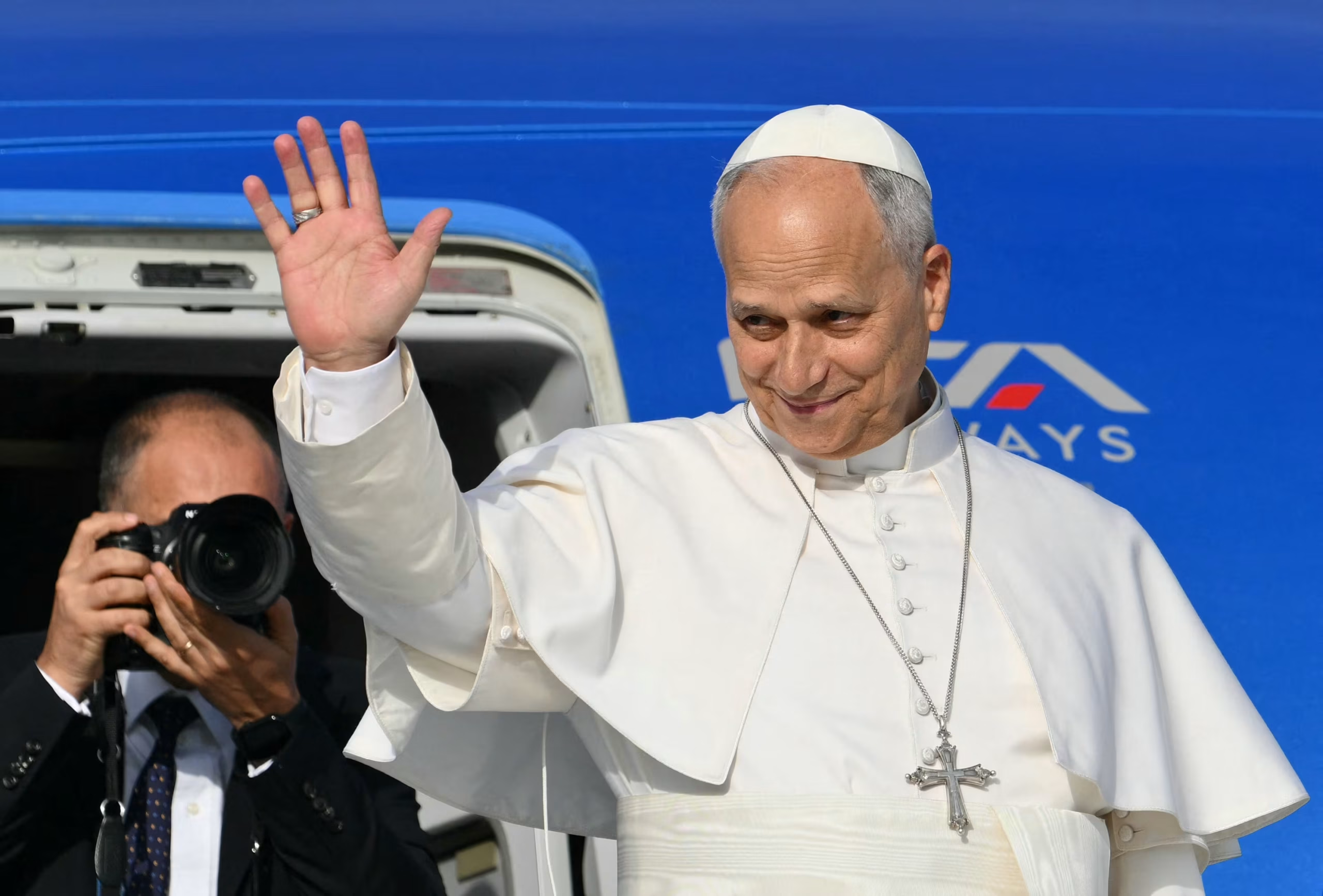
Pope Leo XIV used a visit to the birthplace of America’s first saint to deliver a pointed message about caring for migrants, holding up Mother Frances Cabrini as a model for Christians today. The visit, part of his summer tour across Italy, reinforced his role as a forceful advocate for those fleeing hardship — and as the spiritual heir to the late Pope Francis.
Honoring a Saint of the Migrants
On Saturday, Pope Leo XIV traveled to Sant’Angelo Lodigiano, near Milan, the hometown of Mother Frances Cabrini. There, he prayed before her tomb in a basilica named in her honor and presided over an evening prayer service.
Cabrini holds a special place in Catholic and American history. Known as the patron saint of migrants, she became famous for her work caring for Italian immigrants in the United States at the turn of the last century. But her mission stretched far beyond America — she traveled the globe, founding schools, hospitals, and orphanages for those who had nothing.
After her death in 1917 as a naturalized U.S. citizen in Leo’s native Chicago, Cabrini was later beatified and ultimately canonized in 1946 as the first American saint.
A Message Rooted in Compassion
In praising Cabrini, Pope Leo XIV emphasized how her faith drove her to help migrants who had abandoned everything in search of a better life. He framed her mission as deeply relevant to the present moment.
The pope posed a series of reflective questions to the faithful, asking what Cabrini’s missionary spirit would call her to do if she were alive today. He also invoked the legacy of Pope Francis — himself the son of Italian immigrants — who made service to migrants one of the defining priorities of his papacy.
Leo’s appeal was especially directed at the young. He urged them to truly get to know St. Frances Cabrini by reading her writings, travel journals, and retreat notes, encouraging a new generation to find inspiration in her example.
A Stand on Migration
The visit carried clear political undertones. Pope Leo XIV — the first U.S. pope in history — has clashed with the Trump administration over its crackdown on migrants, lending added weight to his repeated emphasis on welcoming the stranger.
His advocacy has taken him to migration hotspots around the world. Just last week, Leo spent two days in Spain’s Canary Islands, a major arrival point for migrants leaving West Africa, where he called for welcoming and integrating those escaping hardship and conflict.
A Symbolic July 4 Visit
Leo’s commitment to the cause will be on full display next month. On July 4 — U.S. Independence Day — he plans to travel to Lampedusa, the Sicilian island that serves as a major destination for migrants crossing from North Africa to Italy.
The choice of date and location is rich with symbolism. Given Leo’s tensions with the Trump administration over immigration, spending America’s national holiday at one of the Mediterranean’s most prominent migrant landing points sends an unmistakable message. The location carries added significance as well: Lampedusa was where Pope Francis chose to make his very first trip outside Rome as pope back in 2013.
A Prayer at the Tomb of St. Augustine
Before arriving in Cabrini’s hometown, Leo made a stop in nearby Pavia to pray at the tomb of St. Augustine, the fifth-century figure who inspired his religious order. There, he turned his attention to a different concern — the fading state of the Catholic faith in Italy.
Like many once-devout regions of Europe, Italy has watched its churches grow emptier in recent years amid broad secularizing trends, with fewer Italians marrying in the church or attending Mass regularly. Leo called on the faithful to respond by proclaiming the Gospel anew, lamenting that many people seem to have lost their spiritual hunger or no longer find Christian faith appealing.
Drawing Inspiration From Augustine
Leo pointed to Augustine as a powerful source of inspiration for today’s believers. Born in 354 in what is now Algeria, Augustine spent five years living in and around Milan, where he converted to Christianity. He went on to become a bishop, develop a rule for monastic life, and write some of the most influential works in Western thought, including “Confessions” and “The City of God.”
The pope reflected on how Augustine’s life, conversion, and spirituality underscore the value of interiority — the search for meaning within oneself. Having proclaimed himself a “son of St. Augustine” on the night of his election, Leo has cited the saint frequently throughout his first year, making clear that Augustine remains the guiding inspiration of his papacy.
A Papacy Defined by Welcome
Through his words at Cabrini’s tomb and his upcoming journey to Lampedusa, Pope Leo XIV continues to shape a papacy centered on compassion for the displaced. By lifting up America’s first saint as a living example, he has once again signaled that care for migrants will remain at the heart of his ministry — even when that message places him at odds with powerful political forces.
Author