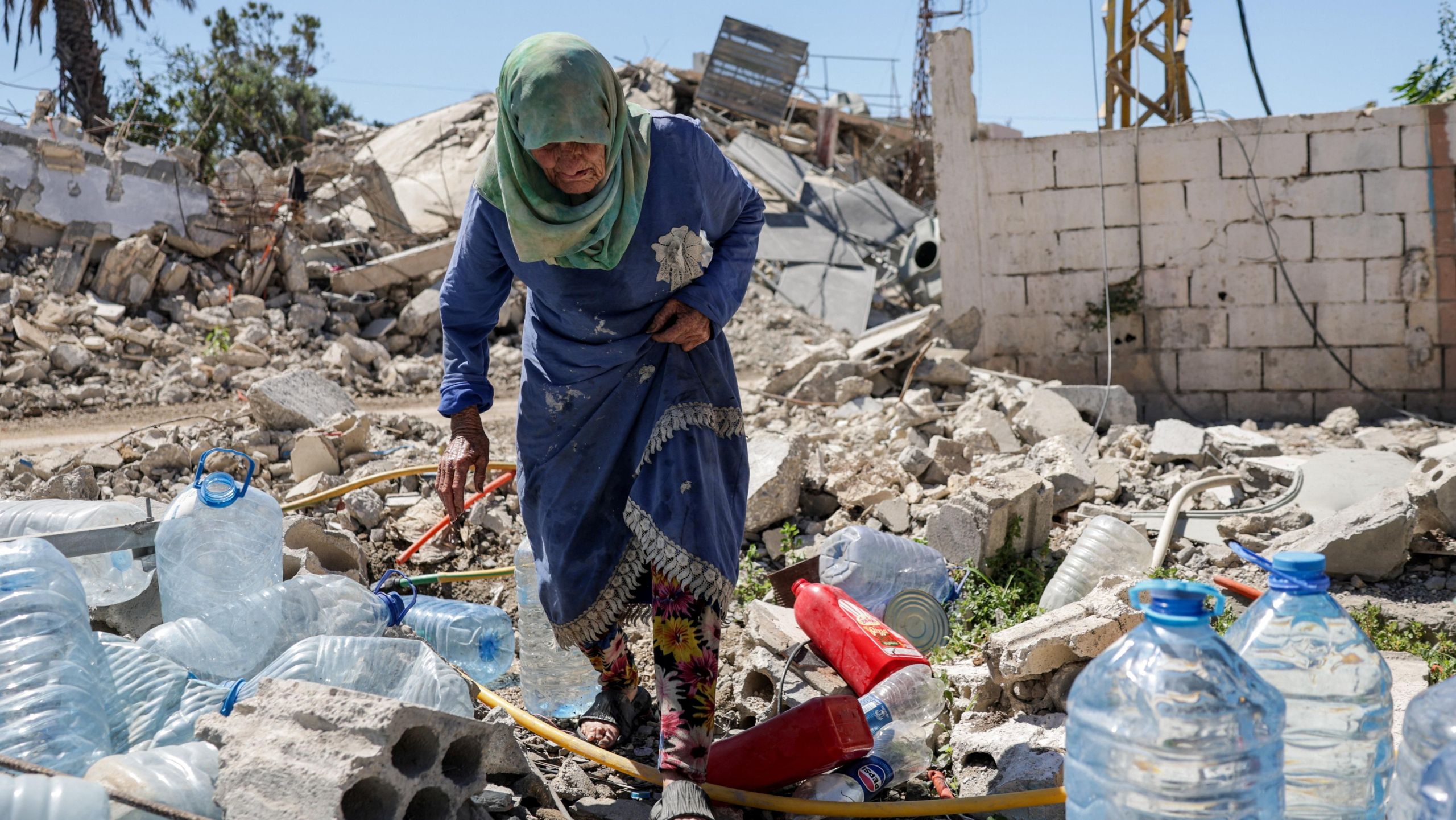
The Israel-Lebanon ceasefire violation alleged on Tuesday has put fresh strain on a fragile truce, after Israeli gunfire killed two people in southern Lebanon. The shooting prompted Iran-backed Hezbollah to accuse Israel of breaching a ceasefire that had largely held since Sunday, raising fears about the durability of the broader peace effort.
This article covers an active armed conflict in which the basic facts are contested by the parties involved. Readers should keep in mind that accounts from each side differ significantly.
A Deadly Break in the Calm
The shooting marked Lebanon’s first fatalities in three days, interrupting what had been the longest lull in fighting since the war began.
That war was ignited by the broader U.S.-Iran conflict on March 2, when Hezbollah opened fire at Israel in support of Tehran, prompting Israel’s second offensive in Lebanon since 2024. The recent calm had been significant enough that the highway south grew clogged with cars Tuesday, as displaced people felt encouraged to return home despite lingering concerns and the continued presence of Israeli forces deep inside Lebanon.
Competing Accounts of the Shooting
As is often the case in this conflict, the two sides offered sharply different versions of what happened.
According to the local mayor and Lebanon’s state news agency NNA, Israeli soldiers opened fire on a group of people near a bulldozer that was clearing a road in the al-Deir neighborhood of Nabatieh al-Fawqa.
The Israeli military told a different story. It said its troops fired warning shots at four people on a bulldozer and motorcycle who had crossed into the zone Israeli forces still hold in southern Lebanon, describing them as “Hezbollah terrorists operating under civilian cover.” The military said that after the group continued to approach, additional fire was used to remove the threat.
In a separate incident, the Israeli military said it struck armed terrorists who posed an immediate threat to soldiers in the Ali al-Taher ridge area, located within the same part of the south.
Hezbollah, for its part, said two civilians were killed in the Nabatieh al-Fawqa shooting and accused Israel of violating the ceasefire. Notably, the group did not say whether it intended to respond.
Why Lebanon Matters to the Bigger Picture
The violence carries implications well beyond Lebanon’s borders, because the conflict there is deeply entangled with the broader U.S.-Iran negotiations.
Tehran has demanded that Israel halt its attacks in Lebanon as part of its interim deal with Washington, effectively tying the fate of the wider talks to the Lebanon conflict. Iran’s ambassador to the United Nations in Geneva, Ali Bahreini, underscored this point when asked about the latest incident.
Bahreini warned that any violation of the memorandum of understanding in Lebanon would create challenges for peace talks. He insisted that Lebanon was “an unquestionable part of the agreement,” arguing that whatever happens there affects the entire process, and that the United States should use all its leverage to make Israel stop its attacks.
Efforts to Hold the Truce Together
Diplomats are working to shore up the fragile ceasefire. A joint statement issued at the end of U.S.-Iranian talks in Switzerland said the parties had agreed to create a “de-confliction cell” to ensure adherence to the end of hostilities in Lebanon.
On Tuesday, U.S. Vice President JD Vance and Secretary of State Marco Rubio told Lebanese President Aoun in a phone call that they were committed to forming this cell to solidify the ceasefire, though details about its formation and operation remained under review.
Israel, however, signaled it would not relinquish its freedom to act. Prime Minister Benjamin Netanyahu said Monday that troops had full freedom of action to thwart any Hezbollah threat against them or Israeli citizens, and that they would remain in Lebanon for “as long as is necessary.” Adding to the day’s tension, a separate Israeli drone strike Tuesday afternoon hit a parked car in southern Lebanon, though no casualties were reported.
Civilians Caught in the Uncertainty
For ordinary Lebanese, the shaky ceasefire has created a painful mix of hope and fear.
Nabatieh and the nearby Ali al-Taher ridge have been focal points of heavy fighting in recent weeks as Israeli forces sought to advance. The broader conflict has forced some 1.2 million people from their homes, according to Lebanese authorities.
The human stories capture the precarious moment:
- Zein Ghandour, the mayor of Nabatieh al-Fawqa, said residents had begun returning to check on their homes but were being urged to stay away after Tuesday’s shooting. “People were scared,” he said.
- In the southern town of Zrarieh, local official Rida Abed al-Khalik said hundreds of families had returned, with more expected depending on the outcome of talks in Washington between Lebanese and Israeli officials.
- In the nearby village of Toura, an official said 60 to 70 percent of residents had returned, though some had no homes left to return to.
The Human Toll
The cost of the conflict has been heavy on both sides. According to the Lebanese health ministry, Israeli attacks in Lebanon have killed more than 4,100 people, including 773 women, children, and healthcare workers, though the toll does not specify how many combatants are among the dead.
On the Israeli side, the death toll from this round of hostilities with Hezbollah includes at least 32 soldiers and four civilians.
A Truce Hanging in the Balance
The alleged Israel-Lebanon ceasefire violation illustrates just how fragile the current calm remains. With each side describing the same events in incompatible terms, and with the Lebanon conflict bound tightly to the larger U.S.-Iran negotiations, a single incident carries the potential to unravel a much broader diplomatic effort.
As displaced families weigh whether it is safe to return home, the coming days and the success or failure of the proposed de-confliction cell may prove decisive in determining whether this fragile truce can hold or whether the region slides back toward wider conflict.
Author