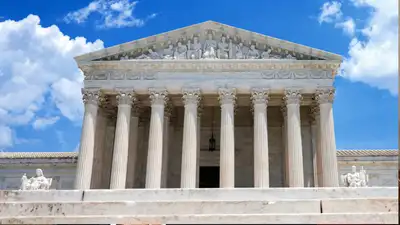
Hawaii handgun law restrictions were struck down by the U.S. Supreme Court on Thursday, marking the latest decision in which the justices have moved to expand gun rights across the country. The ruling invalidates a measure that limited where licensed gun owners could carry handguns and could put similar laws in other states on shaky ground.
What the Court Decided
In a 6-3 ruling driven by its conservative majority, the Supreme Court found that Hawaii’s law violated the Second Amendment’s guarantee of the right to keep and bear arms. The measure had required gun owners to obtain a property owner’s express permission before carrying a handgun onto private property that is open to the public, such as most businesses.
The decision reversed a lower court ruling that had concluded the law likely passed constitutional muster. Notably, the challenge was backed by the Trump administration at the Supreme Court level.
Writing for the majority, Justice Samuel Alito argued that the law undermined a core constitutional protection, framing it as an obstacle to Americans carrying firearms for self-defense in their everyday lives. He concluded plainly that the measure was unconstitutional.
How the Case Reached the Court
The legal fight began shortly after Hawaii’s Democratic governor signed the measure in 2023. Three residents holding concealed-carry licenses, along with a Honolulu-based gun-rights advocacy group, filed suit to challenge it within weeks.
The path through the courts was uneven:
- A federal judge initially blocked the restrictions on a preliminary basis.
- The San Francisco-based 9th Circuit Court of Appeals largely sided against the challengers.
- That appellate ruling pushed the plaintiffs to take their case to the Supreme Court.
The challengers leaned heavily on the Supreme Court’s landmark 2022 decision in New York State Rifle & Pistol Association v. Bruen. That ruling established that the Second Amendment protects the right to carry a handgun outside the home for self-defense, and it created a new standard: firearms laws must align with the nation’s historical tradition of gun regulation rather than simply serve an important government interest.
A Sharp Divide Among the Justices
The court’s three liberal justices dissented forcefully. Justice Ketanji Brown Jackson, joined by Justice Sonia Sotomayor, accused the conservative majority of distorting the Bruen framework into something that allows judges to override the decisions of elected lawmakers by elevating firearm access above competing concerns.
Jackson argued that the ruling revealed a clear priority, suggesting the majority was more interested in protecting guns than in consistently applying legal principles.
Reactions From Both Sides
The decision drew predictably divided responses.
Supporters of the challenge celebrated the outcome. An attorney for the plaintiffs described the Hawaii measure as effectively a ban on carrying firearms in public and said the ruling vindicated his clients’ rights.
Gun-control advocates expressed disappointment. A lawyer with the Giffords Law Center, which had filed a brief supporting Hawaii, stressed that the law was never about banning firearms outright. Instead, he said, it reflected the straightforward idea that property owners should be able to decide whether to allow guns in spaces where their families and communities gather. He added that the ruling still leaves some avenues open for property owners to exercise that choice.
Hawaii officials voiced disappointment but signaled they would comply. The state’s attorney general’s office said it would respect the decision while continuing to pursue what it called commonsense firearm regulation consistent with the Second Amendment.
Part of a Broader Trend
The Hawaii ruling fits into a years-long pattern of the Supreme Court taking an expansive view of Second Amendment protections. In a country deeply divided over how to confront persistent gun violence and frequent mass shootings, the court issued major gun-rights rulings in 2008, 2010, and 2022.
This term alone has featured more than one significant Second Amendment case:
- Earlier in June, the justices narrowed the reach of a long-standing federal law that bars certain drug users from possessing firearms, rejecting an argument from the Trump administration that had threatened the gun rights of many Americans who use marijuana and own guns.
- A year earlier, the court upheld a federal regulation targeting largely untraceable “ghost guns,” which can be assembled at home without serial numbers or background checks. That case, however, was decided on statutory rather than Second Amendment grounds.
One Issue Left Unresolved
The court declined to address one notable piece of the challenge. It did not take up the portion of the law that banned carrying handguns in so-called sensitive places such as beaches and bars. That means those particular restrictions remain outside the scope of Thursday’s decision, leaving some questions for future litigation.
What It Means Going Forward
The ruling’s reach likely extends well beyond Hawaii. Several other states maintain similar laws governing firearms on private property open to the public, and those measures could now face fresh legal challenges in light of the decision.
For gun-rights advocates, the outcome represents another step in steadily broadening where and how Americans can carry firearms. For supporters of stricter regulation, it underscores a growing concern that courts are increasingly constraining the ability of states to set their own firearm policies. With the legal landscape continuing to shift, the debate over balancing individual rights and public safety shows no sign of cooling.
Author