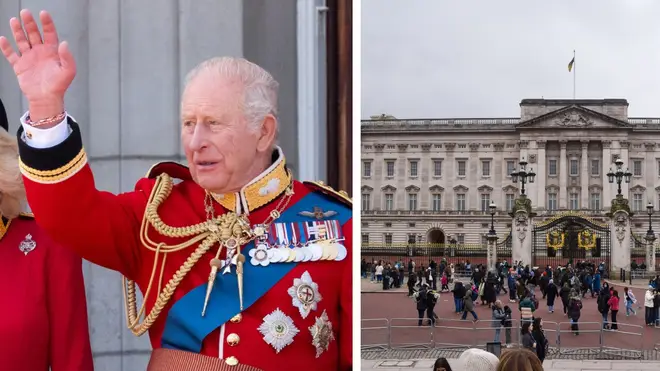
Buckingham Palace renovation, a sweeping £369m project nearing completion, will not result in King Charles and Queen Camilla moving into the historic residence after all, according to the latest royal accounts. The decision marks a notable break from royal tradition and has reignited debate over how the monarchy is funded.
A Surprising Decision
When the costly refurbishments are completed next year, Buckingham Palace will not become the King and Queen’s home. The palace, which has served as the official London residence of the UK sovereign since 1837, will continue to operate as the administrative headquarters of the monarchy. However, the King has decided that nearby Clarence House will remain his official residence.
Officials said the choice was partly made to allow greater public access to the landmark. The 10-year refurbishment, funded through a temporary increase in the Sovereign Grant, is due to be completed in March.
Why the King Is Staying Put
Several practical considerations appear to have shaped the decision. The King has lived at Clarence House, which stands beside St James’s Palace and was once the Queen Mother’s home, since 2003, and has shared it with the Queen since their 2005 marriage.
Now both in their late 70s, neither is understood to have wanted the upheaval of relocating themselves and their staff to Buckingham Palace. Security concerns also played a role. Had the King taken up residence there, it would have limited both the number of visitors and the areas they could view.
By keeping the palace free of a resident monarch, officials hope it can open for longer periods and generate more income. The State Rooms currently welcome visitors each summer and on selected dates throughout the year, with proceeds going to the Royal Collection Trust, a charity responsible for caring for and conserving royal art.
What the Renovation Involves
The extensive project addresses long-overdue infrastructure needs. Ageing cables, lead pipes, wiring, and boilers are being replaced, many for the first time in 60 years, following concerns about potential fire and water damage.
Despite stepping back from living there, the King will continue to use the palace extensively. A palace spokesperson said His Majesty retains huge affection for Buckingham Palace and deep respect for its role in royal and public life, adding that it would remain a buzzing hive of royal activity in every other way. The King will keep hosting a range of events there, including:
- State banquets and garden parties
- Receptions and audiences with the prime minister
- Meetings with new ambassadors
A Change That Looks to the Future
James Chalmers, keeper of the Privy Purse, explained that under the new plans, the King and Queen would have access to private rooms within the palace where they could retire during a working day. Those rooms, he noted, could potentially serve as residential accommodation in the future.
Chalmers framed the move as both a departure from the past and a recognition of what lies ahead, while stressing that in all other respects, Buckingham Palace would remain the ceremonial and operational center of royal life.
Criticism Over Royal Funding
The announcement has drawn pointed criticism from those skeptical of royal spending. Norman Baker, a former Liberal Democrat Home Office minister and longtime critic of royal funding, argued that if the royals are not living in the palace, it should open to the public year-round, with all visitor proceeds going to the Treasury to help cover the cost of the refurbishment.
Graham Smith, CEO of the anti-monarchy campaign group Republic, was similarly critical, noting that the government agreed to spend £369m on the renovation only for the King to decline to use it as a home.
The accounts containing the announcement also revealed notable details about the King’s finances. He has become the first monarch to release tax payment figures, showing he ranked among the UK’s top 100 taxpayers in 2024-25, paying £12.9m for that period along with £11.7m the year before.
The documents also outlined changes to the Sovereign Grant, which funds the monarchy. A temporary uplift introduced in 2017 to pay for the palace overhaul will wind down as the work concludes. The overall grant is set to fall from £137.9m to £99.9m in 2027-28, though that figure remains nearly double the core grant of £51.8m in 2024-25 and above the £72.1m core grant in 2025-26.
A Break From Tradition
The decision runs counter to longstanding royal expectations. There had been a general assumption that the King would live at Buckingham Palace once the renovation was complete, and not since the reign of Queen Victoria has a monarch chosen to live away from it.
Victoria was the first monarch to use the palace as the official seat of court. After marrying Prince Albert, she transformed the 775-room building to accommodate their family, entertain guests, and conduct official business, though she spent long periods away following her husband’s death.
The palace was also closely tied to Queen Elizabeth II, who gave birth to both Charles and Prince Andrew there and kept an apartment in the residence. The late Queen last stayed overnight at the palace in March 2020, spending much of the Covid lockdown with the Duke of Edinburgh at Windsor Castle.
The Bottom Line
King Charles’s decision to remain at Clarence House signals a quieter, more modern approach to the monarchy’s most iconic building, one that treats Buckingham Palace less as a home and more as a working and ceremonial hub open to the public. While officials frame it as a forward-looking choice that balances practicality, security, and public access, critics see an opportunity to push for greater transparency and a better return for taxpayers on a costly investment. Either way, the move quietly rewrites a chapter of royal tradition that had endured for generations.
Author