The NASA Swift telescope rescue has captured the attention of the space community as the agency prepares to spend $30 million on an unprecedented mission to save an aging observatory before it tumbles back to Earth. The bold operation raises a fascinating question: is it worth rescuing a 22-year-old telescope that has long outlived its original purpose?
A Telescope on the Brink
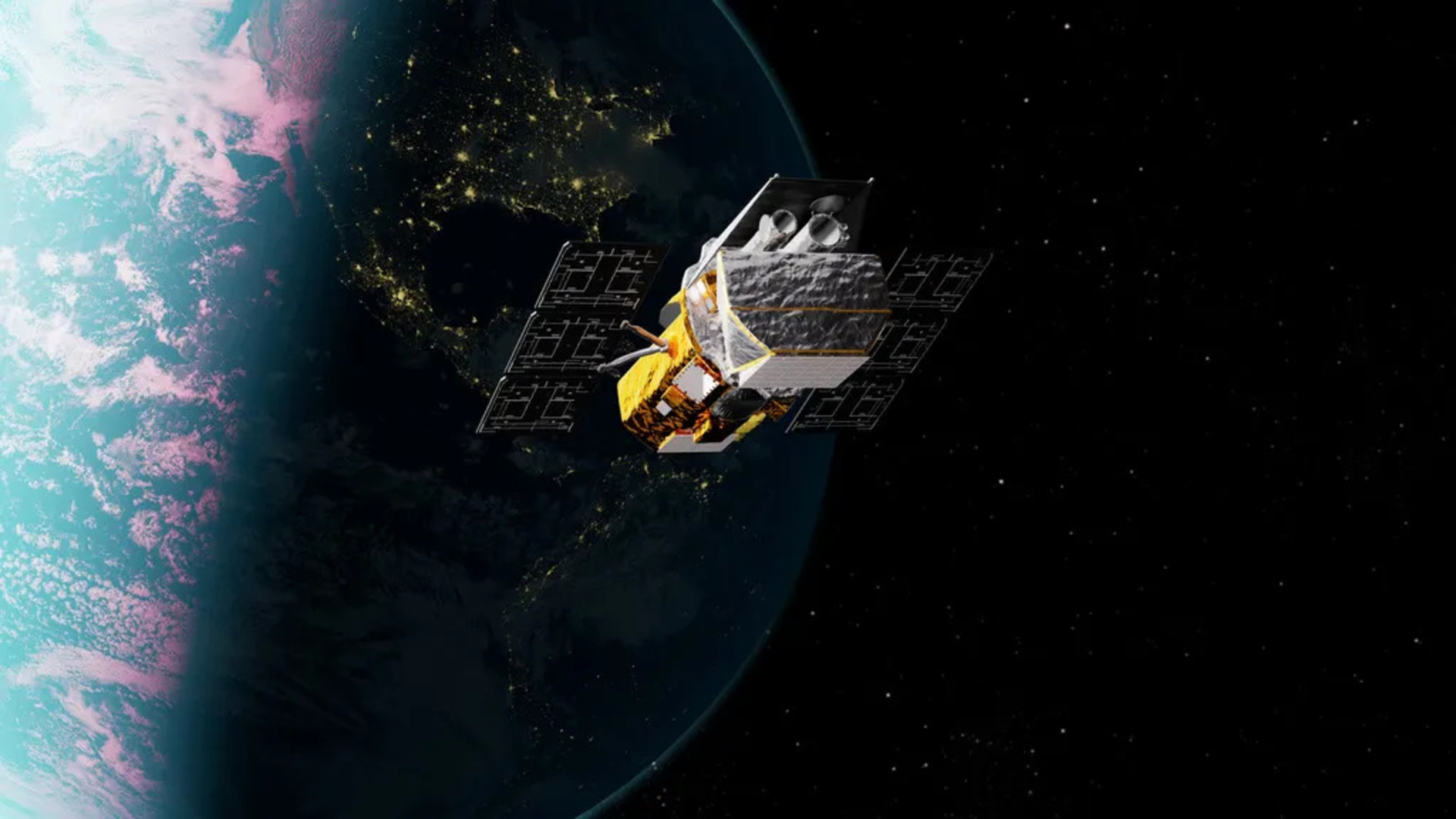
On the surface, the decision might seem straightforward. The Swift Observatory, launched in 2004 for a planned two-year mission, is now nearly 22 years old and falling out of space. Earth’s outer atmosphere, energized by solar storms, has created higher-than-expected drag on the satellite, dragging it toward a fiery end by year’s end.
For $30 million, NASA could attempt to save the telescope, a sum that might tempt some to simply let nature take its course. After all, many people replace their cars for far less and far sooner. So why fight the inevitable?
Why Swift Is Worth Saving
According to NASA, Swift is anything but ordinary. For more than two decades, the observatory has served as a kind of orbital sentinel, constantly scanning the cosmos for gamma-ray bursts and capable of pivoting to point at these short-lived but extraordinarily powerful explosions at a moment’s notice.
What makes Swift irreplaceable is a capability no other space observatory can match. Not even the celebrated Hubble Space Telescope or the James Webb Space Telescope can respond as quickly. NASA’s Astrophysics Division director, Shawn Domagal-Goldman, emphasized that the agency did not want to set a precedent that every spacecraft leaving orbit must be boosted, since regular deorbiting is a natural part of the space ecosystem. But he stressed that Swift was no ordinary spacecraft, describing it as an observatory with unique astrophysics capabilities able to swiftly pivot across the night sky to find things that “go boom in the night.”
A First Responder of the Cosmos
NASA originally built and launched Swift in 2004 for $250 million. Since then, it has acted as a cosmic first responder, rapidly spotting distant gamma-ray bursts that can last mere seconds yet unleash more energy than our sun will produce in its entire lifetime. Its success has led NASA to extend its mission repeatedly.
The observatory’s name reflects its defining strength. Swift Principal Investigator Brad Cenko explained that the name is not an acronym but rather a nod to its ability to rapidly and autonomously repoint its narrow-field X-ray and ultraviolet telescopes almost anywhere in the sky. The telescope was later renamed the Neil Gehrels Swift Observatory in 2018, honoring its first principal investigator, who died the previous year.
The contrast with other telescopes illustrates Swift’s value. While Hubble can capture sharper images, it can take up to two days to point at a new target. Swift accomplishes the same in mere minutes, making it, in Cenko’s words, NASA’s true first responder.
A Legacy of Discovery
Swift’s contributions to science have been profound. Its observations helped confirm that the universe’s heaviest elements, including precious metals like platinum and gold found in jewelry, were forged in the explosive power of gamma-ray bursts, which scientists believe come from supernovas and neutron-star mergers.
In 2022, Swift discovered a gamma-ray burst so intense that scientists nicknamed it the “BOAT,” short for Brightest of All Time. At the time, it stood as the most powerful space explosion ever observed. Yet now, this remarkable instrument faces destruction unless something is done.
The Rescue Plan
NASA’s rescue effort, fittingly named Swift Boost, is scheduled to launch on June 30, about three days later than originally planned. The mission will fly aboard the very last Pegasus XL rocket, an air-launched booster built by Northrop Grumman, carried aloft by the final L-1011 Stargazer carrier plane from a U.S. military test site in the Marshall Islands.
To pull off the rescue, NASA turned to an untested Arizona-based company, Katalyst Space, selected just nine months ago in September 2025. The timeline is staggering. In that brief window, the company had to:
- Build a brand-new spacecraft from scratch
- Launch it on a rendezvous mission to an observatory never designed to be approached by another vehicle
- Push Swift to a higher orbit that would guarantee at least five more years of scientific life
Even Swift’s top scientist admits the stakes have cost him sleep. Cenko acknowledged having several sleepless nights, though he added that working with the team gave him great confidence.
Meet “Link”
Katalyst’s rescue ship, called Link, is a compact spacecraft roughly the size of a refrigerator. It comes equipped with three main ion engines, three robotic arms, and a suite of sensors and thrusters designed to capture the falling observatory.
The spacecraft went from a blank sheet of paper to a finished vehicle attached to a rocket in record time. Kieran Wilson, Link’s principal investigator at Katalyst, credited the exceptional urgency of the Swift requirements for driving the rapid development, with the top priority being readiness to launch before Swift fell from space.
A Race Against Time
The clock is unforgiving. Swift was originally placed in an orbit 375 miles above Earth, but with no engines of its own to maintain altitude, it is now on a path to fall below 186 miles by October. Beyond that point, Link may no longer be able to reach it in time.
To prepare, the teams have leaned heavily on testing and computer modeling. Wilson noted that Katalyst relied on NASA’s expertise to avoid simple mistakes and maximize the chances of success, acknowledging that many things could go wrong as the mission added significant complexity.
If everything goes according to plan, Link will spend several weeks in orbit running tests before attempting to rendezvous with Swift, grappling onto it with its robotic arms, and spending up to three months slowly raising its orbit.
All-or-Nothing Stakes
Success would mark a genuine first in space history: reboosting an ailing telescope using a spacecraft developed in under a year to rescue a target meant to be left in space forever. Katalyst sees major commercial potential in such a service and already holds a U.S. Space Force contract to demonstrate a similar capability for larger spacecraft in 2027.
And if the mission fails? Swift will simply fall out of space on its own, which it was already destined to do. To slow its descent, the science team even placed Swift in a low-power mode in February, halting all research operations.
For Cenko, the calculation is clear. He reminded himself that the alternative is reentry into Earth’s atmosphere, making the risk relatively low. Trading a few more months of paused science against the potential of many additional years of discovery, he concluded, was a no-brainer.
As the launch approaches, the world watches to see whether this daring $30 million gamble will breathe new life into one of NASA’s most valuable cosmic first responders, or whether the aging telescope’s remarkable journey will finally come to an end.
Author