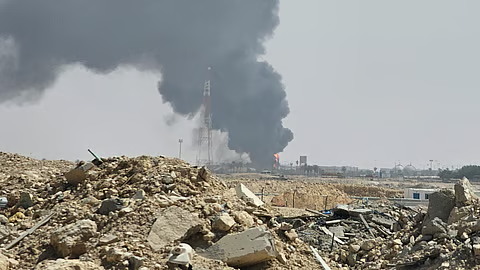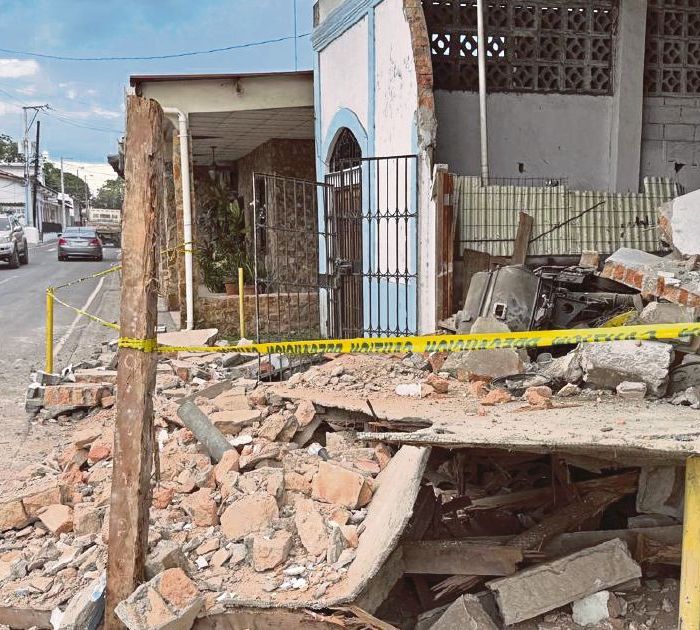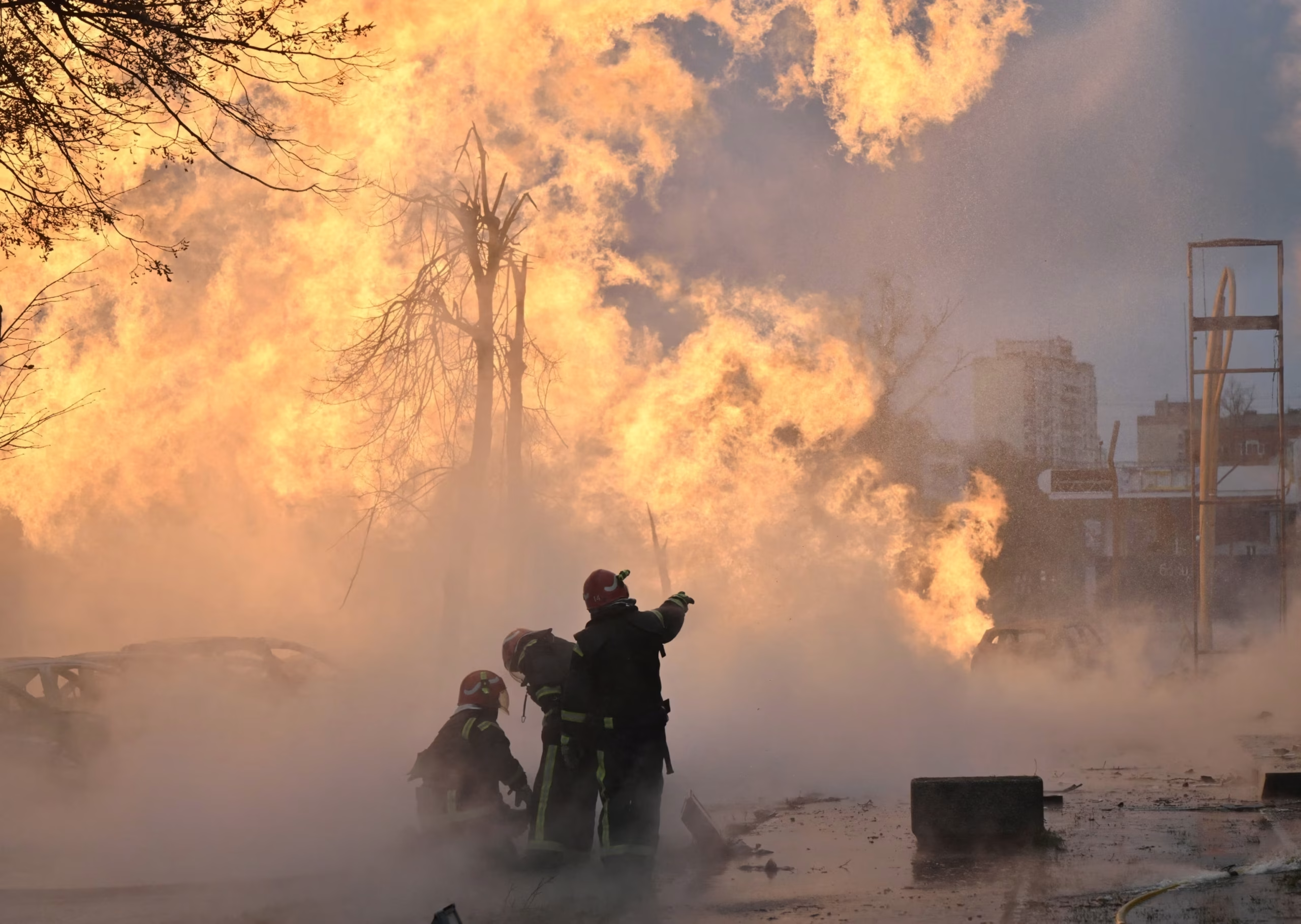
The explosions came before the sirens.
That detail, more than any other, defines the Kyiv missile attack that struck the Ukrainian capital in the early hours of July 11. Journalists on the ground reported hearing blasts at around 3:38 a.m. Air raid alerts did not sound in Kyiv until 3:40 a.m., and in Kyiv Oblast until 3:54 a.m.
By then, ballistic missiles had already hit.
Eleven people were injured, among them an 11-year-old boy.
The Scale of the Assault
Ukraine’s Air Force detailed what was launched overnight.
Russia fired 12 missiles in total:
- Six Iskander-M and S-400 ballistic missiles
- Four Kh-59 and Kh-69 cruise missiles
- Two Kh-31 anti-radiation missiles
Alongside these came 121 attack and decoy drones.
Ukrainian air defenses performed strongly against much of it — intercepting 111 drones and two of the guided missiles.
But the ballistic missiles got through.
Zelensky’s Warning
President Volodymyr Zelensky acknowledged the gap directly.
“Most of the targets were shot down by our defenders, but not the ballistic missiles,” he said.
That distinction is the entire problem. Drones are slow and interceptable. Cruise missiles are manageable. Ballistic missiles descend at speeds that leave almost no margin for response — which is why they arrive before the sirens.
Zelensky used the moment to press Ukraine’s allies on commitments made at the NATO summit.
He said Ukraine expects partners to fulfill the agreements reached on support packages designed to protect civilians, and called for rapid movement on two specific items: Patriot licenses, and the joint European anti-ballistic project.
The request is not abstract. It is a direct response to what happened at 3:38 a.m.
Where the Missiles Landed
Local authorities confirmed that Russian ballistic missiles struck three districts of the capital.
Mayor Vitali Klitschko reported damage in the Dniprovskyi district and confirmed the attack involved ballistic weapons. Journalists heard further explosions around 3:55 a.m.
Kyiv City Military Administration head Tymur Tkachenko said a building was damaged in the Sviatoshynskyi district. He later reported a fire in an office building in the Solomianskyi district.
The Casualties
Klitschko said four of the eleven injured were hospitalized. The remaining seven were treated at the scene.
Among the wounded was a child of eleven.
A Pattern, Not an Incident
This was not an isolated strike. It is the latest entry in a sustained campaign against the Ukrainian capital.
Just two days earlier, on July 8, Russia launched drones and ballistic missiles at Kyiv, killing four people and injuring fifteen.
Before that, attacks came on July 2 and July 6, killing and injuring dozens.
In roughly ten days, the capital has absorbed four significant bombardments.
Why Ballistic Missiles Change the Equation
Understanding why Zelensky’s plea centers so heavily on Patriots requires understanding what ballistic missiles actually do.
They follow a high arcing trajectory and re-enter at extreme speed. Standard air defense systems designed for drones and cruise missiles simply cannot engage them effectively.
Patriot batteries can. So can dedicated anti-ballistic systems — which is precisely why Ukraine has been pushing for both licenses to manufacture Patriot interceptors domestically and participation in a joint European anti-ballistic effort.
The alternative is what happened this week: air defenses shooting down 111 drones successfully while the weapons that actually hit the city pass through untouched.
The Warning Gap
The timing sequence deserves emphasis, because it captures the human reality of this kind of attack.
Explosions: 3:38 a.m.
Kyiv air raid alert: 3:40 a.m.
Kyiv Oblast alert: 3:54 a.m.
Further explosions: 3:55 a.m.
Residents were asleep. The sirens that exist to send them to shelter sounded after the first strikes had already landed. For ballistic weapons, the entire early-warning architecture is functionally too slow.
What Comes Next
Fires were extinguished. Buildings were assessed. The injured were treated. Kyiv, as it has done repeatedly, absorbed the night and resumed the day.
The strategic question remains where Zelensky placed it: whether Ukraine’s partners will deliver, and how quickly, on the air defense commitments they have already made.
Until they do, the pattern is likely to hold — and the sirens will keep arriving late.
Author