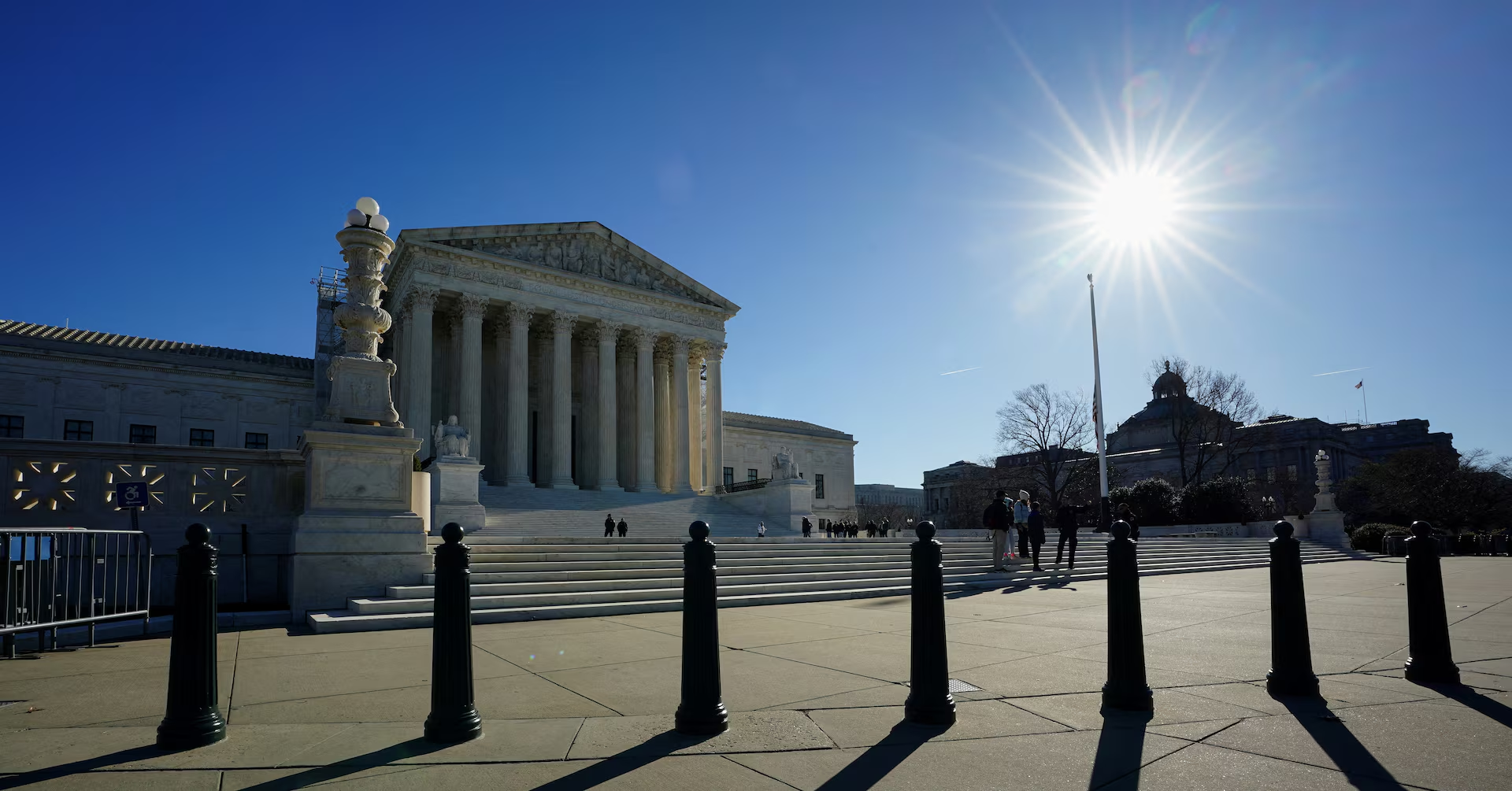
The Alabama nitrogen gas execution of a convicted murderer was halted at the last moment Thursday night when the Supreme Court blocked the state from carrying it out, handing a setback to officials and reigniting questions about whether this relatively new method is constitutional. The unsigned ruling spares Jeffery Lee for now and could open the door to a much larger legal battle.
A Last-Minute Reprieve
The Supreme Court rejected an emergency appeal from Alabama officials after lower courts found that using nitrogen gas in this case was “likely unconstitutional.” As is common with such emergency decisions, the order was unsigned and offered no explanation. Three conservative justices — Clarence Thomas, Samuel A. Alito Jr. and Neil M. Gorsuch — dissented.
The timing made the decision especially notable. Alabama had planned to execute Lee, 49, at 6 p.m. Thursday. Had it proceeded, he would have become the eighth inmate executed by nitrogen in Alabama and the ninth nationwide.
It is rare for the Supreme Court to stop an execution at the eleventh hour. Usually these emergency requests come directly from prisoners. Here, the situation was reversed: a federal appeals court had already blocked the execution, and it was Alabama asking the high court to overrule that decision.
Lee learned the news in an emotional phone call to his mother, captured on video by his legal team, in which he credited his faith for the outcome.
Officials Vow to Press On
State leaders were quick to stress that the relief was only temporary. Governor Kay Ivey expressed disappointment that the state could not move forward with what she called Lee’s chosen method, while insisting she remained committed to securing justice for his victims.
A Battle Over How, Not Whether
At the heart of the case is not Lee’s death sentence itself, but how it would be carried out. Lee challenged claims that nitrogen hypoxia is fast and painless, even proposing death by firing squad as a quicker, less agonizing alternative.
The legal path to Thursday’s decision was winding:
- Late last month, U.S. District Judge Emily Marks ruled the execution could proceed, finding the gas did not amount to cruel and unusual punishment.
- The U.S. Court of Appeals for the 11th Circuit disagreed and sent the case back to her.
- On Tuesday, Judge Marks reversed course, agreeing that a firing squad using four .30-caliber bullets aimed at the heart would significantly reduce the risk of severe pain.
- The appeals court affirmed her new decision on Wednesday night.
Alabama argued it had no protocol, legislative approval, or staffing for a firing squad. But Judge Marks pointed out that the state already permits and has experience with lethal injection and electrocution.
The Irony of Lee’s Own Choice
State officials emphasized that Lee himself had originally selected nitrogen gas. He did so after Alabama passed a 2018 law allowing inmates to choose the method as an alternative to lethal injection.
Once the method was actually put into practice, however, Lee joined other condemned inmates in lawsuits challenging its constitutionality. Their filings cited witness accounts of prisoners convulsing, shaking violently, and gasping for breath during executions.
The Crime Behind the Case
Lee has spent more than 25 years on death row. A jury found that in 1998 he stormed into a pawnshop near Selma with a sawed-off shotgun and killed two people.
The store belonged to Jimmy Ellis, who had gained some fame outside Alabama as a masked singer called Orion, performing under the claim that he was Elvis Presley living in secret after faking his death. Lee fatally shot Ellis and Elaine Thompson, Ellis’s former wife. A third victim, Helen King, was shot but survived.
There is a further legal wrinkle. The jury had voted to sentence Lee to life in prison, but the trial judge imposed the death penalty instead through a practice known as judicial override. Alabama was the last state to allow judges that power before changing the law in 2017. Some legal experts have argued it is unfair to execute Lee under a standard the state has since abandoned.
Even so, officials have refused to back down. Attorney General Steve Marshall said the people of Alabama have not forgotten the victims and that anything less than carrying out the sentence would fall short of justice.
A Method Under Growing Scrutiny
For death penalty opponents, the ruling was an incremental but meaningful win that could strengthen broader challenges to nitrogen hypoxia.
States have increasingly turned to nitrogen gas as lethal injection drugs became harder to obtain. South Carolina, for example, has revived the firing squad, using it three times since 2025.
With nitrogen hypoxia, a mask forces the inmate to breathe only nitrogen, cutting off oxygen and, supporters say, causing unconsciousness within minutes. Advocates have promoted it as fast, less painful, and less error-prone than other methods.
Witnesses tell a different story. Some have described inmates writhing and gasping for extended periods. The Rev. Jeff Hood, a spiritual adviser to Alabama death row inmates, recounted watching one prisoner appear to suffocate and struggle to breathe for 19 minutes during an execution last year.
In a statement Thursday night, Hood expressed hope that the outcome in Lee’s case marked “the beginning of the end” of nitrogen executions, calling the courts’ decisions a moment when righteousness, in his words, had shown up.
What Comes Next
For now, Lee’s execution is on hold, but the underlying death sentence stands. The legal fight has shifted decisively toward how states may carry out executions, and Thursday’s ruling could become a turning point in the national debate over nitrogen hypoxia. Whether it truly signals the method’s decline, as critics hope, will depend on how courts handle the cases still to come.
Author