After a tense weekend of military strikes and sharp threats, signs point to a possible pause, with reports that the US and Iran will stand down for now while negotiations continue. Two US officials say talks remain “on track” despite the latest flare-up, though Tehran’s exact position is still murky. The exchange near the Strait of Hormuz raised fears that a fragile understanding between the two nations could unravel.
A Tense Pause After Renewed Strikes
The weekend saw both Washington and Tehran trade fire close to the strategically vital Strait of Hormuz, reigniting worries about a wider conflict. According to two US officials, the two sides will hold off on further action for the time being, and diplomatic efforts have not collapsed.
Still, there’s a notable gap in the picture. While American officials project cautious optimism, Iran has not clearly spelled out where it stands. That uncertainty leaves observers guessing about whether the calm will hold or prove temporary.
The recent military exchange put real strain on an earlier arrangement between the two countries. That initial agreement was meant to freeze hostilities for a 60-day window so negotiators could work toward a broader resolution. The weekend’s violence tested whether that framework could survive under pressure.
The Strait of Hormuz Remains a Flashpoint
Few stretches of water carry as much global importance as the Strait of Hormuz, and right now it sits at the center of the standoff. Shipping data shows that traffic through the waterway is still running at only a fraction of what it was before the war.
Part of the problem is confusion over who’s actually in charge. Different authorities are competing to manage the passage of vessels, which puts ship operators in a tough spot as they try to figure out which route is safest. Adding to the tension, Iran’s foreign minister has insisted the strait will stay under Tehran’s “exclusive management,” a claim likely to keep the dispute simmering.
The uncertainty has real consequences:
- Reduced shipping traffic disrupts global energy supplies
- Operators face difficult and risky routing decisions
- Competing claims of authority heighten the chance of further incidents
Conflict Spills Into Lebanon
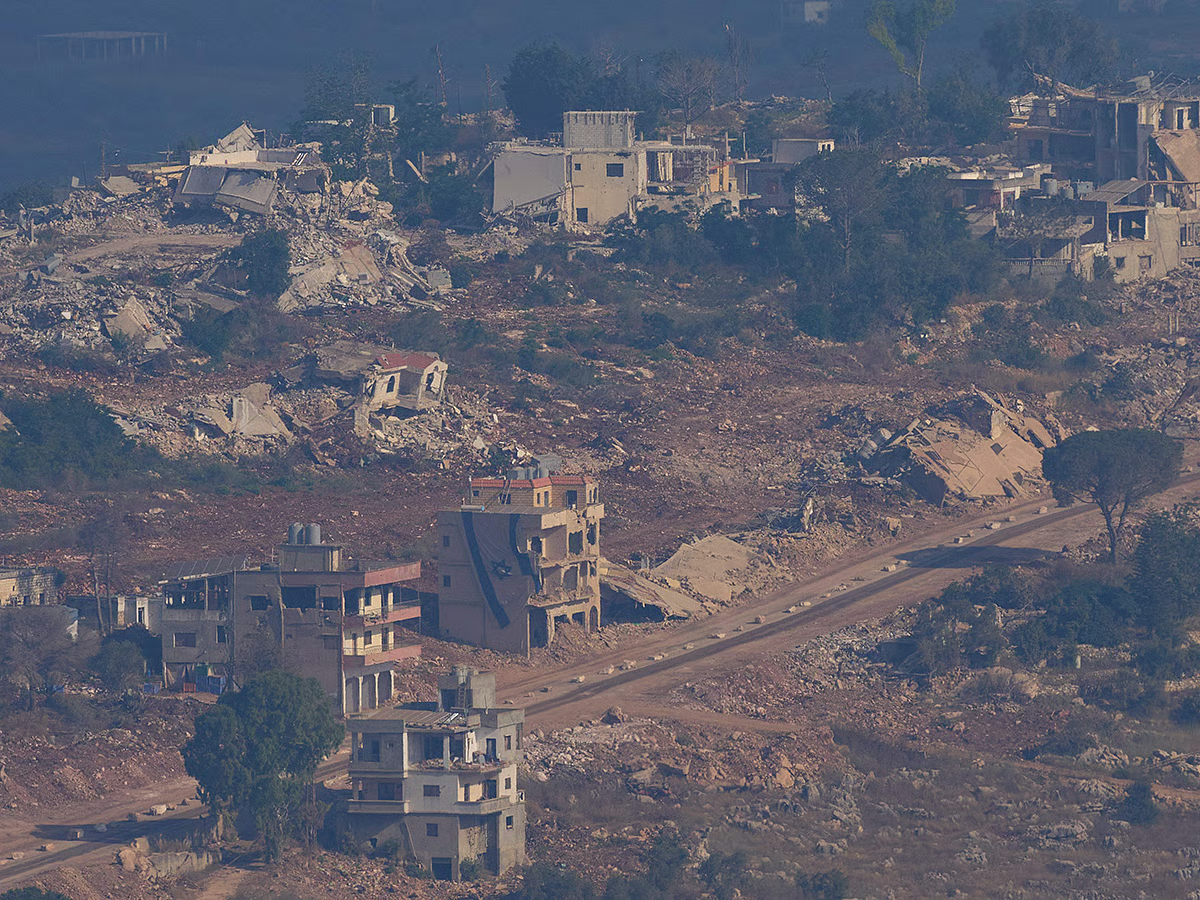
The tensions aren’t confined to the waters near Iran. Over the weekend, fighting between Hezbollah and Israel continued inside Lebanon, even after the two sides had reached a recent agreement meant to ease hostilities.
Iran has tied the situation in Lebanon directly to its broader negotiations with the United States. Tehran is demanding a complete withdrawal of Israeli forces from Lebanese territory as a condition for any final deal. That demand adds another layer of complexity to talks that were already delicate, linking the fate of one conflict to the resolution of another.
Iran Says Billions in Frozen Assets Will Return
Amid the military back-and-forth, a significant financial development emerged from Tehran. Iranian President Masoud Pezeshkian announced that a sizable portion of Iran’s frozen assets held in Qatar would be returned to the country.
Speaking during meetings with senior clerics in the city of Qom, Pezeshkian was quoted by the semi-official Tasnim news agency. He said that $6 billion of the total $12 billion in Iranian resources parked in Qatar would be sent back, with efforts underway to recover the rest as well.
The claim ties directly into the memorandum the US and Iran agreed to earlier in the month. Under that document, Washington pledged to make Iran’s frozen or restricted funds fully available once the agreement was implemented. For Tehran, the return of assets locked up in foreign banks has long been a central demand throughout the negotiations.
CNN has reached out to the White House for comment on Pezeshkian’s announcement, and the response could offer clues about how closely the two sides’ accounts of the deal actually align.
Where Things Stand
For now, the situation rests on an uneasy balance. The reported decision to stand down offers a brief window of relief, but several unresolved issues continue to cast a shadow over the process. The contested control of the Strait of Hormuz, the ongoing violence in Lebanon, and the still-unclear status of Iran’s frozen assets all remain potential sticking points.
The key questions heading into the coming days include:
- Whether Iran publicly confirms its commitment to pausing hostilities
- How control of the Strait of Hormuz gets resolved
- Whether the Lebanon fighting derails the wider negotiations
- If the promised return of frozen assets actually moves forward
A Fragile Path Forward
What happens next depends largely on whether both sides can resist the pull toward escalation. The fact that talks are described as still being on track is encouraging, but the weekend’s strikes showed just how quickly the situation can turn.
Diplomacy and confrontation are unfolding side by side, and the months ahead will reveal whether the negotiating table can outlast the battlefield. For the moment, the world watches a tense standoff where a single misstep could undo weeks of careful progress.
Author