NATO unity is about to face one of its stiffest tests in years as alliance leaders prepare to gather in Ankara. At the heart of the challenge stands Secretary-General Mark Rutte, a man tasked with an increasingly delicate balancing act: holding 32 member nations together while keeping an unpredictable American president engaged. With disagreements simmering over defense spending, shrinking U.S. commitments, and the fallout from the Iran war, the upcoming summit could reveal whether the alliance still speaks with one voice.
A Charm Offensive in Washington
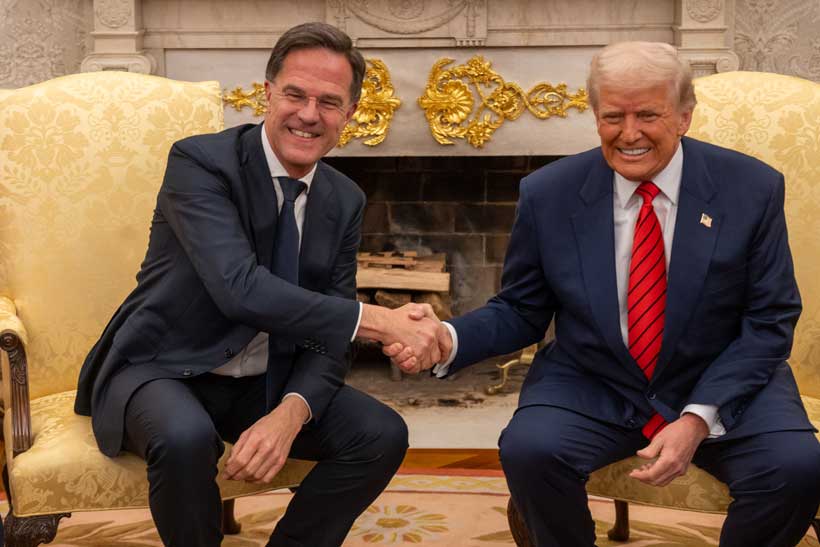
When Rutte arrived in Washington in late June, he came armed with a strategy — and plenty of flattery. As Donald Trump aired his frustrations about European allies dragging their feet during the conflict with Iran, the NATO chief responded not with pushback but with praise.
Standing before the cameras, Rutte gestured toward large display boards splashed with gold lettering, one of them proclaiming “The Trump Trillion.” His message was carefully crafted to appeal directly to the president’s sense of achievement. He credited Trump with driving an additional $1.2 trillion in defense spending from European allies and Canada since 2017, when the president first entered office.
The performance was pure salesmanship, and it revealed what has become Rutte’s defining mission: keeping Trump invested in an alliance the president has repeatedly questioned.
Why the Summit Matters
The gathering in Ankara, set to begin on July 7, arrives at a moment thick with uncertainty. Leaders from all 32 member states will convene against a backdrop of escalating tensions in the Middle East and Russia’s grinding war in Ukraine.
Adding to the unease, the United States has begun reviewing its military footprint across Europe. That move has left many European governments anxiously wondering just how committed Trump remains to their collective security.
Rutte’s approach to steadying the ship rests on three pillars:
- Flattering Trump and acknowledging his role in boosting alliance spending
- Emphasizing the tangible benefits NATO delivers to the United States
- Spotlighting the growing defense investments made by European members
His overriding aim is to avoid any public spats in Ankara and instead present a picture of solid, unshakable unity.
Selling NATO as Good Business
According to Claudia Major, a trans-Atlantic security expert at the German Marshall Fund, nervous leaders will be working hard to signal that the alliance remains strong while simultaneously trying to satisfy Trump and build a compelling case for NATO’s value.
That calculation likely explains why Rutte has pushed defense production to the forefront of this year’s agenda. He is expected to announce what he’s branding a “defense industrial revolution,” featuring tens of billions of dollars in fresh contracts and procurement deals for European nations eager to ramp up weapons manufacturing.
The strategy, Major explained, is designed to demonstrate that a genuine market exists for American defense industry and to frame NATO in economic terms Trump might find appealing. In other words, if the alliance can be sold as a moneymaker, perhaps the president will see the point of keeping it.
The Question of American Commitment
Whether flattery and business incentives will be enough remains far from certain. As Major put it, the one consistent lesson from Trump’s time in office is his capacity for disruption and the difficulty of predicting his next move.
That unpredictability was on full display at a defense ministers’ meeting in Brussels in June, when Defense Secretary Pete Hegseth announced a review of American troop deployments across Europe. Hegseth paired the announcement with a pointed warning, making clear that Washington would be watching allies closely.
He framed the review as a kind of test — one that some countries would fail while others passed with flying colors. His blunt tone reportedly ruffled feathers among the assembled ministers.
Managing a Delicate Transition
The review itself came as no surprise. European governments have long braced for a gradual pullback of the American presence on the continent. Their real worry centers on the pace of that withdrawal.
German Defense Minister Boris Pistorius cautioned against opening dangerous gaps in military capability during any transition, stressing the need for a coordinated, carefully synchronized road map rather than an abrupt exit.
Major echoed that concern, arguing that Europe urgently needs its own plan. If Washington decides to step back from its central role, she said, Europeans must move quickly to fill the void — especially given the persistent threat from Russia and the fragile geopolitical landscape surrounding the continent. Under sustained American pressure, European allies and Canada did raise defense spending by roughly 20% in 2025 compared to the previous year in real terms.
Ukraine Remains Center Stage
Beyond questions of spending and troop levels, securing continued support for Ukraine ranks high on the Ankara agenda. Leaders are weighing significant new funding commitments to bolster the country’s defenses.
Reports suggest that NATO’s European members and Canada are prepared to pledge 70 billion euros in military aid to Ukraine for both this year and next. Still, familiar tensions over burden-sharing linger, with Rutte repeatedly urging that the responsibility for aiding Ukraine be spread more evenly across the alliance.
For Major, though, the summit’s defining issue isn’t procurement or spending figures. It’s political unity. If the gathering puts division on display — if Trump publicly scolds an ally for insufficient spending or inadequate support during the Iran war — it would erode the alliance’s political cohesion and, with it, the credibility of NATO’s deterrence.
Reasons for Cautious Optimism
Despite the risks, there are hopeful signs. At last month’s G7 summit in France, Trump adopted a notably more cooperative posture, joining fellow leaders in backing tougher measures against Russia, including new sanctions targeting oil exports and the banking sector.
German Chancellor Friedrich Merz welcomed that outcome as an encouraging signal for Ukraine, suggesting it set a fresh tone of trans-Atlantic unity and might even crack open a rare window for peace.
The Real Test in Ankara
NATO leaders are hoping to recreate that spirit of solidarity. The summit’s final declaration is expected to reaffirm Article 5 — the bedrock principle that an attack on one member is an attack on all — while preserving language that identifies Russia as a long-term threat to Euro-Atlantic security.
Yet deterrence only holds power if the promise behind it is believable. That is precisely why unity, more than any dollar figure or weapons contract, represents the true measure of success when NATO’s leaders sit down together in Ankara.
Author