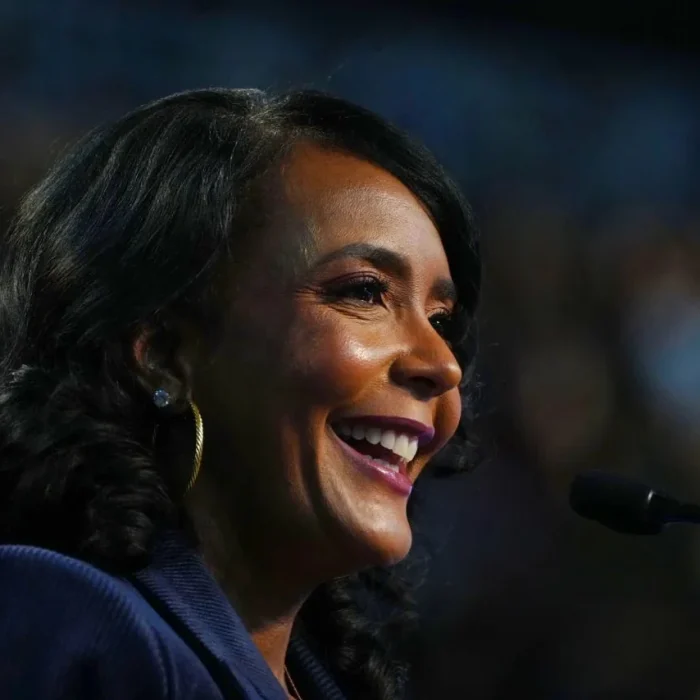
Amy Acton Ohio governor is a phrase that would have sounded far-fetched in the spring. On Tuesday night it became reality, as voters elected the moderate Democrat to lead the state, making her both the first woman and the first Jewish person to hold the office. Her victory over billionaire Republican Vivek Ramaswamy capped a contest widely regarded as the most vicious governor’s race in the country this year.
From Underdog to Winner
As recently as April, polling showed Acton trailing Ramaswamy or locked in a dead heat. The former state health director entered the race as a political novice facing a well-funded opponent with national name recognition. Few analysts gave her strong odds.
The campaign that followed turned ugly. Ramaswamy’s team unleashed a barrage of attacks, the most notorious of which featured Acton’s estranged mother, Donna Arthur, accusing her daughter of dishonesty and questioning her fitness to govern. The ad drew widespread revulsion given the family’s history: Arthur had stood by her husband after he was arrested and charged with raping Acton when she was 12 years old. Many observers viewed the spot as a line crossed, and it may have backfired.
A Fighter Beneath a Calm Exterior
Acton, a native of Youngstown, is known for a soft-spoken manner that can be mistaken for timidity. Those who have watched her career closely say that impression is misleading. She absorbed the attacks without retreating and kept her campaign focused on economic concerns and practical policy.
Her agenda included free breakfast and lunch for public school students, child tax credits aimed at low- and middle-income families, and a requirement that data centres cover the cost of the electricity they consume rather than passing it on to residential customers.
A Legislature Unlikely to Cooperate
Translating those proposals into law will be difficult. Republicans control both chambers of the Ohio General Assembly, and there is little expectation they will hand a Democratic governor policy victories. Much of Acton’s platform may stall in a legislature inclined to resist her.
She will also contend with the challenges of being a first-time elected official, learning the mechanics of governing while under intense scrutiny from both parties.
Tension With Her Own Base
Acton’s path to victory involved positions that frustrated progressive Democrats. She stated that she did not support transgender girls competing in girls’ sports, prompting criticism from LGBTQ+ advocates who accused her of turning trans people into a campaign talking point. She endorsed a constitutional amendment enshrining voter identification requirements and said local police should cooperate with Immigration and Customs Enforcement.
Conservatives welcomed those stances. Some on the left were left wondering why a Democrat would adopt them. Acton has pledged to work across the aisle, and her willingness to break with her party on select issues may reflect both personal conviction and a calculation about what Ohio voters would accept.
She becomes only the third Democrat to serve as Ohio governor in the past half century, following Richard Celeste, who held the office from 1983 to 1991, and Ted Strickland, who served from 2007 to 2011. Democrats in the state have little recent experience with executive power, and managing their expectations will be its own test.
The Covid Chapter
Acton’s only previous high-profile government role came in 2019, when Governor Mike DeWine appointed her to run the Ohio Department of Health. A year later she found herself at the centre of the state’s pandemic response, delivering daily briefings that earned her admiration for her composure and clarity.
She also became a lightning rod for opponents of stay-at-home orders and other restrictions that DeWine imposed and she implemented. Protesters gathered outside her home. In June 2020 she resigned, later explaining that she feared a hostile legislature would force her to sign orders she did not believe were justified.
That experience shaped her reputation as someone who would rather step aside than compromise her principles, a trait that may serve her well, or complicate her tenure, in the governor’s office.
An Economy Under Strain
Acton inherits a state facing real hardship. Petrol prices hover around 4.20 dollars for regular and 6.30 dollars for diesel, a burden for commuters and for the farmers who depend on diesel-powered equipment. Federal spending reductions have stripped more than 100,000 Ohioans, including roughly 60,000 children, of food assistance through the Supplemental Nutrition Assistance Program. Electricity costs have climbed 34 percent since 2022, driven in part by the energy demands of data centres.
These pressures formed the backdrop to the election and will define the early months of her administration.
Following DeWine
Acton succeeds DeWine, who was barred by term limits from running again. The outgoing governor built a reputation as a moderate guided by a sense of compassion, notably defending the Haitian community in Springfield when it became a target of national political attacks and describing federal deportation plans as a mistake. He held that position despite criticism from within his own party.
Supporters of Acton see her as a natural heir to that style of governance, prioritising decency over partisan combat.
What Her Win Means
Whether Ohio has returned to swing-state status is far from settled. Several factors converged to produce this result: an unpopular president, a struggling economy and a Republican nominee whose campaign alienated many voters. It would be premature to read a lasting realignment into a single election.
What the outcome does suggest is that a candidate perceived as fundamentally decent can prevail even in a hostile environment and even after enduring attacks of extraordinary cruelty. For Acton, the harder work begins now: governing a divided state with a legislature that did not want her and a party that does not always understand her.
Author