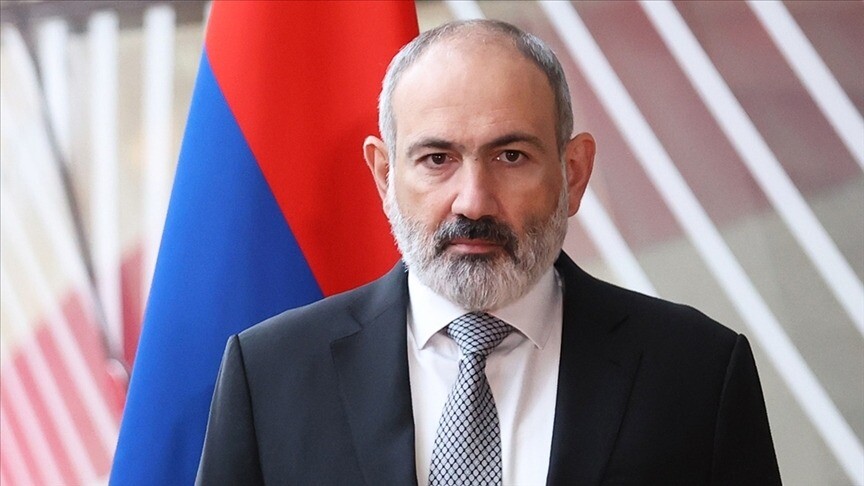
Armenia heads to the polls on Sunday in an election that has become a referendum on the nation’s very direction, pitting Prime Minister Nikol Pashinyan against a bloc of pro-Russia rivals in a contest shadowed by war, foreign interference, and bitter personal feuds. President Trump is in his corner. President Vladimir Putin is working against him. And his small, war-scarred country stands at a genuine crossroads.
A Leader Fighting for Survival
Pashinyan rose to power in 2018 on the back of an anti-corruption uprising. Now he is fighting to keep it. In this weekend’s parliamentary vote, his faction squares off chiefly against three leading pro-Russia parties, and the stakes could hardly be higher.
Out on the campaign trail, the threats can feel distant. Last week, Pashinyan climbed onto the back of a pickup truck in a quiet mountain village near where he grew up, rallying voters with a familiar call and response. He asked whether they stood for independence, for the future, for peace. Each time the crowd roared back its approval.
He has leaned heavily on tangible achievements, touting newly rolled-out state health insurance along with new schools, day care centers, and housing. Above all, he has framed his re-election as essential to preserving a preliminary peace deal with neighboring Azerbaijan, brokered with Trump’s help last year. He likens the fragile pact to a nine-month-old baby that must be nurtured to survive.
The Weight of a Painful Defeat
This is the first time Armenians have voted since 2023, when the country lost the disputed region of Nagorno-Karabakh to Azerbaijan, a humiliating defeat the opposition pins squarely on Pashinyan. The conflict between the two former Soviet republics stretches back to the final years of the U.S.S.R. and produced decades of intermittent war.
Against that backdrop, Pashinyan is selling a vision of an Armenia at peace for the first time since the Soviet collapse, along with the economic and security benefits such stability could bring. That peace would mean normalized relations with Azerbaijan and Turkey, both of which have kept their borders closed to Armenia for decades, potentially opening doors beyond Moscow’s orbit.
Tilting Toward the West
Central to that vision is what Pashinyan promotes as the Trump Route for International Peace and Prosperity, or TRIPP, an American-operated road and rail corridor running through Armenia to link two parts of Azerbaijan. The prime minister has steadily deepened ties with Washington, welcoming visits from both Vice President JD Vance and Secretary of State Marco Rubio, and has even floated eventual European Union membership. Last month he hosted the first-ever EU-Armenia summit and welcomed Ukrainian President Volodymyr Zelensky.
The shift reflects a broader public mood. Armenians soured on Russia after Moscow failed to come to their aid when Azerbaijan struck inside Armenia in 2022 and seized Nagorno-Karabakh the following year. The share of Armenians naming Russia the country’s main friend collapsed from 57 percent in 2019 to just 14 percent in 2024.
Yet Pashinyan has stopped short of a full rupture. Russia remains a treaty ally with a military base on Armenian soil and an indispensable economic and energy partner. Ruben Rubinyan, a senior figure in Pashinyan’s party and vice president of Parliament, stressed that the party has no intention of feuding with Moscow, even as it refuses to compromise on Armenia’s core interests and seeks to diversify beyond reliance on a single geopolitical center.
Analysts frame the choice in stark terms. Historian and former diplomat Gerard Libaridian called it nothing less than a question of independence, warning that Russian control extends beyond foreign and security policy to the very nature of the government itself.
A Campaign Turned Vicious
The race has been anything but civil. Authorities have arrested opposition members on accusations of vote bribery, financial crimes, and calls to overthrow the government, while Pashinyan’s opponents accuse him of wielding state power to crush his rivals.
The leading challenger is Samvel Karapetyan, a billionaire who built much of his fortune in Russia. Under current law he cannot become prime minister or even sit in Parliament because he holds Russian and Cypriot citizenship, though his Strong Armenia party has pledged to change the rules to let him lead. He has been campaigning from his mansion, where he has been under house arrest since last year on charges of calling for the government’s overthrow, allegations his party denounces as political persecution. His lawyer and second-ranked candidate, Aram Vardevanyan, insisted the phrase that triggered the case amounted to lawful political participation, not sedition.
Observers warn that a Karapetyan victory could steer Armenia down the path of neighboring Georgia, where a Russia-enriched billionaire reversed years of pro-Western policy and pulled the country back toward Moscow.
Lurid Feuds and Raw Wounds
The campaign’s tone has at times turned shockingly personal. Pashinyan, a populist firebrand known for fedoras, viral TikTok videos, and a signature heart gesture made with both hands, has also erupted at Nagorno-Karabakh refugees who confronted him, with authorities detaining one activist in a move even some of his supporters called excessive.
His clash with the Armenian Apostolic Church, a pillar of national identity and a major recipient of Karapetyan’s money, grew especially ugly. After church leaders led protests against his peace negotiations and demanded his resignation, Pashinyan accused them of breaking celibacy vows and plotting a criminal-oligarchic coup, and several officials were arrested. The exchanges spiraled into crude territory, with accusations involving a supposed sex tape, claims about Pashinyan’s religious identity, and an offer by the prime minister to publicly prove his opponents wrong about his body. It was a far cry from kumbaya.
Moscow Pushes Back
Beyond his domestic foes, Pashinyan faces sustained pressure from Russia and its state media. In 2024 he froze Armenia’s participation in the Moscow-led military alliance obligating Russia to defend the country. Tensions burst into the open during a tense Kremlin meeting in April, where Putin urged drawing a line under the Nagorno-Karabakh issue and warned that Armenia could not pursue EU membership while remaining in a trade union with Russia. He also criticized the prosecution of Karapetyan and pressed Pashinyan to let pro-Russia forces compete.
Pashinyan fired back, insisting Armenia is a democracy and implicitly jabbing at Putin’s own censorship and repression. The following month, Putin warned that Armenia, which has not formally applied to the EU, was retracing Ukraine’s steps, pointedly noting that Ukraine’s troubles began with its own European aspirations.
The economic squeeze has become a campaign weapon. Russia has piled on restrictions targeting Armenian flowers, produce, alcohol, and mineral water, and opposition parties have seized on the pain. At a Yerevan rally, the Armenia Alliance aired interviews with a flower grower and a tomato seller who blamed Pashinyan for their losses. Lawmaker Anna Grigoryan called it insane to make an enemy of Russia, arguing the prime minister was using crass rhetoric and making unacceptable concessions while chasing an unrealistic EU dream.
A Narrow Path Forward
Polling shows Pashinyan as comfortably the most popular candidate, yet he remains vulnerable. Many voters are undecided, and he lacks viable coalition partners polling strongly enough to enter Parliament. Should his Civil Contract party fail to win a majority outright, he could lose power and face prosecution or exile.
Trump, eager to preserve the unfinished peace deal he helped broker, endorsed him on Truth Social on May 28, hailing Pashinyan as a great friend and leader making Armenia strong, wealthy, and secure. His own party frames the contest as a battle against the return of corrupt, autocratic forces aligned with Moscow. As party lawmaker Sona Ghazaryan put it, those seeking a comeback are not democratic at all.
When Armenians cast their ballots on Sunday, they will be deciding far more than who governs. They will be choosing, as much as anything, which direction their country faces, and whether the fragile peace and westward tilt of recent years endure or unravel
Author