US Ebola Travel Ban Expands to Green-Card Holders from African Nations
The United States has rolled out a sweeping US Ebola travel ban that now blocks even lawful permanent residents from re-entering the country if they have recently traveled to certain African nations. Anyone holding a green card who has been to the Democratic Republic of the Congo (DRC), Uganda, or South Sudan within the past 21 days will not be allowed back into the US under the latest federal order.
This decision marks a significant tightening of earlier rules, which had only restricted travelers without US passports while leaving citizens and permanent residents exempt.
What the New Order Says
The order, signed on Friday, was issued by the US Department of Health and Human Services (HHS) in coordination with the Centers for Disease Control and Prevention (CDC). Officials say the move is meant to safeguard public health and reduce the chance of Ebola reaching American soil.
According to the directive, the CDC director or another designated official now has discretion to deny entry to specific permanent residents during this period. Authorities argued that green-card holders often have deeper roots in their countries of origin than US citizens, which they believe makes the restriction a less harsh measure compared to barring nationals altogether.
The travel ban will remain in place for an initial period of 30 days, though it could be extended depending on how the outbreak evolves.
Enhanced Airport Screening Begins
For US citizens returning home from the three affected countries, the entry process has also changed. Previously, all such travelers had to come through Washington Dulles International Airport, which served as the single point of entry. The CDC has now added Hartsfield-Jackson Atlanta International Airport to its enhanced Ebola screening program, giving travelers a second option.
The agency explained that handling quarantinable diseases on US soil is no small task. It requires highly specialized isolation facilities, trained staff, and considerable resources. Right now, 18 individuals are already being held in a dedicated quarantine unit at the University of Nebraska after being removed from the MV Hondius cruise ship, which had been hit by a hantavirus outbreak.
The CDC stressed that applying the ban temporarily to green-card holders strikes a balance between protecting Americans and managing limited emergency response capacity.
Top US Officials Speak Out
US Secretary of State Marco Rubio made the administration’s stance crystal clear in recent remarks, saying that keeping Ebola from reaching the United States is the top priority. According to him, preventing any cases from arriving in the country is non-negotiable.
Why the Concern Is Growing
The World Health Organization has raised the alarm, classifying the risk of the rare Bundibugyo strain of Ebola turning into a national outbreak in the DRC as “very high.” It has also declared the joint outbreak in the DRC and Uganda an emergency of international concern.
Current WHO figures paint a worrying picture:
- 82 confirmed Ebola cases in the DRC
- 7 confirmed deaths
- 177 suspected deaths
- Nearly 750 suspected cases tied to the Bundibugyo strain
This particular strain is especially dangerous because there is no approved vaccine or treatment for it, which makes containment far more difficult than during outbreaks involving other Ebola variants.
Ten African Nations Now on Alert
The Africa Centres for Disease Control and Prevention (Africa CDC) has identified 10 countries facing elevated risk of cross-border transmission. Speaking on Saturday, Africa CDC head Jean Kaseya listed the nations under watch:
- Angola
- Burundi
- Central African Republic
- Republic of the Congo
- Ethiopia
- Kenya
- Rwanda
- South Sudan
- Tanzania
- Zambia
These countries share borders or active travel links with the affected regions, raising fears of a wider regional crisis if the virus is not brought under control quickly.
Violence Disrupts the Response
The situation in eastern DRC is becoming more chaotic by the day. In the town at the heart of the outbreak, angry residents reportedly attacked and set fire to part of a health center where Ebola patients were being treated. Eighteen people suspected of being infected fled the facility during the unrest, raising serious concerns about further spread within the community.
A separate incident on Thursday saw another treatment center in the town of Rwampara torched after authorities refused to let family members take away the body of a local man who had died.
Such attacks reflect deep-rooted mistrust between local communities and outside health workers, fueled by years of conflict and broken promises.
The Risk of Traditional Burials
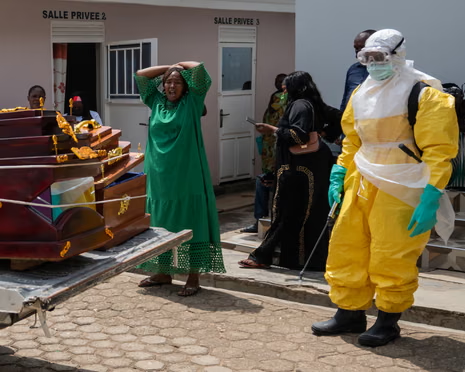
One of the biggest challenges for health teams is managing burials safely. The bodies of Ebola victims remain highly contagious after death, and traditional funeral practices, which often involve washing the deceased and gathering in large numbers, can trigger new chains of infection.
Whenever possible, authorities are now handling burials directly to limit the risks. Officials in the north-eastern DRC have also banned funeral wakes and prohibited gatherings of more than 50 people, hoping these measures will slow transmission.
A Critical Moment for Global Health Security
The expansion of the US Ebola travel ban highlights just how seriously the situation is being taken on the global stage. With limited treatment options, fragile health systems in affected regions, and rising community resistance, the coming weeks will be crucial in determining whether the outbreak can be contained or whether it spreads even further across borders.
Author