Chinese President Xi Jinping will travel to North Korea next week for a state visit, a high-profile gesture underscoring the renewed warmth between two neighbors that spent years drifting apart. The trip signals a deliberate effort by Beijing and Pyongyang to rebuild a relationship strained by the pandemic, diplomatic friction, and shifting alliances.
The Visit Confirmed
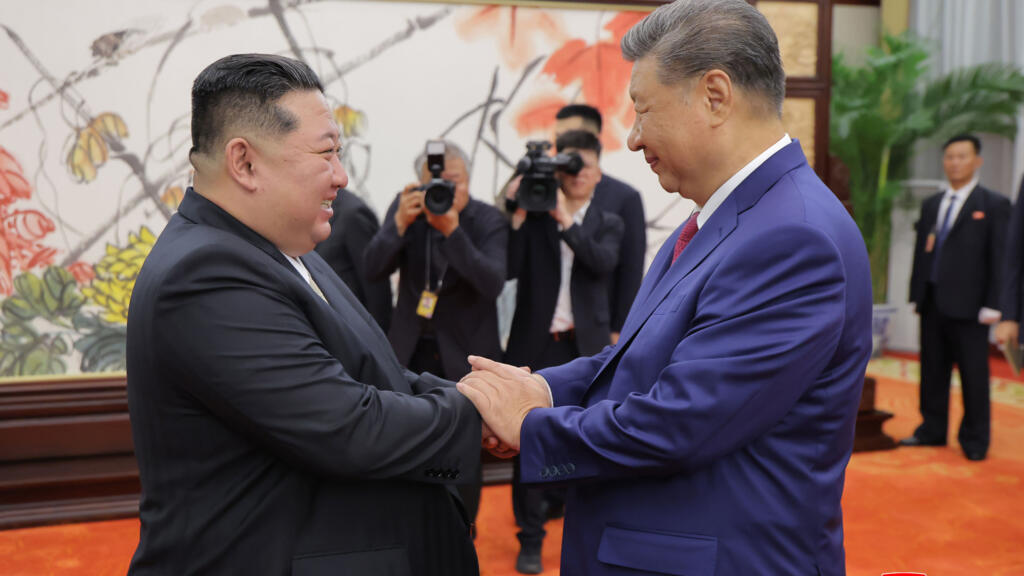
According to state news agency Xinhua, Xi will visit the Democratic People’s Republic of Korea on June 8 and 9 at the invitation of North Korean leader Kim Jong-un. The announcement, attributed to the International Department of the Communist Party of China’s Central Committee, marks Xi’s second trip to the country. His first came in 2019, just before the coronavirus pandemic sealed the border crossings between the two nations for years.
Chinese foreign ministry spokeswoman Mao Ning said the two leaders would discuss bilateral relations and matters of mutual interest. She framed the timing around a milestone, noting that this year marks the 65th anniversary of the China-North Korea Treaty of Friendship, Cooperation and Mutual Assistance, and that both sides intend to use the visit to advance their relationship and pursue greater development.
A Relationship in Repair
The visit caps a cautious thaw after a prolonged stretch of relative isolation. Several factors had cooled ties in recent years, including the pandemic-era border closures, North Korea’s displeasure with Beijing’s support for denuclearisation, and China’s own reservations about Pyongyang’s deepening military cooperation with Moscow.
The diplomatic groundwork has been building steadily. In September of last year, Kim attended a military parade in Beijing commemorating the 80th anniversary of the end of World War II, his first appearance at a major multilateral event, standing alongside Xi and Russian leader Vladimir Putin. The following day, Xi assured Kim that Beijing places great importance on the traditional friendship between the two countries and that this stance would remain unchanged regardless of how the global landscape evolves.
A series of senior visits followed. Chinese Premier Li Qiang traveled to Pyongyang a month later for events marking the 80th anniversary of North Korea’s ruling party, and in 2024, China’s third-ranking official, Zhao Leji, met Kim and declared the year one of friendship, though no major celebrations ultimately materialized.
An Alliance Like No Other
China’s bond with North Korea stands apart from its many other partnerships. While Beijing maintains dozens of strategic relationships with countries such as Russia, Pakistan, and Iran, the 1961 Sino-North Korean treaty remains the only formal, legally binding mutual defense pact China still holds.
That alliance is reinforced by economic dependence. China has long been Pyongyang’s most important ally and primary source of economic support, reportedly accounting for more than 90 percent of North Korea’s total trade. As international sanctions squeeze an economy plagued by severe currency devaluation, surging inflation, and chronic food insecurity, Beijing has served as a crucial lifeline.
Balancing Beijing and Moscow
Even as he leans on China, Kim has worked to diversify his options by drawing closer to Russia. In 2024, Pyongyang signed a mutual defense treaty with Moscow and has since sent troops to support the Kremlin’s war in Ukraine in exchange for economic and military assistance. That balancing act has been a source of unease in Beijing, adding a layer of complexity to the relationship Xi is now moving to shore up.
Signs of normalization have nonetheless accumulated. In March, the two countries restored transport links, including rail services, and Air China resumed direct flights for the first time since the pandemic. Cross-border freight had returned even earlier, with cargo rail restarting in 2022 and truck shipments the following year. Chinese customs data showed trade rebounding to near pre-pandemic levels in 2025, reaching 19.6 billion yuan, roughly $2.85 billion, a 26 percent increase year on year. Notably, Chinese tourists remain barred from North Korea, which stays largely closed to international tourism apart from limited arrangements for Russian nationals.
A Tense Regional Backdrop
Xi’s visit unfolds against a volatile situation on the Korean peninsula. Kim has ruled out engagement with South Korea and hardened his posture on his country’s nuclear status, while Seoul has pressed Beijing to help revive stalled dialogue with Pyongyang.
The North Korean leader has only sharpened that defiance recently. On Wednesday, he inspected a new plant producing weapons-grade nuclear material and pledged to expand the country’s nuclear forces at what he called an exponential rate. In March, he formally branded South Korea the country’s most hostile state, finalizing a doctrine introduced in 2023, and again described North Korea’s status as a nuclear weapons state as irreversible. He also accused the United States of carrying out state-sponsored terrorism and aggression, an apparent reference to its war on Iran, though he stopped short of naming Trump directly. Dignity and a nation’s final victory, Kim said, can only be guaranteed by the most powerful might, adding that North Korea was prepared to respond to whatever choice its enemies made.
The Trump Factor
The trip also arrives amid active diplomacy involving Washington. Xi’s visit comes just weeks after Trump and Putin visited Beijing. Returning from that May summit, Trump said he had discussed denuclearisation with Xi and that the two had reached a good understanding of the concept. A White House fact sheet asserted that the leaders confirmed a shared goal of denuclearising North Korea, though the Chinese account mentioned only that they discussed important international issues such as the Korean peninsula situation.
The differing readouts hint at the gap between the two powers’ positions. Within a week of Trump’s visit, China and Russia issued a joint statement condemning the use of diplomatic isolation, sanctions, and military pressure to threaten North Korea’s security, while pledging to play a constructive role in pursuing a political resolution and building a lasting peace mechanism in the region.
For now, the prospect of renewed U.S.-North Korea engagement remains uncertain. Trump met Kim three times during his first term, and despite speculation about a possible reunion when he visited South Korea for the APEC forum last October, a fourth meeting has yet to occur. As Xi prepares to land in Pyongyang, his visit stands as a reminder that, amid all the maneuvering among Washington, Moscow, and Seoul, Beijing remains the indispensable partner in North Korea’s calculations.
Author