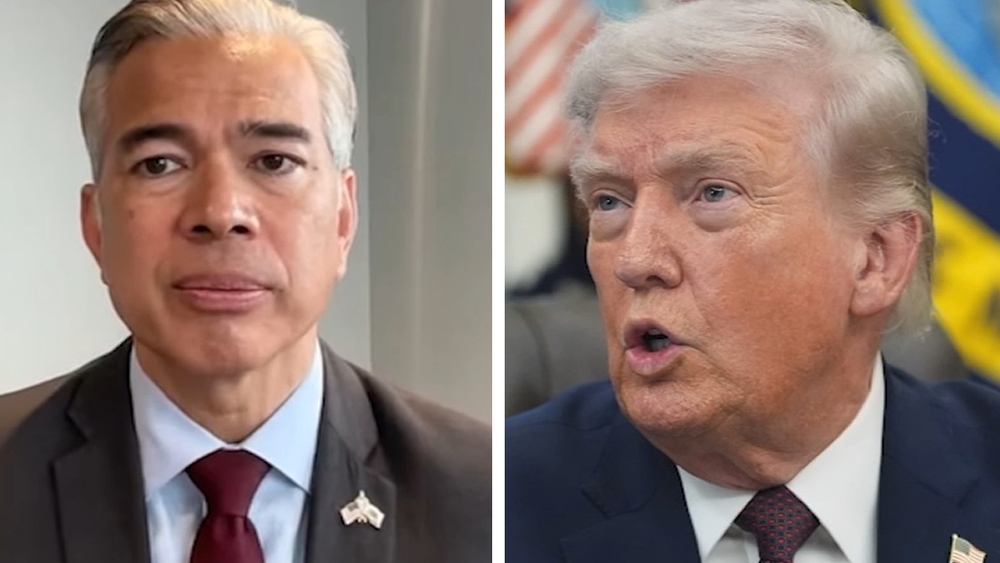
California mail-in ballots have spent months at the center of a national argument, and that argument is now headed for the highest court in the country. The Trump administration filed an emergency appeal on July 27 asking the Supreme Court to step around a lower court decision that has kept its new election rules from taking effect before the midterms.
State Attorney General Rob Bonta says his office is not backing down.
What the Executive Order Would Have Done
The dispute traces back to an executive order President Donald Trump signed in March. Under it, the Department of Homeland Security would have assembled state-by-state rosters of citizens eligible to vote. The Postal Service would then have consulted those lists to determine whether an individual voter could receive and cast a ballot by mail.
A federal court blocked key portions of that order, and an appeals court declined to lift the hold. The practical effect is that the rules cannot be applied to the upcoming midterm elections in the states that sued.
Bonta framed the outcome in constitutional terms, arguing that the federal government has no authority to dictate how individual states run their elections. He said the ruling keeps the central provisions frozen for the plaintiff states through the midterms and pledged to keep defending both voting access and the rule of law.
The Administration’s Counterargument
The Justice Department sees the injunction very differently. In its filing, the department called the decision indefensible, saying it stops federal agencies from carrying out a presidential directive at all. The government’s position is that the district court leapt ahead of the facts and concluded that anything the agencies might eventually do would be illegal, before those agencies had actually done anything.
A spokesperson for the California attorney general’s office responded that the lower court got it right and that the appeals court, in a carefully reasoned order, was correct to leave the block in place. The office said it looks forward to submitting its formal response.
The Supreme Court has instructed the challenging states to reply by August 3, a deadline set by Justice Jackson. Gov. Gavin Newsom’s office did not provide comment before publication.
Why California Became the Example
The administration has repeatedly pointed to California when making the case that mail voting needs tighter federal rules, and the reason is timing rather than fraud.
California counts mail ballots on and after Election Day, which means final results routinely take days or longer. Trump has seized on those delays before, most notably when a leading Republican in the Los Angeles mayoral race led early and then slipped behind as later ballots were tallied, eventually falling out of contention for the general election. His comments about that outcome included accusations that have never been substantiated.
Criticism has come from within the state as well. Republican gubernatorial candidate Steve Hilton dismissed the system as a farce after the primary and has since built much of his campaign around voter identification requirements and broader election changes. In a July 23 interview, he pointed to long-running estimates that California’s voter rolls contain millions of outdated entries. He acknowledged that many of those are simply people who moved or changed addresses, but argued the state should clean them up if it wants voters to trust the results.
The state’s answer has been consistent. Newsom said in May, after signing SB 73, that California would not let its elections be taken over by intimidation, abuse of power, or interference from people chasing conspiracy theories, and described the law as protection for voters, election workers and the democratic process itself. Since taking office in 2021, he has signed ten bills aimed at election security.
The Real Reason the Count Takes So Long
Election specialists offer a less dramatic explanation for California’s pace, and it has little to do with irregularities.
The state has built a system designed to maximize participation. Every registered voter receives a mail ballot. Voters whose signatures are missing or do not match can fix the problem afterward rather than losing their vote. People can register on Election Day itself.
Each of those features adds time. Ballots arriving late require verification. Curing signatures involves contacting voters and waiting for them to respond. Same-day registrations must be processed and checked. The tradeoff is deliberate: speed was traded for access.
The question now occupying election reformers is whether some of that speed can be recovered without giving up the protections.
Recommendations From a Nonpartisan Group
The California Voter Foundation, which takes no partisan side, recently published proposals aimed at faster results while keeping universal vote-by-mail intact.
Shorten the curing window. The group’s most significant suggestion is cutting the period for fixing a missing or mismatched signature from 22 days after Election Day down to 14. Backers argue counties could certify sooner while voters would still have a reasonable opportunity to resolve issues.
Fund the infrastructure. The foundation calls for more state money for election staff, equipment and facilities, plus upgrades to VoteCal, the statewide registration database. Local officials have said additional resources would ease the bottlenecks that slow processing.
Encourage earlier returns. Voters themselves can shorten the count by mailing ballots well before Election Day or voting in person. Ballots that arrive on or after Election Day demand the most handling and verification.
Report more clearly. The group wants counties to publish better information about how many ballots remain uncounted and what stage they are at. Greater transparency, advocates say, would help voters, candidates and news outlets understand why certain races stay undecided for days or weeks instead of leaving that gap to be filled by speculation.
What Happens Next
The immediate question is narrow: whether the Supreme Court allows the executive order to take effect while litigation continues. The states must respond by August 3.
The larger question is the one that has been building for months. Federal officials argue Washington needs authority over how ballots are handled. California argues that authority belongs to the states, and that the current fight is less about accuracy than about control of the machinery of voting itself.
Author
-
Lucienne Albrecht is Luxe Chronicle’s wealth and lifestyle editor, celebrated for her elegant perspective on finance, legacy, and global luxury culture. With a flair for blending sophistication with insight, she brings a distinctly feminine voice to the world of high society and wealth.