Canadian Warship Taiwan Strait Transit Sends a Pointed Message to Beijing
A Canadian warship sailed through the Taiwan Strait just days before a major diplomatic visit by China’s Foreign Minister, openly defying an earlier warning from Beijing to steer clear of the contested waterway. The move underscores Canada’s determination to assert navigation rights even as it works to deepen economic ties with China.
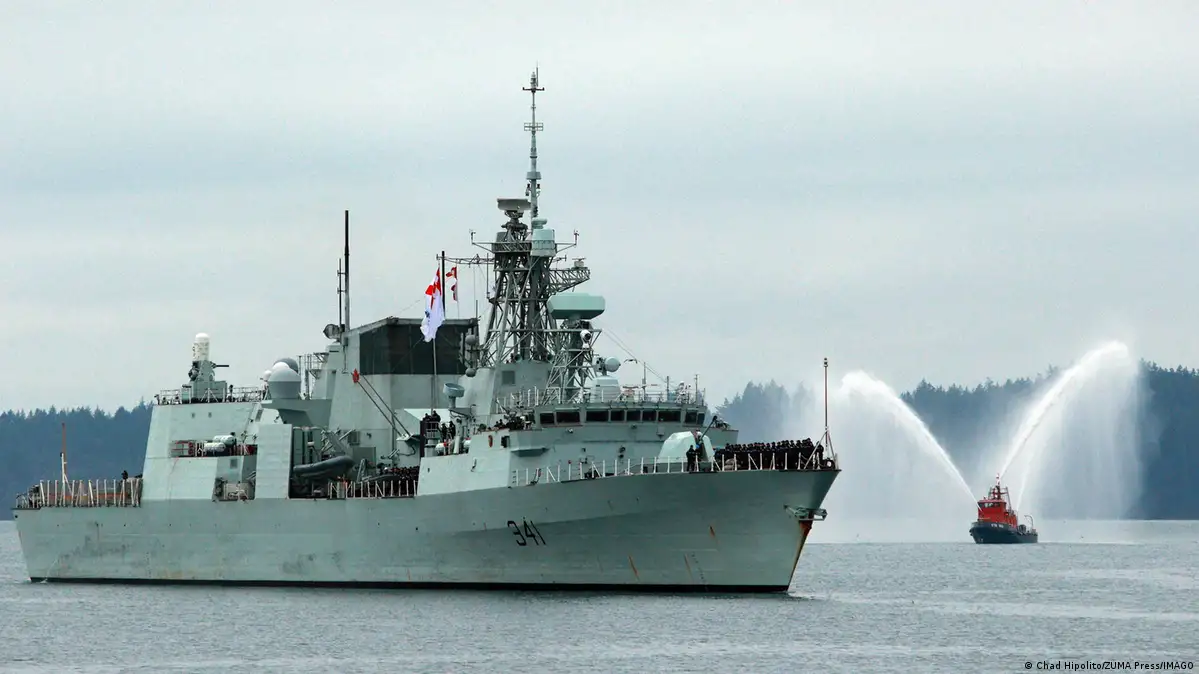
The frigate HMCS Charlottetown made the passage last week, and notably, it did so without being accompanied by any allied vessels. The timing and the solo nature of the transit have drawn significant attention across the region.
The Details of the Transit
Canada’s Department of National Defence confirmed the voyage on Thursday, describing it as a routine operation. According to spokesperson Andrée-Anne Poulin, the HMCS Charlottetown conducted a transit through the Taiwan Strait that began on May 22 and was completed the following day.
Interestingly, the department was initially reluctant to confirm the event. Three days passed before it responded to an inquiry about whether the transit had actually occurred, hinting at the diplomatic sensitivity surrounding the matter.
A Visit Loaded With Significance
The transit’s timing is hard to overlook. China’s Foreign Minister, Wang Yi, was scheduled to arrive in Canada late Thursday for a visit lasting through the weekend. This marks the first trip by a Chinese Foreign Minister to Canada in a decade.
Both Ottawa and Beijing have been seeking to expand their relationship, particularly against the backdrop of rising U.S. protectionism. The juxtaposition of a high-profile diplomatic visit and a military transit through disputed waters captures the delicate balancing act Canada is attempting to perform.
Beijing’s Earlier Warning
The passage came just weeks after a pointed warning from China’s ambassador to Canada, Wang Di. In an interview last month, the envoy cautioned that the developing partnership between the two nations could suffer if Ottawa continued sending military vessels through the Taiwan Strait or if Canadian parliamentarians kept traveling to Taiwan to meet with its government.
The ambassador appeared to be outlining Beijing’s expectations for Canadian conduct as the two countries worked to build on a truce reached in January 2026. That breakthrough, achieved between Prime Minister Mark Carney and Chinese President Xi Jinping, had eased a painful trade war.
For Carney, the stakes are considerable. He has been pursuing larger overseas export markets and fresh foreign investment to help offset the economic damage caused by U.S. President Donald Trump’s tariffs, making the China relationship economically valuable even as security concerns persist.
The Dispute Over “International Waters”
At the core of the disagreement lies a fundamental clash over how the Taiwan Strait should be classified. Defence Minister David McGuinty stated earlier this month that Ottawa regards the waterway between China and Taiwan as international waters.
The two countries hold sharply different views:
- Canada considers the strait to be international waters, invoking the principle under the United Nations Convention on the Law of the Sea that straits used for international navigation allow warships to pass freely without seeking prior permission from the coastal state.
- China, by contrast, regards the Taiwan Strait as an internal waterway under its control.
This distinction is more than semantic. It reflects competing claims about sovereignty and freedom of navigation in one of the world’s most strategically sensitive regions.
The Taiwan Question and Canada’s Position
The broader context involves the long-standing dispute over Taiwan itself. The People’s Republic of China claims the island, located about 160 kilometers off its coast, as a breakaway province. Taiwan, where many from the losing side of China’s civil war fled in 1949, refers to itself as the Republic of China.
Canada’s diplomatic stance adds nuance to the situation. Ottawa ended formal relations with Taiwan in 1970 under then-Prime Minister Pierre Trudeau, recognizing the Communist-led People’s Republic of China instead. Since then, Canada’s One China policy has acknowledged the PRC as the sole legitimate government of China, while notably stopping short of endorsing Beijing’s claim that Taiwan is Chinese territory.
This careful positioning matters legally. If Canada accepted Taiwan as Chinese territory, it would struggle to justify treating the channel between the island and the mainland as an international waterway.
Political Reactions at Home
The transit drew praise from some quarters of Canadian politics. Conservative foreign affairs critic Michael Chong, who had himself traveled to Taiwan earlier in the month to meet Taiwanese President Lai Ching-te in defiance of the Chinese ambassador’s warning, welcomed the latest passage.
Chong argued that the government needed to signal it would not bow to what he described as Beijing’s unreasonable demand. His comments reflect a view that Canada must demonstrate independence in the face of Chinese pressure.
A Look at the Pattern
The frequency of such transits has shifted over time, offering insight into evolving Canadian policy:
- Between 2018 and the resignation of former Prime Minister Justin Trudeau last year, Canadian warships transited the Taiwan Strait 11 times, over Beijing’s objections.
- Under Carney’s government, this had occurred only once before, when a Canadian frigate made a single trip in September 2025 alongside an Australian destroyer.
The latest solo passage therefore stands out as a notable assertion of Canadian intent under the current government.
A Mysterious Journey
The HMCS Charlottetown’s movements leading up to the transit added an element of intrigue. The frigate dropped off publicly accessible marine traffic tracking websites for more than a week earlier in the month.
In mid-May, the ship made a goodwill visit to Da Nang, Vietnam, a stop local press reported as lasting about four days. After that, the warship vanished from regular tracking sites, indicating it had switched off the automatic identification system transponder that normally allows it to be tracked. According to Ottawa-based open-source researcher Steffan Watkins, the frigate reappeared on Thursday in a location just south of the Korean peninsula, more than a week later.
Why the Region Is Watching
The transit carries weight far beyond the immediate Canada-China relationship. Vina Nadjibulla, vice-president of research and strategy at the Asia Pacific Foundation of Canada, noted that Canada’s behavior in the South China Sea and East China Sea is being closely observed in capitals ranging from Beijing to Tokyo to Taipei, as well as in Australia and the United States.
She described the move as a strong signal that Canada intends to chart its own course in the Indo-Pacific. Significantly, this marks the first time Canada has used the route since Carney’s January visit to China and the announcement of the new strategic partnership with Beijing.
Nadjibulla framed the transit as evidence of Canada’s commitment to upholding international law and ensuring that waterways like the Taiwan Strait remain open for passage to all. She also captured the central tension of Canada’s approach, explaining that the country must advance multiple goals simultaneously: deepening economic engagement with China, which is the purpose of the Wang Yi visit, while standing firm on its broader national-security agenda.
What It All Means
The Canadian warship Taiwan Strait transit illustrates the complex tightrope Canada is walking as it navigates its relationship with China. On one hand, Ottawa is actively courting Beijing for economic benefits, especially as it seeks alternatives to a U.S. market complicated by tariffs. On the other, it appears unwilling to surrender its position on freedom of navigation or to be seen as yielding to pressure.
The Chinese embassy in Canada did not immediately respond to a request for comment, leaving Beijing’s official reaction to the latest transit unclear. As Wang Yi’s visit unfolds, the episode sets an intriguing tone, demonstrating that even amid efforts to repair and expand ties, fundamental disagreements over Taiwan and maritime rights remain firmly in place. How both nations manage these competing interests in the days ahead may offer a glimpse into the future of one of the world’s more delicate diplomatic relationships
Author