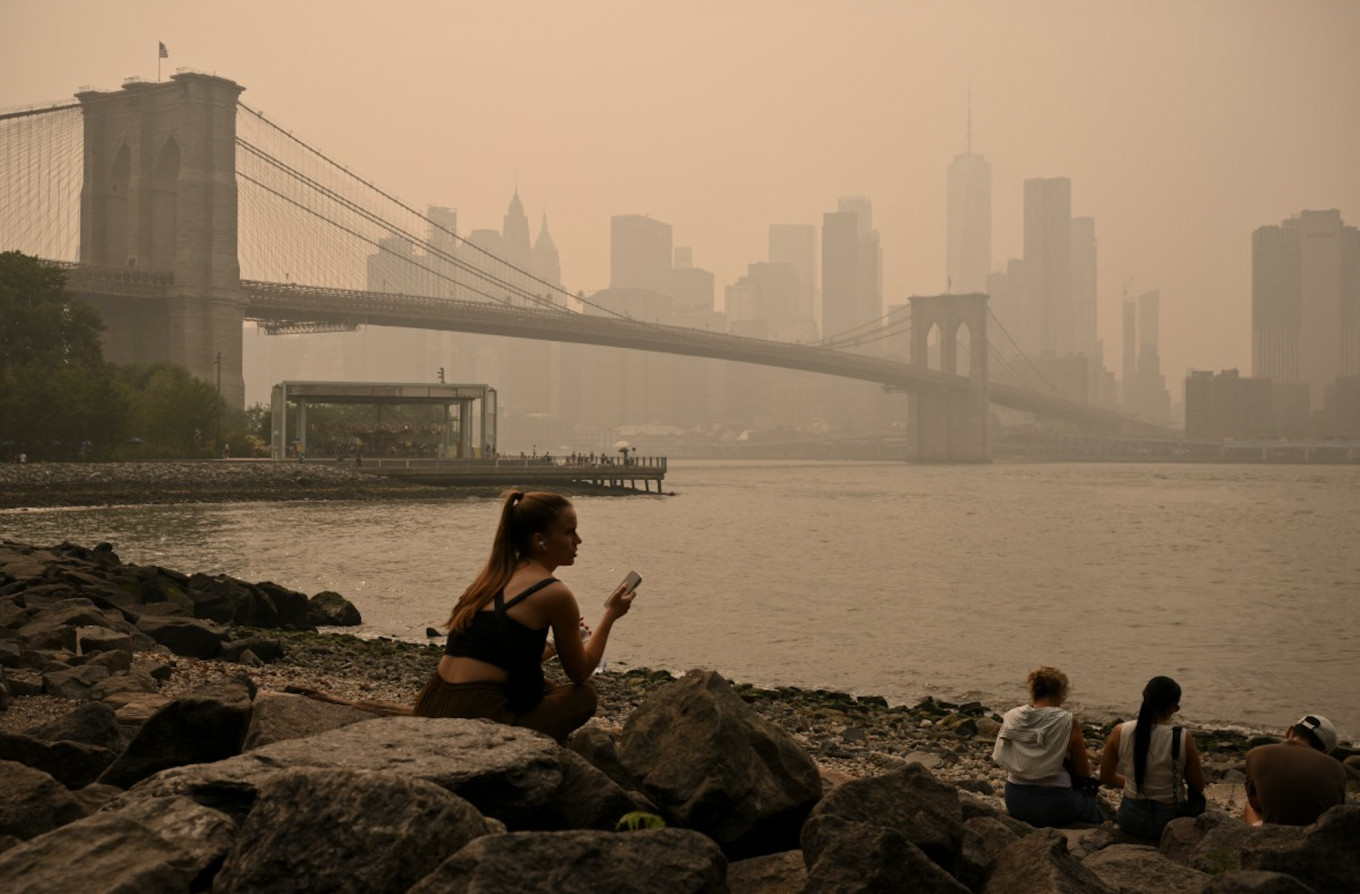
Chicago Chokes Again as Canadian Wildfire Smoke Returns Days After Record-Breaking Air Quality
The Chicago air quality wildfire smoke problem returned Saturday night after barely a day of relief, pushing the city back onto the list of the worst-polluted major cities on Earth.
By Sunday evening, Chicago registered an Air Quality Index reading of 128 — a level the Environmental Protection Agency classifies as unhealthy for sensitive groups, including children, older adults and people with existing health conditions. The index runs from 0 to 500, with higher numbers signalling greater danger.
According to IQAir, Chicago held the second-worst air quality of any major global city during part of Sunday before easing to fourth worst by late in the day.
Ranking Fourth Worst in the World Is Not Normal
That statistic deserves a moment.
Cities that routinely top global pollution rankings typically do so because of chronic industrial emissions, vehicle density and geography that traps pollutants. Chicago is not one of them. A major American city landing in that company means something extraordinary is happening upwind.
What’s happening is hundreds of fires burning across Canada, sending smoke plumes thousands of kilometres south into the American Midwest.
How Long This Lasts
An air quality alert covered the region through midnight Sunday. But the National Weather Service’s Chicago office indicated the unhealthy conditions are likely to persist into Monday regardless of when the formal alert expires.
Relief may arrive from an unexpected direction. Forecasters flagged the possibility of severe storms sweeping into the area Monday night, which could displace the smoke and clear the air considerably.
That outcome is not guaranteed. The weather service noted genuine uncertainty about whether those storms will actually develop as the system moves east across the Mississippi River. Storm systems weaken or reorganize on that track fairly often.
So the city faces a trade-off it can’t control: potentially severe weather, or continued smoke.
The Record That Preceded This
The current episode follows something considerably worse.
Earlier in the week, Chicago recorded an Air Quality Index reading of 638 — on a scale that officially tops out at 500. The reading broke the record for the worst air quality ever measured in Cook County.
An AQI beyond the scale’s maximum isn’t a technicality. The index was designed with 500 as a ceiling representing conditions hazardous to everyone, regardless of age or health. Exceeding it by nearly 140 points describes air that the measurement framework wasn’t built to categorize.
The response reflected that severity. The Chicago Park District shut down every beach and outdoor pool. A Chicago Fire home match was postponed. Ordinary summer activity across the city simply stopped.
Conditions improved by Friday afternoon, giving residents a brief window of something close to normal air. That reprieve ended late Saturday.
What the Guidance Says
Health authorities issued tiered recommendations depending on individual risk:
- Sensitive groups — children, older adults, and anyone with lung conditions such as asthma — should avoid prolonged or strenuous outdoor activity and stay indoors where possible
- Everyone else should reduce extended or intense outdoor exertion
- Anyone who must be outside is advised to wear a properly fitted N95 or KN95 mask
The mask specification matters. Wildfire smoke’s primary hazard is PM2.5 — particles small enough to travel deep into lung tissue and enter the bloodstream. Cloth masks and surgical masks offer essentially no protection against particles that size. Only properly sealed respirators filter them effectively, and fit is as important as the rating.
Why Smoke Exposure Adds Up
There’s a compounding element to repeated episodes like this one.
A single bad air day is unpleasant for most healthy people. Repeated exposure across a season is a different exposure profile entirely, and research has connected sustained PM2.5 exposure to cardiovascular strain, worsened respiratory disease, and increased emergency department visits during and after smoke events.
For people managing asthma or COPD, each episode can trigger a flare that takes days or weeks to settle. Going from record-breaking pollution to a brief recovery and straight back into unhealthy air gives those systems no time to reset.
Practical Steps for the Next Few Days
Until conditions clear, a few measures genuinely help:
- Keep windows and doors closed, even overnight when temperatures drop
- Run air conditioning on recirculation rather than drawing outside air
- Use HEPA air purifiers in bedrooms if available
- Postpone running, cycling and other high-exertion outdoor activity
- Check current AQI readings before going out rather than judging by how the sky looks
That last point catches people out. Smoke can thin visually while particulate levels remain elevated, and hazy-but-tolerable skies don’t reliably indicate safe air.
The Larger Picture
Chicago is not the only place affected. Canadian wildfire smoke has spread across a broad corridor of the United States, reaching from the Midwest into the Northeast and Mid-Atlantic, prompting advisories in multiple states.
The fires themselves are burning far beyond the reach of anything Illinois residents or officials can influence. Wind patterns determine who breathes what on any given day.
For now, Chicago waits — on a storm system that may or may not arrive, to clear smoke from fires that may or may not slow down.
Author