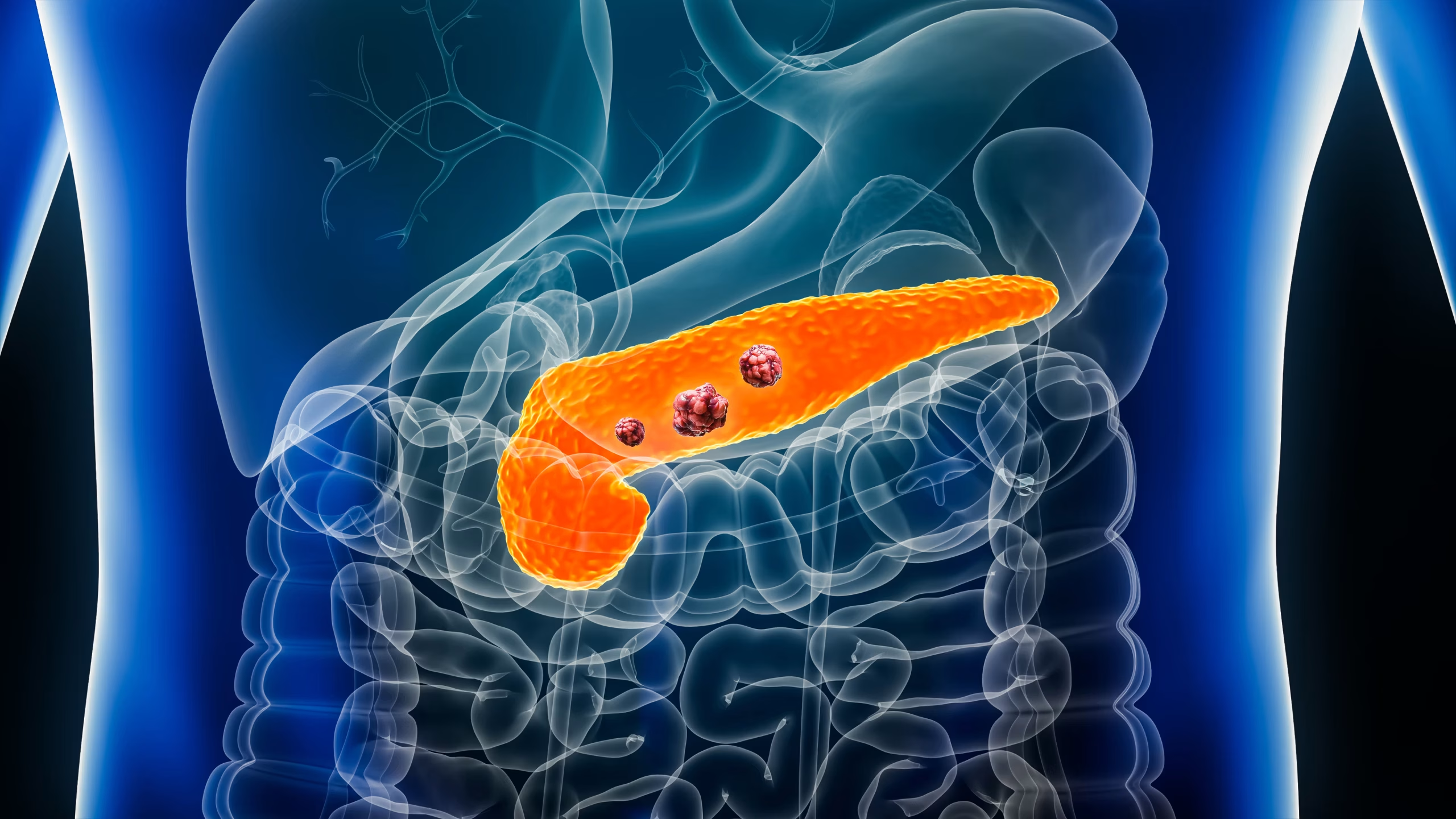
Daraxonrasib Pancreatic Cancer Drug Nearly Doubles Survival in Landmark Trial
The daraxonrasib pancreatic cancer drug has delivered results that researchers are calling a genuine breakthrough. In a Phase 3 clinical trial, this experimental treatment for metastatic pancreatic cancer nearly doubled overall survival, handing new hope to patients battling one of the most lethal forms of the disease.
The findings were unveiled Sunday at the American Society of Clinical Oncology’s annual meeting and published the same day in the New England Journal of Medicine. According to the data, patients who took daraxonrasib lived roughly six months longer on average than those treated with standard chemotherapy. Importantly, the drug has not yet earned approval from the U.S. Food and Drug Administration.
Why Experts Are Calling This a Win
The reaction from the oncology community has been notably upbeat.
“I think many of us would consider this a big win,” said Dr. Brian Wolpin, who directs the Hale Family Center for Pancreatic Cancer Research and Gastrointestinal Cancer Center at the Dana-Farber Cancer Institute, in an interview with Good Morning America that aired Monday.
The global study enrolled 500 patients with metastatic pancreatic cancer, all of whom had already gone through one round of chemotherapy for their advanced disease. The numbers that followed were striking:
- Patients on daraxonrasib had a median overall survival of 13.2 months.
- Those receiving chemotherapy survived a median of 6.7 months.
- The drug cut the risk of death by 60 percent.
Beyond simply extending life, the trial set out to improve its quality. “The trial is trying to help people live as long as they can and actually live better with less side effects, less symptoms from the cancer, and that is a very big deal,” Wolpin explained.
How the Drug Works
Daraxonrasib is an oral targeted therapy, meaning patients take it by mouth rather than through infusion. It works by blocking RAS proteins, molecules that fuel the growth of pancreatic cancer in the vast majority of cases. By shutting down this driver, the drug aims to slow or stop the disease at its source.
That mechanism matters because pancreatic cancer is notoriously difficult to treat. It often goes undetected until it has already spread beyond the pancreas, and once it reaches that stage, few patients survive past a year. Worse still, treatment choices tend to dry up after the first round of chemotherapy, leaving patients and doctors with limited options.
Patients Share Their Stories
For the people living with this diagnosis, the trial has meant something far more personal than statistics.
Jim, one of the trial participants, described the emotional weight of his diagnosis. “It’s news that can set you back or it can push you forward,” he told GMA. After starting daraxonrasib, a tumor in his liver that had spread from his pancreas shrank dramatically.
“The tumor that I had in my liver, which had spread from the pancreas, got reduced by 50 percent, which was incredible news,” he said. The progress has given him room to dream again, and he and his family are now busy rescheduling trips they had once put on hold.
Carla Walker, another participant, shared a similar experience. The medication shrank her tumors by 40 percent while keeping the mass in her pancreas stable. These days, she pours her energy into time with her grandsons and holds tight to a goal that keeps her looking forward.
“I would love, love to make it to their graduation from high school, and that’s like a long-term goal, and that’s what I look forward to. I’m going to be there, no matter what,” Walker said.
What This Could Mean for the Future
Researchers believe these results could mark a turning point in how metastatic pancreatic cancer is treated, provided the drug clears FDA review.
“This is the first RAS inhibitor evaluated in a large, randomized trial for patients with pancreatic cancer, and it demonstrates how important an impact these novel medicines are likely to have on the treatment of the disease,” Wolpin said in a press release announcing the findings.
There’s also movement on the access front. Earlier this month, the FDA approved an expanded access program that lets certain patients with previously treated metastatic pancreatic cancer receive daraxonrasib even as it continues working its way through the regulatory pipeline.
“It is exciting to see that we may soon be able to help patients with metastatic pancreatic cancer in ways we haven’t been able to before, improving both survival and quality of life,” Wolpin added.
For a disease that has long resisted progress, the daraxonrasib pancreatic cancer drug represents a rare and meaningful step forward, one that could reshape the outlook for thousands of patients in the years ahead.
Author