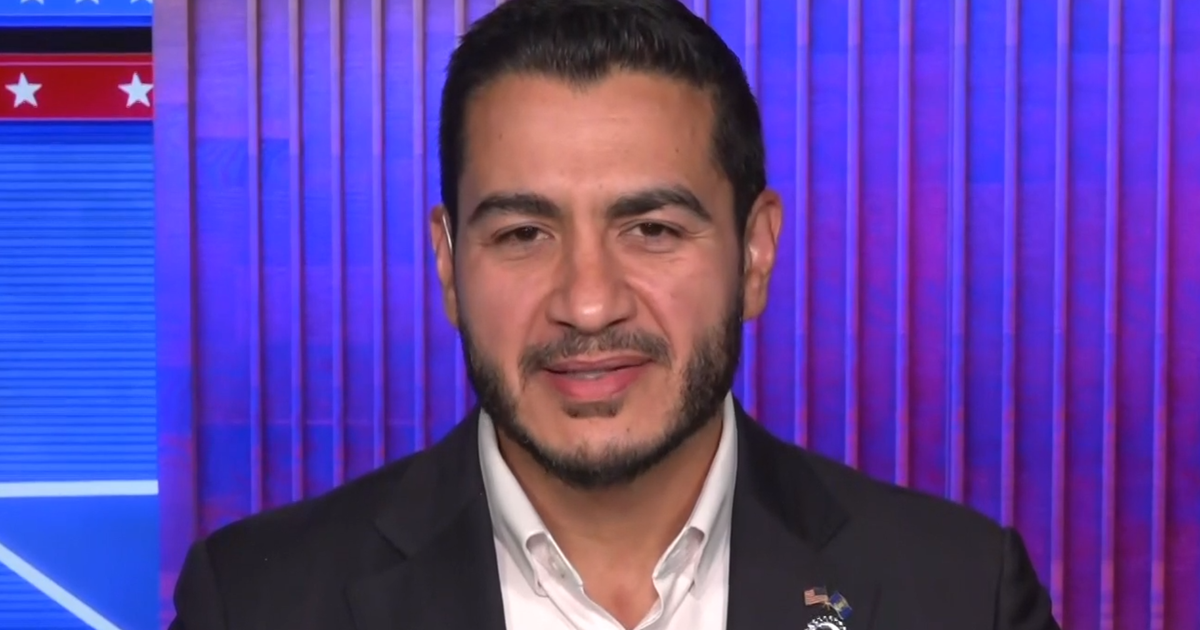
The Abdul El-Sayed unity message arrived within hours of his projected victory, as the 41-year-old former Michigan health official turned immediately toward the work of repairing a Democratic Party bruised by one of the most contentious primaries of the cycle.
Speaking on “CBS Mornings” Wednesday, El-Sayed acknowledged plainly that considerable repair work lies ahead following what he described as a hard-fought primary.
An Open Door Rather Than a Victory Lap
His framing avoided the triumphalism that often follows an upset win.
He described his campaign as a broad and open movement, extending an invitation to anyone who believes government should belong to ordinary people rather than to concentrated interests. That language deliberately left room for voters and operatives who had spent months working against him.
El-Sayed’s campaign declared victory earlier Wednesday morning after a close contest with Rep. Haley Stevens.
The Conversation That Hasn’t Happened Yet
As of the interview, El-Sayed and Stevens had not yet spoken.
He expressed confidence that both are committed to reunifying the party, and said he was looking forward to that exchange. He also emphasized the compressed timeline, noting that only 13 weeks remain before the general election against an opponent he argued has no business serving in the Senate.
His characterization of the primary itself was notably generous. He said he was grateful for the race and argued that what unites him and Stevens vastly outweighs whatever divided them during the campaign.
That posture matters practically. Stevens built a coalition of moderates, suburban voters, and establishment institutions. El-Sayed needs a meaningful share of those voters in November, and antagonizing them now would carry real cost.
The November Matchup
El-Sayed will face former Rep. Mike Rogers, who ran unopposed in the Republican primary.
Rogers came close in 2024, losing narrowly to Sen. Elissa Slotkin in the contest for Michigan’s other Senate seat. That near miss gives him both name recognition and a proven ability to compete statewide.
Michigan’s political character makes the race genuinely uncertain. The state has not sent a Republican to the Senate since 1994, yet it has backed Donald Trump in two of the last three presidential elections.
This seat sits among a small group Democrats must defend, and those defenses will help determine which party controls the chamber.
The Campaign He Says He Ran
El-Sayed described three founding objectives for his campaign: removing money from politics, putting money back into voters’ pockets, and passing Medicare for All.
He drew a direct contrast with his opponent, claiming Rogers wants to increase the influence of money in politics rather than reduce it.
That framing lets him keep his core primary message intact while redirecting it outward. Rather than abandoning the argument that carried him past Stevens, he is aiming it at a Republican target.
A Message to Democrats Who Opposed Him
El-Sayed faced substantial resistance from national Democrats during the primary, many of whom backed Stevens explicitly on electability grounds while progressive leaders lined up behind him.
Asked what he would say to those who withheld support, he pointed toward the common opponent. He argued this is a moment to remember what the party collectively faces in the Trump administration, and that whatever disagreements exist among Democrats are dwarfed by their areas of agreement.
He laid out a sequence of goals: defeating Rogers, defeating what he called Trumpism, holding the administration accountable over the coming years, and eventually electing a president committed to democratic values, healthcare access, strong schools, and broader opportunity.
He closed the thought simply, expressing hope that the party could come together starting that day.
What Unity Actually Requires
Conciliatory language is the easy part of this process. The harder question is whether institutional support follows.
Several tests will reveal how sincere the reconciliation proves to be:
Whether Stevens campaigns actively for El-Sayed rather than offering a perfunctory endorsement
Whether national committees invest at levels comparable to what they would have committed for a moderate nominee
Whether the donors and outside groups that spent heavily against him redirect resources toward defeating Rogers
Whether Gov. Gretchen Whitmer, who endorsed Stevens late in the primary, appears alongside El-Sayed
None of those are guaranteed. Primaries this expensive and this personal tend to leave residue.
The Broader Stakes
For El-Sayed, the coming weeks require a difficult balance. He must retain the energy and volunteer base that powered his insurgent campaign while simultaneously reassuring voters who found his politics too far left.
Candidates who manage that transition well tend to do it by keeping their economic message central and letting ideological labels fade into the background. His emphasis on healthcare costs and money in politics suggests he understands the assignment.
Thirteen weeks is not long. Whether Michigan Democrats spend that time arguing with each other or arguing with Mike Rogers will likely determine the outcome.
Author
-
Lucienne Albrecht is Luxe Chronicle’s wealth and lifestyle editor, celebrated for her elegant perspective on finance, legacy, and global luxury culture. With a flair for blending sophistication with insight, she brings a distinctly feminine voice to the world of high society and wealth.