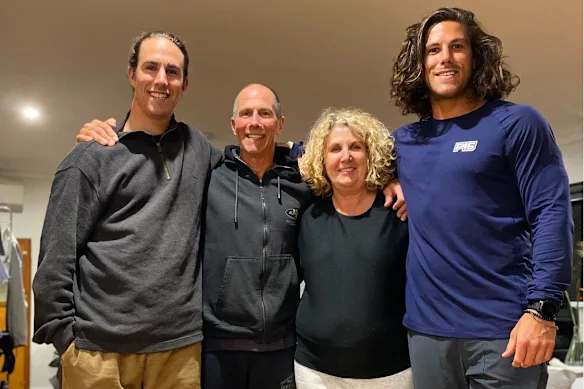
Renee Good and Alex Pretti died more than six months ago in Minneapolis. On Monday, Minnesota investigators finally got their hands on the evidence they had been demanding ever since.
Federal prosecutors turned over the long-withheld materials to state authorities, marking a rare breakthrough in a standoff that has frustrated local officials and infuriated the victims’ families.
What Was Handed Over
Hennepin County Attorney Mary Moriarty said the release from U.S. Attorney Daniel Rosen’s office included:
- Hard drives containing witness statements
- Police body camera footage
- Additional case materials previously kept from state investigators
- Good’s severely damaged SUV
“The wonderful thing now is we have all the evidence,” Moriarty said, adding that any time the government takes the life of a community member, a complete and rigorous investigation is essential.
The Minnesota Bureau of Criminal Apprehension, which took custody of the materials, said significant progress had been made toward a full review of the shootings.
Who They Were
Renee Good was 37, a mother of three. She was shot and killed inside her vehicle on January 7 as she left a protest against immigration enforcement in Minneapolis.
Alex Pretti was also 37 — an intensive care nurse. He died on January 24, shot during another protest just weeks later.
Their deaths triggered national outrage and intensified calls to restrain federal immigration operations. The Minneapolis crackdown that formed the backdrop, branded “Operation Metro Surge” and promoted as the largest immigration enforcement operation ever attempted, was wound down in February.
The Leverage That May Have Broken the Logjam
Moriarty declined to explain what finally moved the federal government. But court filings offer a plausible answer: the feds wanted something too.
State investigators had gathered evidence in the case of ICE agent Christian Castro, 52, who was charged with assault and falsely reporting a crime. Prosecutors allege Castro fired through the front door of a Minneapolis home on January 14, striking Julio Cesar Sosa-Celis in the thigh while chasing a different man. Sosa-Celis survived.
When federal officials came looking for that material, Minnesota set terms. In a legal filing, Bureau of Criminal Apprehension Superintendent Drew Evans wrote plainly that the state would share evidence only if the exchange went both ways.
Moriarty and Attorney General Keith Ellison then amended their lawsuit against the administration to document the refusal to cooperate. Within days, both sides had reopened talks about mutual information sharing.
Lingering Distrust
Nobody in Minnesota is calling this resolved.
Ellison said he remains deeply troubled that it took more than half a year for the materials to arrive. It should never have dragged on this long, he said, expressing hope that it signals a genuine shift in federal behavior rather than a one-time concession.
Moriarty is not withdrawing the lawsuit, which seeks access to evidence in three separate shootings.
And the Pretti family remains unconvinced. Their attorney, Steve Schleicher, said Rosen’s office refused during a Monday meeting to confirm any formal cooperation agreement between state and federal agencies. No family, he argued, should have to plead with federal authorities to do their jobs. Without a public commitment to cooperate, he said, holding anyone accountable for Pretti’s death becomes nearly impossible.
Lawyers for Good’s family were more measured, calling the transfer a meaningful step toward justice and accountability.
Requests for comment from Rosen’s office, ICE, and the Department of Homeland Security went unanswered Monday.
Houston: Same Problem, No Progress
While Minnesota inched forward, prosecutors in Texas voiced identical complaints.
They are investigating the death of Lorenzo Salgado Araujo, a Mexican national and homebuilder who had lived in the United States for decades. He was shot last week by an ICE officer.
DHS has conceded that officers stopped Salgado Araujo while searching for someone else entirely. The agency insists he rammed an ICE vehicle while trying to leave, prompting an officer to fire in self-defense — but has produced no evidence supporting that account.
Harris County District Attorney Sean Teare said his office still does not know the names of the officers involved, or even where they are, nearly a week after the shooting.
“The federal government has not invited us in,” Teare said. “The federal government is not collaborating with us with this investigation.”
A Growing List, No Charges
At least nine people have died since the administration’s immigration enforcement campaign began last year. Not one person has been charged in connection with those deaths.
The federal government has taken the position that state prosecutors lack jurisdiction to investigate federal officers at all — a claim that sits at the center of the legal fight now unfolding in Minnesota.
Another Death, Another Investigation
The Minnesota development landed on the same day an ICE agent shot and killed a motorist in Maine.
The man, a Colombian national, died in Biddeford, a coastal city of roughly 23,000 people about 15 miles southwest of Portland. Federal officers claimed he attempted to use his vehicle as a weapon against agents pursuing him for deportation.
It is a claim that echoes almost word for word what DHS said about Houston. And like Houston, it arrives without supporting evidence — leaving yet another set of local investigators to ask the same question Minnesota spent six months asking: will the federal government show them what happened?
Author