Borrowing Costs Are Climbing
The latest news on federal student loan rates brings a fresh challenge for students and families already stretched thin by the rising cost of higher education. Interest rates on new federal student loans are set to increase for the upcoming school year, adding another layer of financial pressure.
While the rate hike itself is modest, it arrives at a difficult moment for borrowers navigating a complex and shifting financial landscape.
A Small but Notable Increase
The new rates represent a relatively minor jump. Borrowers will face a rate of 6.52 percent, compared to 6.39 percent this year.
Although the increase may seem slight, it compounds the challenges students are already confronting. Many are grappling with steep college costs while also dealing with stubbornly high prices at the grocery store and gas station.
On top of these everyday expenses, borrowers must now contend with a major overhaul of the federal student loan repayment program, including new limits on how much they can borrow.
When the New Rates Apply
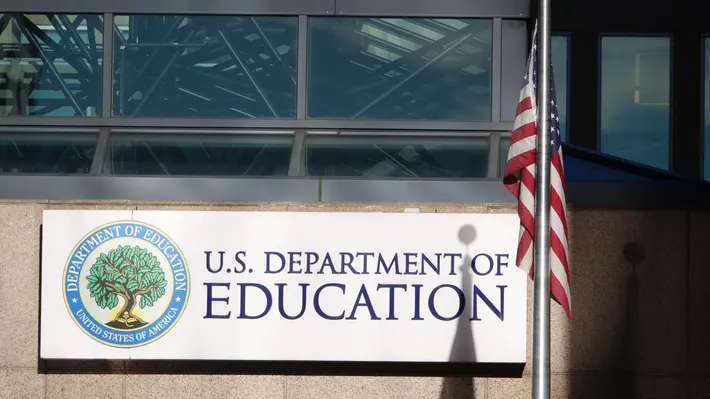
The Education Department announced the updated rates this month. These rates apply to loans made between July 1 of this year and June 30 of next year.
Importantly, the rates remain fixed for the entire life of the loans. They do not apply to loans taken out earlier, meaning existing borrowers will not see their rates change as a result of this announcement.
This fixed structure provides some predictability, even as the starting point shifts higher.
A Discount That Won’t Help New Borrowers
There is a potential bright spot, but it comes with significant limitations. Students taking out the new, higher-rate loans are unlikely to benefit from a temporary interest rate reduction the Education Department announced.
Starting July 1, the department said it would offer a temporary rate reduction to borrowers who are repaying their loans and who sign up by September 30 to have their monthly payments automatically deducted from their bank accounts.
However, this perk applies only to borrowers already in active repayment. According to the department’s press office, those just beginning to borrow will not qualify.
Why Timing Matters
The reasoning behind this exclusion is straightforward. Students who take out loans on July 1 or later for the coming academic year cannot benefit from the discount because they will not yet be in repayment.
Scott Buchanan, executive director of the Student Loan Servicing Alliance, explained this limitation. He did note one possible exception involving students who already earned undergraduate degrees and had begun repaying their loans but are now in graduate school.
These individuals may be allowed to waive the in-school deferment of their loans and continue making payments. Because they would still be actively paying, they could potentially benefit from the temporary discount.
Parent PLUS Loans Face Hurdles
The timing issue also affects Parent PLUS loans. Buchanan noted that while these loans typically enter repayment relatively soon after they are issued, most such loans borrowed on July 1 or later would not meet the September 30 enrollment deadline to qualify for the discount.
This means that many parents borrowing for the upcoming year will miss out on the temporary savings. The narrow window for eligibility leaves a significant number of borrowers unable to take advantage of the offer.
The result is that new borrowing largely falls outside the scope of the discount program.
Impact on Different Loan Types
The higher rates affect multiple categories of loans. Both subsidized loans, which are based on financial need, and unsubsidized loans will see the increase.
The distinction between these two types matters. With subsidized loans, students are not charged interest while they remain enrolled in college. In contrast, unsubsidized loans begin accruing interest from the moment the money is sent to the school.
This difference can have a meaningful effect on the total amount borrowers ultimately repay.
Putting the Increase in Perspective
Financial-aid expert Mark Kantrowitz noted that the new rate is the highest since the 2024-25 school year, when it stood at 6.53 percent. While this marks an increase, the practical impact remains relatively contained.
To illustrate, the increase is minimal in dollar terms. On a loan of $5,500, the new rate would cost a borrower about $44 more in interest over the course of a standard 10-year repayment plan, according to an online student loan calculator.
This modest figure helps frame the rate hike as more of an added burden than a dramatic shift.
Debate Over Borrowing Limits
The rate increase coincides with broader changes to federal borrowing. Republican proponents of the new loan limits argued that curbing federal borrowing would help keep students and families out of debt and pressure colleges to lower their prices.
However, advocates for borrowers offered a different perspective. They warned that in practice, the limits could push students toward riskier private loans, assuming they can even qualify, and ultimately restrict access to higher education.
Persis Yu, deputy executive director and managing counsel at Protect Borrowers, captured the difficulty of the moment, describing it as a hard place for students and families to find themselves.
Higher Rates for Graduate Students and Parents
The rate increases extend beyond undergraduates. Rates for graduate and professional students rose to 8.07 percent from 7.94 percent.
Meanwhile, rates on PLUS loans, which provide additional financing to parents and some graduate students, climbed to 9.07 percent from 8.94 percent. Notably, graduate PLUS loans have been eliminated for new borrowers as of July 1.
An exception exists for graduate students who were already enrolled and had taken out loans before July 1, preserving some access for those already in the system.
How the Rates Are Determined
The process for setting these rates follows a specific formula. Rates are determined annually for new loans, based on a formula established by Congress.
This formula takes the high yield from the final 10-year Treasury note auction in May and adds a fixed amount. For example, this year the high yield at the May 12 auction was 4.468 percent, with an extra 2.05 percent added for undergraduate loans. The additional amount is larger for graduate and PLUS loans.
There are also legal caps in place. Rates on undergraduate loans cannot exceed 8.25 percent, while the maximum rates are 9.5 percent for graduate and professional loans and 10.5 percent for PLUS loans.
Changes to Borrowing Limits
Borrowing limits are shifting as part of a major tax and policy bill that Republicans passed last summer. The law also made significant changes to the menu of affordable repayment plans, with some options depending on the timing of borrowing.
For undergraduate students, the caps remain unchanged. Dependent students can borrow up to $5,500 in their first year, up to $6,500 in the second year, and $7,500 in the third and later years, for an overall total of $31,000. Limits are higher for independent students.
The more substantial changes target graduate students and parents.
New Limits for Graduate Students
Graduate borrowing faces notable restrictions starting July 1. Previously, graduate students could borrow up to their program’s total cost of attendance through a combination of direct loans and PLUS loans.
Now, with the graduate PLUS option eliminated, borrowing for many graduate programs will be limited to $20,500 a year and $100,000 total. These new limits do not apply to legacy borrowers who enrolled and borrowed before July 1, provided they remain in the same program.
Students pursuing certain professional degrees, such as medicine, dentistry, law, and veterinary medicine, can borrow more, up to $50,000 a year and $200,000 overall.
Restrictions on Parent Borrowing
Parents will also encounter new caps. Previously, parents could take out PLUS loans up to the full cost of their child’s attendance.
Under the new rules, these loans will be capped at $20,000 a year per dependent child, with a total limit of $65,000 per child. This change reflects growing concern that the ability to borrow almost any amount through Parent PLUS loans was pushing some families into unmanageable debt.
Yu cautioned, however, that restricting borrowing without addressing the high cost of college could make it harder for some students, particularly those from lower-income and minority families, to afford higher education.
Planning Becomes Essential
The tighter caps mean families must think more carefully about financing. Ann Garcia, a certified financial planner and author, noted that some families historically approached college funding by spending their savings first and figuring out the rest later.
With the new borrowing limits in place, Garcia emphasized that mapping out financing for a student’s entire course of study has become especially important. In her words, families now need to have more of a plan.
This shift requires a more strategic and forward-looking approach to paying for college.
Exploring Alternatives
Many families may turn to the private loan market to cover funding gaps, though qualifying can be challenging. Unlike government PLUS loans, which require only a cursory credit review, private lenders conduct full credit checks, including evaluating credit scores.
Borrowers with excellent credit may secure lower rates than federal loans offer, while those with poor credit may face higher rates or need a co-signer. Private loans also tend to carry more risk because they often lack protections found in federal loans, such as income-linked payment plans and options to postpone payments during financial hardship.
Betsy Mayotte, founder of the Institute of Student Loan Advisors, warned that students unable to qualify for private loans may be forced to abandon their studies, ending up with debt but no degree. She noted that these are often the borrowers who default.
State-Level Solutions Emerge
Some states are stepping in to address the gap. States including Connecticut and Minnesota are creating their own graduate loan programs to fill the void left by the new federal limits.
However, these solutions may take time to develop more broadly. It could be a while before additional states establish their own options, leaving many borrowers without immediate alternatives.
Looking Ahead
The combination of rising rates, new borrowing limits, and a transformed repayment system has created a more complicated environment for students and families. While individual rate increases remain small, the cumulative effect of these changes presents real challenges.
As borrowers adapt to the new landscape, careful planning and a clear understanding of available options will be more important than ever. The coming year will test how students, families, and institutions respond to a financial aid system in significant transition, with the stakes remaining high for those pursuing higher education.
Author