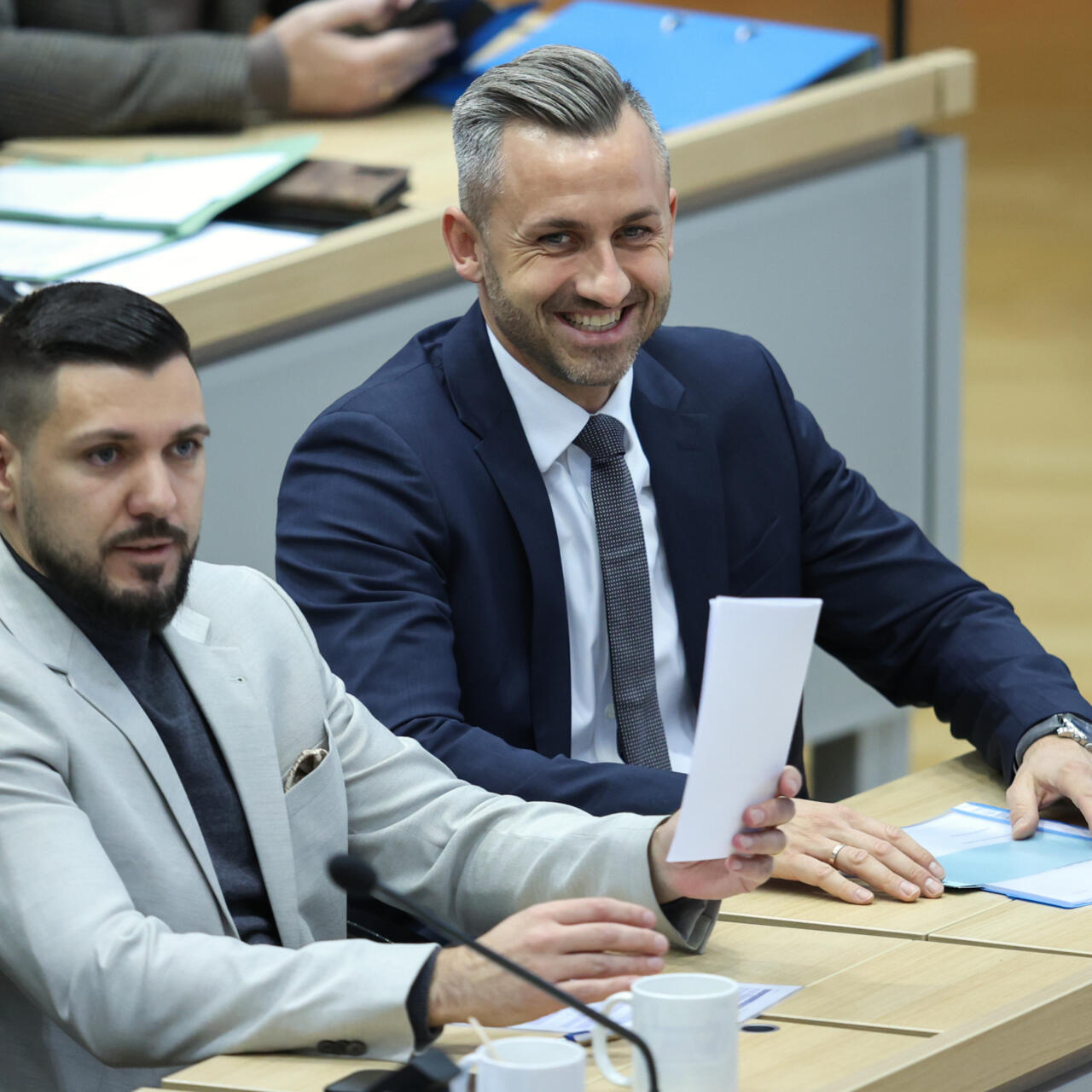
The AfD parliament speaker vote in Saxony-Anhalt has marked a first for postwar Germany. On Tuesday, Tobias Rausch of the far-right Alternative für Deutschland was elected president of the state parliament, making the AfD the first far-right party to hold such a post in any German regional assembly since the Second World War.
How the Vote Unfolded
Rausch, 35 and a former estate agent, won in the first round at the opening session in Magdeburg, collecting 48 of the 82 votes cast. Twenty-nine members voted against him and five abstained.
The AfD holds 39 seats, just short of a majority. Five members of the BSW, a small left-wing party that shares some of the AfD’s positions on Russia and immigration, had said they would back him. That means four additional lawmakers supported him in the secret ballot, and their identities are unknown.
Later in the day, Hans-Thomas Tillschneider, from the party’s more extreme wing, was elected deputy speaker with 44 votes. The BSW had said it would not support him, so it is unclear who delivered those votes.
The Firewall Under Strain
For years, mainstream parties have kept a moral agreement, known as the firewall, to shun the AfD. This vote shows it cracking. The AfD, which the state’s intelligence agency classes as right-wing extremist, won almost 44 percent of the vote last month.
BSW founder Sahra Wagenknecht said it was time to end what she called firewall idiocy. Deputy leader Christian Leye said the firewall is not working and that the votes of nearly 44 percent of the electorate cannot be ignored. He argued for engaging with the AfD’s programme instead.
The result gives the party a realistic path to forming a government, something that had looked unlikely. That would be an even bigger milestone in postwar German politics.
Who Are the New Office Holders?
Rausch promised to represent all voices and make decisions transparently. His own group and the BSW applauded, while other lawmakers did not respond. He was a central figure in a nepotism row over AfD members employing relatives in parliament. He denied that siblings and a brother-in-law worked there, though he confirmed employing several players from his football club. He is a close ally of Ulrich Siegmund, the AfD’s lead candidate.
Tillschneider, an Islamic studies scholar, is described as the architect of the party’s radical manifesto and is tipped to become culture and science minister. He has praised Vladimir Putin and has described Islam as a fungus growing on the German oak.
Government Talks and Warnings
Siegmund has until December to form a government. He says negotiations are going well but has not named partners. The AfD says it is courting CDU members, which CDU leaders deny. The BSW says it would back an AfD-led government only if a nonpartisan figure leads it, a condition the AfD rejects.
Opposition lawmakers were furious. Green MP Susan Sziborra-Seidlitz said those who gave the office to an extremist party would bear responsibility for the consequences. Eva von Angern of Die Linke compared the moment to Hermann Göring’s use of the Reichstag speaker’s role in the 1930s. She also claimed there were already effects, including fewer tourists and teachers withdrawing applications.
Pressure on Merz
The Saxony-Anhalt result, with two other regional elections in September, has put Chancellor Friedrich Merz under heavy strain. He promised in 2025 to halve AfD support. Instead, the CDU’s backing has roughly halved while the AfD has risen to about 30 percent in national polls.
What to Watch Next
- Who the four unidentified backers of Rausch and the supporters of Tillschneider are
- Whether Siegmund can assemble a government by December
- Whether the CDU holds its line against cooperation
- How the BSW’s conditions play out
The Bottom Line
A symbolic barrier has fallen. Whether it was a one-off or the first step toward AfD governance in Saxony-Anhalt will become clear in the coming weeks, and the answer will shape German politics well beyond one state.
Author