The Golden Gate Bridge protesters at the center of one of San Francisco’s most closely watched protest cases have been convicted of multiple misdemeanors, even as jurors couldn’t agree on the far more serious felony conspiracy charge. The verdict, handed down Thursday, closes one chapter in a legal saga that has become emblematic of the broader clash over how authorities respond to pro-Palestinian demonstrations.
What the Jury Decided
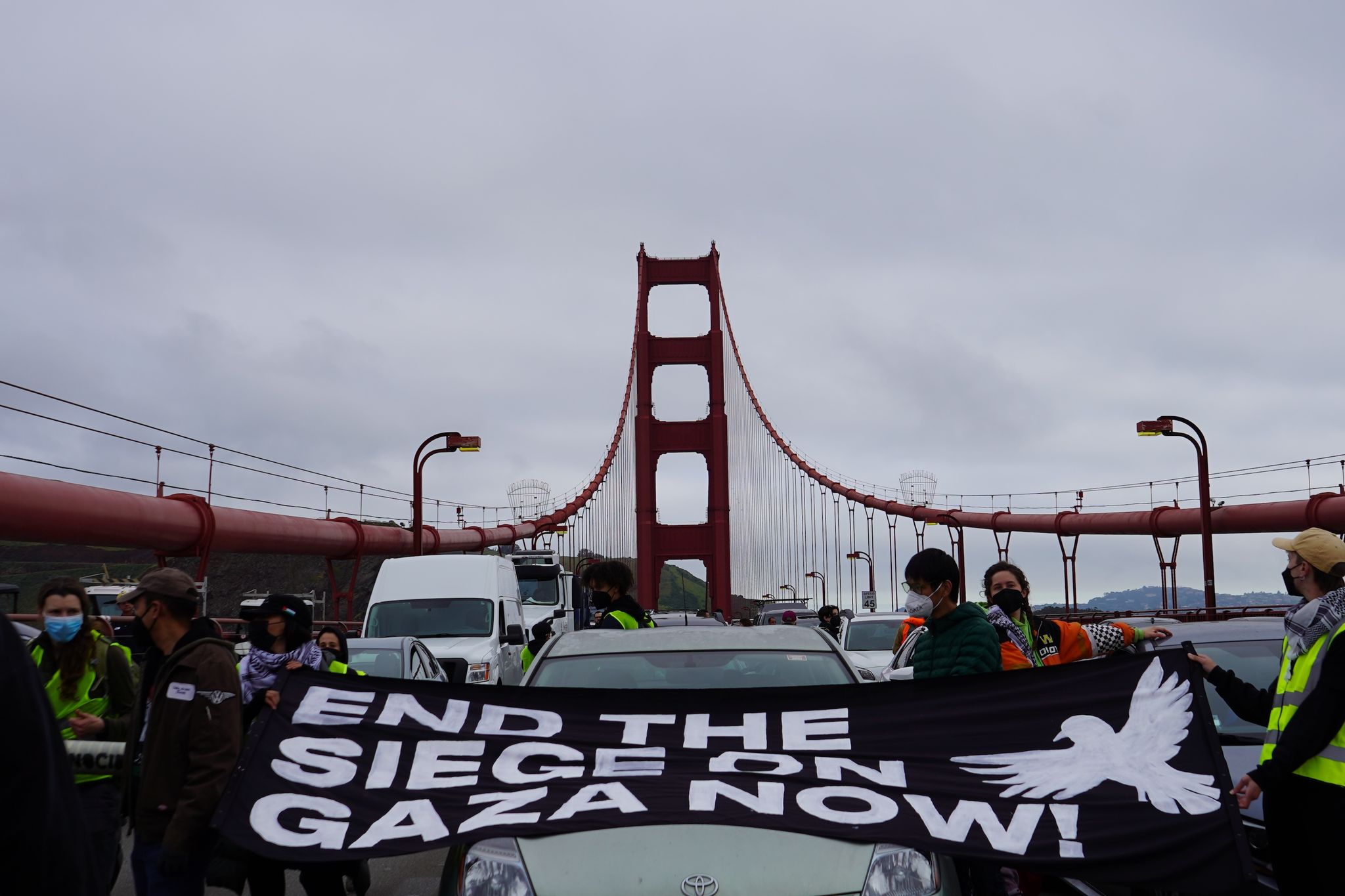
After roughly six weeks of trial and days of deliberation, a San Francisco jury found seven activists guilty on most of the counts they faced. The charges stemmed from an April 15, 2024 demonstration in which protesters shut down traffic on the iconic bridge for about four hours to protest U.S. military support for Israel during the war in Gaza.
Each of the seven defendants was convicted of six misdemeanors, which included:
- False imprisonment
- Obstruction of a thoroughfare
- Unlawful assembly
One defendant, Sara Cantor, who described herself as a police liaison during the protest, was convicted of an additional misdemeanor for refusing to disperse.
Crucially, though, the jury could not reach a unanimous verdict on the two most contested counts: felony conspiracy and a misdemeanor trespassing charge. The judge declared a mistrial on both. Had the defendants been convicted of the felony conspiracy charge, they could have faced up to 15 years in prison.
A Deadlocked Jury on the Big Charge
The breakdown of the jury’s split proved telling. According to the foreperson, jurors took at least six votes on the conspiracy charge, repeatedly landing at a 10-to-2 split, with the majority favoring guilt. On the trespassing count, the numbers ran the other way, with 11 jurors leaning toward not guilty and a single holdout preventing a unanimous decision.
That the jury balked at the felony charge became the defense’s rallying point. Prosecutors have signaled they intend to weigh their options, and a hearing on a possible retrial of the deadlocked charges was set to follow in early July.
Sentencing Looms in August
The convicted protesters are scheduled to be sentenced on August 21. Six of them face a maximum of five years in county jail, while Cantor faces up to five and a half years due to her additional conviction.
The seven defendants, identified as Bhavika Anandpura, River Allen, Sara Cantor, Rocky Chau, Conrad de Jesus, Sarah Ferrell, and Em Tillotson, sat in a packed courtroom as the verdicts were read. Some remained stoic while others wept, and supporters flooded out of the courthouse chanting slogans in solidarity with Palestinians.
How the Protest Unfolded
The demonstration itself was carefully coordinated. On Tax Day 2024, activists drove onto the bridge from Marin County, stopped their vehicles in a row across the southbound lanes, and physically locked themselves together, some extending their arms through PVC pipes and chaining themselves to cars. The result was a four-hour standstill for drivers heading into the city.
The action was part of a nationwide Tax Day protest against U.S. financial and military aid to Israel. Some motorists reported missing medical appointments and work shifts while stuck in the resulting gridlock, and the bridge lost thousands of dollars in uncollected tolls.
Two Competing Narratives
Throughout the trial, jurors weighed sharply different portrayals of what happened. Prosecutors from District Attorney Brooke Jenkins’s office argued the protest created a serious public safety risk, trapping motorists and endangering the health and welfare of those stuck on the span. The DA’s office framed the coordinated nature of the action, the simultaneous arrival, the locking mechanisms, and the discarding of car keys, as evidence of conspiracy.
The defense told a different story. Attorneys maintained that the protesters acted out of a genuine moral obligation to draw attention to what they viewed as a genocide unfolding in Gaza. They emphasized that their clients turned to civil disobedience only after more conventional avenues, like writing letters and contacting members of Congress, led nowhere. At the time of the protest, Israel was weighing an invasion of Rafah, where roughly a million displaced Palestinians had sought refuge, and the activists believed urgent action was necessary to save lives.
Accusations of Overcharging
A dominant theme, both inside and outside the courtroom, has been whether the prosecution went too far. Defense attorneys repeatedly characterized the case as dramatically overcharged for what amounted to a familiar form of Bay Area civil disobedience.
The group became known as the “Golden Gate 26,” a reference to the number of people originally arrested. Charges against the majority were later dropped, deferred, or diverted, leaving these seven as the primary targets of the prosecution. Critics questioned why the DA didn’t reduce the felony charges to misdemeanors after dismissing so many of the other cases.
Defense lawyers also drew pointed comparisons to how similar protests have been handled. They noted that demonstrators who blocked the San Francisco-Oakland Bay Bridge in 2023 during the APEC Summit received only a fine and a few hours of community service. Past bridge protests tied to causes like the AIDS epidemic and the killing of George Floyd similarly resulted in minor consequences, without felony charges.
The Restitution Controversy
Adding to the sense that these protesters were being treated differently, the Golden Gate Bridge transit authority took the unusual step of demanding restitution for the toll revenue lost during the shutdown. Critics pointed out that the authority had never before sought restitution from a traffic-blocking protest on the bridge, viewing it as further evidence that demonstrators were being singled out for their pro-Palestinian stance.
The public defender’s office also publicly criticized the DA’s office for using social media to solicit people affected by the protest to come forward and seek restitution. Ultimately, the restitution claims were resolved before trial, with individual defendants paying modest sums ranging from the hundreds into the low thousands of dollars.
A Defiant Response
Despite the convictions, the defense team struck a triumphant tone. Speaking outside City Hall, Deputy Public Defender Nuha Abusamra framed the outcome as a victory rooted in the jury’s refusal to convict on the felony charge. She insisted the fight was about more than winning, describing the case as a precedent for both the movement and civil rights more broadly. She characterized blocking traffic for a few hours as the bare minimum citizens should be doing while their tax dollars fund the war.
The defense confirmed it plans to appeal the misdemeanor false imprisonment convictions. One defendant reflected on the emotional weight of the day of the protest, describing a profound sense of relief at feeling able to actually do something in the face of overwhelming odds.
A Bridge With a History of Protest
The Golden Gate Bridge has long served as a stage for political expression. Since the late 1980s, the 4,200-foot span connecting San Francisco and Marin County has hosted demonstrations for causes ranging from AIDS awareness and environmentalism to the Black Lives Matter movement. Against that backdrop, the felony charges brought in this case struck many observers as a notable departure from precedent.
As the defendants await sentencing and prosecutors decide whether to retry the deadlocked counts, the case stands as a stark illustration of the heightened tensions surrounding protest, free expression, and the war in Gaza. Whatever comes next, the outcome has already sparked a broader conversation about where the line falls between civil disobedience and criminal conspiracy, and whether that line is being drawn evenhandedly for all who choose to demonstrate.
Author