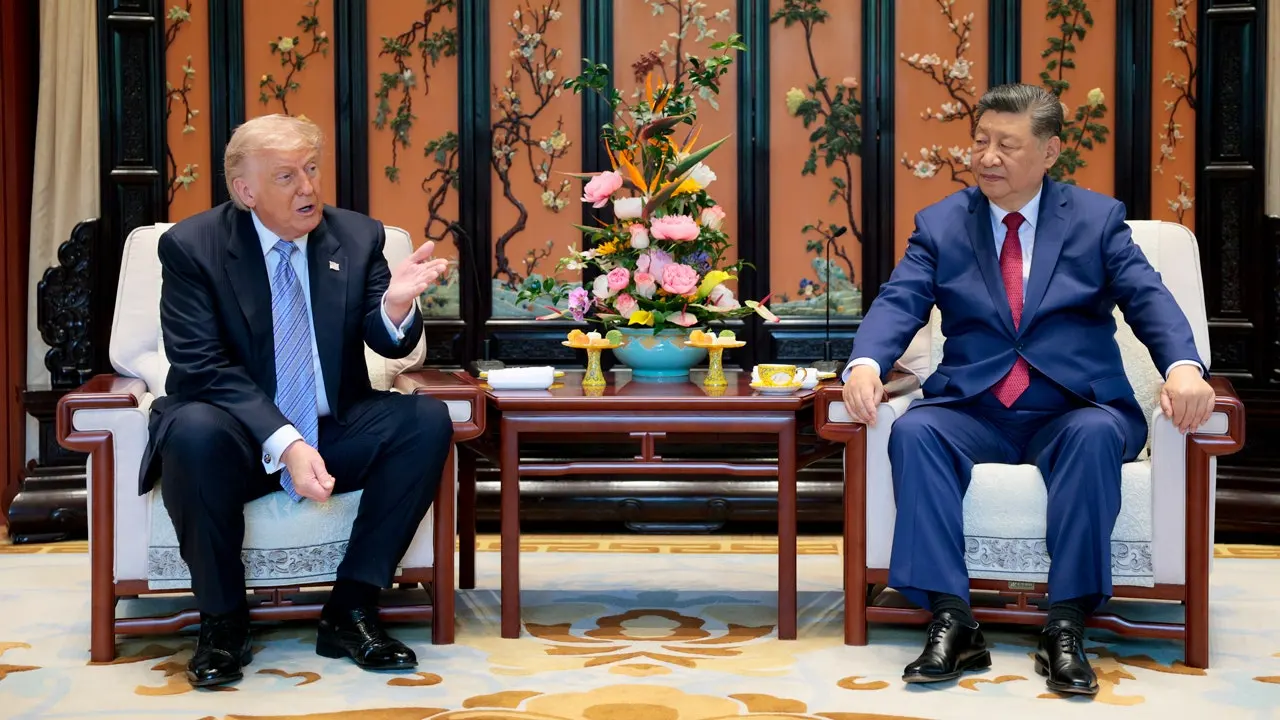
Trump China Visit Ends With Trade Optimism but Lingering Uncertainty on Iran and Taiwan
The Trump China visit has wrapped up after three eventful days, leaving behind a mix of optimism and unanswered questions. While United States President Donald Trump returned home promoting a series of broad trade agreements, his trip produced little tangible progress on two of the most pressing global issues: the future of Taiwan and the ongoing US-Israeli war in Iran.
The visit marked the first trip to China during Trump’s second term and was filled with diplomatic spectacle. Yet beneath the ceremonial warmth, deep disagreements and strategic ambiguity remained firmly in place.
A Trip Filled With Pomp and Symbolism
From the moment Trump arrived, the visit was designed to project goodwill and grandeur. He was welcomed by waving children and a formal military honor guard, given a private tour of a historically secretive former imperial garden, and taken to the 15th-century Temple of Heaven, a site rich in Confucian and cultural significance.
By the conclusion of the trip, both Washington and Beijing publicly described the visit as a success. However, their interpretations of what was actually accomplished diverged in notable ways, particularly regarding trade and security matters.
Taiwan Remains a Delicate Flashpoint
One of the most closely watched topics was Taiwan, the self-governing island that Beijing claims as part of its territory. Speaking to reporters aboard Air Force One, Trump confirmed that he and Chinese President Xi Jinping discussed the issue at length.
According to Trump, Xi made clear his opposition to Taiwanese independence. Trump, however, said he chose to listen without offering a response or making any commitments in either direction.
Xi framed Taiwan as the single most important issue in China-US relations. He warned that mishandling the matter could push the two nations toward confrontation or even conflict, potentially placing the entire relationship in a dangerous position.
Trump also addressed the sensitive question of US arms sales to Taiwan, an issue with strong backing in the US Congress but firmly opposed by Beijing. He stated that no final decision had been made, adding that he believed a war thousands of miles away was the last thing currently needed.
Key points regarding Taiwan included:
- Xi reiterated firm opposition to Taiwanese independence
- Trump declined to take a public position on the matter
- No decision was announced on a new US weapons package
- Taiwan’s foreign minister signaled a desire to strengthen ties with the US amid rising regional risks
Little Clarity on the US-Israeli War in Iran
The conflict in Iran was another major topic during the summit. Trump said he and Xi spoke extensively about the US-Israeli war and shared a mutual interest in reopening the Strait of Hormuz, a critical route for global oil shipments.
Some members of the Trump administration had hoped Beijing would use its influence over Tehran to help break the deadlock in ceasefire negotiations. However, Trump appeared to downplay expectations, telling reporters he was not asking China for any favors on the issue.
Chinese Foreign Minister Wang Yi offered little indication that Beijing’s stance had shifted. He reiterated that China encourages the United States and Iran to resolve their disputes, including the nuclear question, through negotiations, and supports reopening the Strait of Hormuz while maintaining a ceasefire.
In the end, the White House announced no concrete breakthroughs on the conflict, leaving the diplomatic path forward largely unchanged.
Trade Deals Take Center Stage
Where Trump expressed the most enthusiasm was on trade. Traveling alongside a delegation of prominent US business leaders, he concluded the visit by promoting what he described as a series of strong trade agreements beneficial to both nations.
In an interview with Fox News, Trump highlighted a notable claim: that China had agreed to purchase 200 aircraft from American manufacturer Boeing. If finalized, such a deal would represent the first major Boeing purchase by China in more than a decade. The White House also suggested that China could soon increase its purchases of US oil and agricultural products.
However, the specifics remained unclear. Beijing was far more reserved in its messaging, and China’s official summary of the visit made no mention of any new agreements.
According to Foreign Minister Wang, both sides agreed to establish a trade council and an investment council, and to continue discussions on tariff adjustments and agricultural market access. Notably, Trump said tariffs were not discussed during his meetings with Xi, and he gave no update on whether a previous trade war truce from October had been extended.
A Summit of Symbolism Over Substance
The contrast between the visit’s ceremonial success and its limited concrete outcomes highlights the complex nature of US-China relations. Both leaders appeared eager to project stability and cooperation, particularly on economic matters, while carefully avoiding firm commitments on the most contentious geopolitical issues.
The differing accounts of what was agreed upon further underscore the strategic caution on both sides. Trade optimism offered a positive headline, but the absence of clarity on Taiwan and Iran revealed how fragile and unresolved key tensions remain.
What This Means Going Forward
The Trump China visit illustrates a relationship increasingly defined by a business-first approach, where economic deals take priority while harder security questions are deliberately left open. For now, both nations seem content to emphasize cooperation where possible and sidestep confrontation where necessary.
Yet the unresolved issues are significant. Taiwan continues to be a potential flashpoint, the war in Iran remains volatile, and the long-term trajectory of US-China trade is still uncertain.
Final Thoughts
Trump’s three-day visit to China delivered impressive diplomatic imagery and hopeful trade announcements, but it stopped well short of resolving the deeper challenges shaping global politics. As both nations move forward, the world will be watching closely to see whether the optimism surrounding trade can translate into lasting stability, or whether unresolved tensions over Taiwan and Iran will define the next chapter of US-China relations.
Author