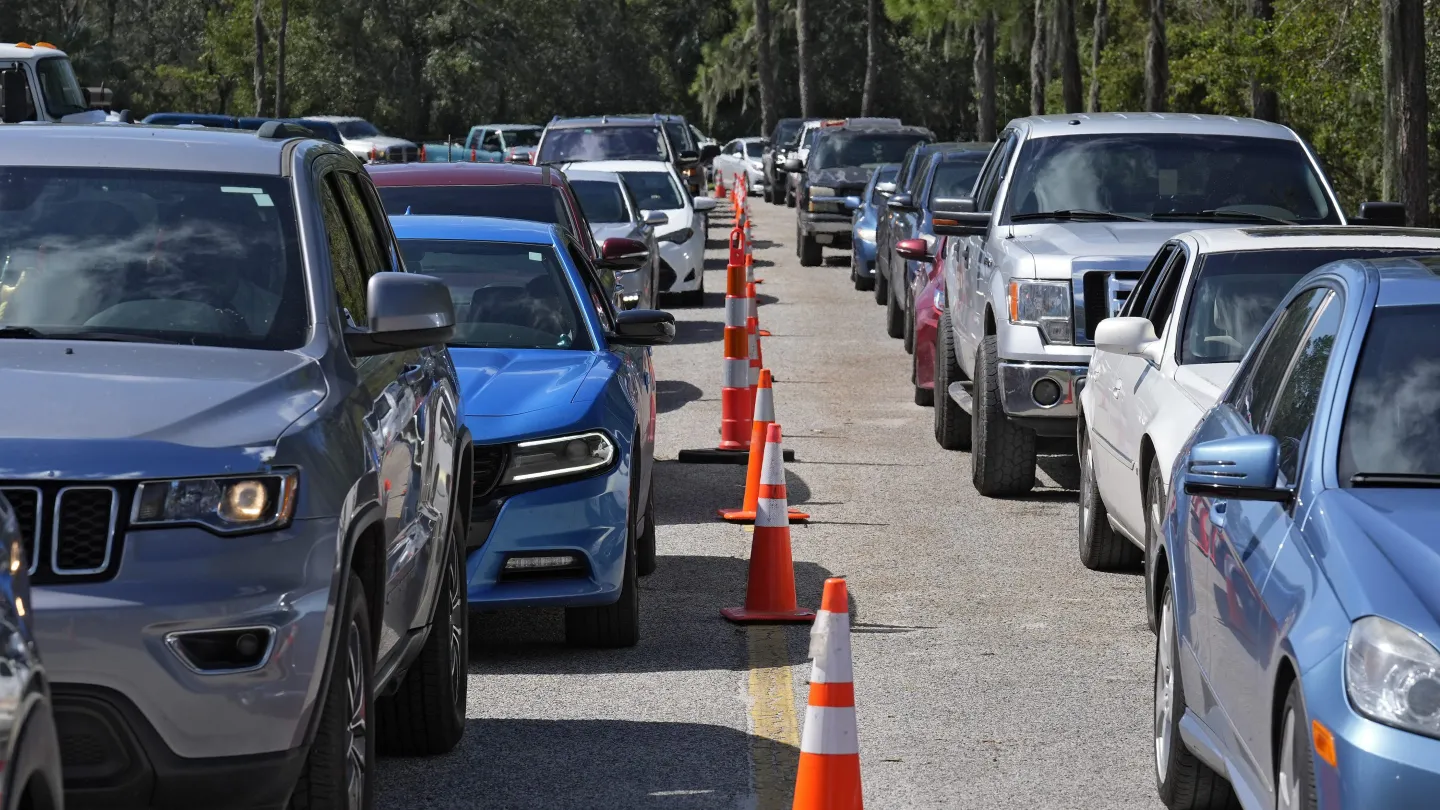
Gas shortages have compounded an already difficult week for residents across the Chicago area and northwest Indiana, where thousands remained without electricity Wednesday after severe storms swept through the region.
The problem is circular in a frustrating way. Power failures knocked stations offline, since pumps cannot operate without electricity. That pushed all demand onto the handful of locations still running, which then began emptying their tanks. Drivers needing fuel for generators found themselves burning fuel just to search for more.
Hours Spent Driving Between Stations
Residents described extended searches that turned an ordinary errand into most of a morning.
Tamika, who lives in Chicago Heights, said her generator ran out of gas overnight and rain arrived the following morning. She was trying simply to keep power flowing and her refrigerator running.
She estimated she had visited roughly six stations before locating fuel. Many, she said, were open for business but had nothing to sell.
That distinction matters. A station with lights on and no gasoline still draws traffic, which is part of why lines formed so unpredictably across the area.
A Region Not Used to This
For some longtime residents, the scale of the disruption felt genuinely unfamiliar.
Henry Bentley said he has lived in the area nearly 30 years and had never experienced tornadoes and conditions like these. He described it as rougher, in his view, than the pandemic period.
That comparison says less about relative severity than about the nature of the disruption. Weather events strip away basic services abruptly and without any period of adjustment.
Indiana Residents Head West
Officials in Indiana reported both gas shortages and power problems, and advised residents to buy fuel in Illinois.
That guidance produced exactly what it suggests. Drivers began crossing the state line.
Mary Chakonas of Dyer, Indiana, said her family found nothing available locally. She described arriving at one station to find roughly 100 people waiting, at which point her husband decided to head west instead.
Cross-border fuel runs are a reliable indicator of how uneven storm damage can be. Grid restoration proceeds at different rates depending on which substations and lines were hit, so a functioning station may sit only a few miles from an entire cluster of dark ones.
Prices Moving Upward
Several motorists reported higher costs at the pump as demand concentrated on fewer locations.
Tamika said prices were noticeably up. She added a secondary frustration familiar to anyone caught in a widespread outage: she could not log into her rewards account because the system was down, removing even the discount she would normally receive.
Payment and loyalty systems depend on network connectivity, which frequently fails alongside power. Some stations in these situations revert to cash only, another complication when ATMs are also offline.
Practical Advice While Supplies Are Tight
A few things help during a fuel crunch of this kind.
Call ahead where possible rather than driving station to station. Local social media groups often carry faster updates than official channels.
Carry cash. Card systems go down even where pumps are working.
Fill approved containers only, and never store fuel indoors or in an attached garage.
Run generators outdoors, well clear of windows, doors, and vents. Carbon monoxide poisoning consistently spikes after major outages and kills people who survived the storm itself.
Reduce refrigerator and freezer openings. A full freezer holds temperature for roughly 48 hours if left closed, which can stretch limited generator fuel considerably.
Prioritize what the generator powers. Refrigeration, medical devices, and phone charging matter more than convenience appliances.
Why Restoration Takes Time
Utility crews face a specific sequence in events like this. Transmission infrastructure comes first, then substations, then distribution lines feeding neighborhoods, then individual service drops.
When storms bring down large numbers of poles and spans, the repair count itself becomes the bottleneck. Crews mobilized from other regions help, but staging and assignment take time.
That is why some households regain power within hours while neighbors a street away wait days.
The Broader Picture
The storms that caused these outages brought tornadoes and extensive wind damage across parts of Illinois and Indiana, with cleanup underway alongside restoration work.
Fuel availability typically resolves faster than the grid does, since stations only need power to resume operating and deliveries follow shortly after. Until that happens, the queues will keep forming wherever a pump is working.
For people running generators to save food, keep medical equipment operating, or simply hold onto some normalcy, those lines are not an inconvenience. They are the day’s main task.
Author
-
Lucienne Albrecht is Luxe Chronicle’s wealth and lifestyle editor, celebrated for her elegant perspective on finance, legacy, and global luxury culture. With a flair for blending sophistication with insight, she brings a distinctly feminine voice to the world of high society and wealth.