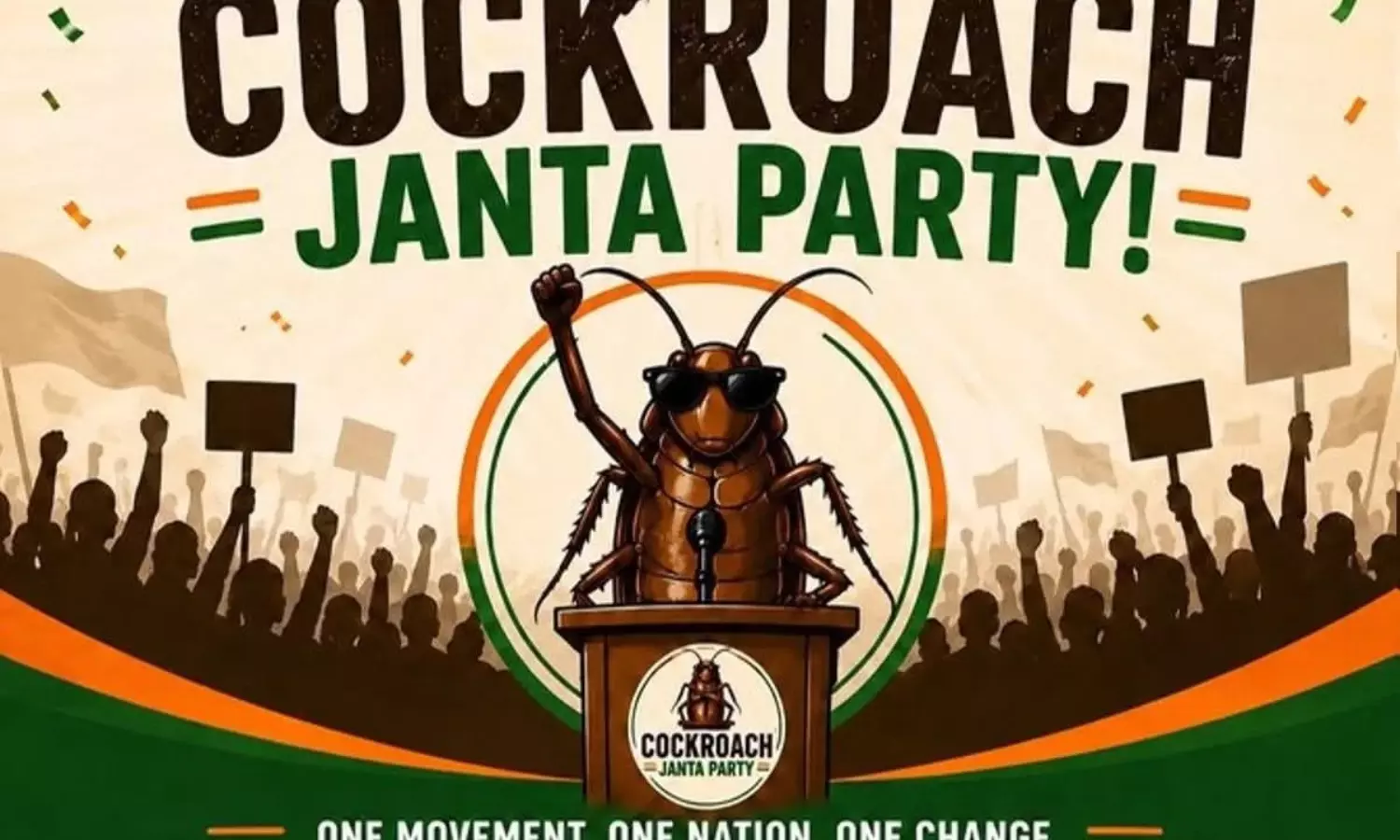
Cockroach Janta Party India Becomes a Viral Symbol of Youth Frustration
The Cockroach Janta Party India has taken social media by storm, becoming an unexpected but powerful symbol of frustration among the country’s young population. What started as a satirical online movement has quickly grown into one of the most talked-about political phenomena in India, drawing massive attention from politicians, the media, and millions of unemployed youth who feel ignored by the system.
A Movement Born From a Single Word
The entire movement traces its roots back to a single controversial comment. Last week, India’s Chief Justice Surya Kant was widely reported to have referred to the country’s unemployed youth as “cockroaches” and “parasites” during a courtroom hearing. The remark sparked immediate outrage among India’s massive Gen Z population, many of whom are struggling with limited job opportunities and rising frustration with the political class.
Within just a few days, the criticism transformed into something no one expected. A satirical online party, the Cockroach Janta Party (CJP), was born and quickly became a viral sensation.
Justice Kant Tries to Clarify, But It’s Too Late
As the backlash grew louder, Chief Justice Surya Kant tried to clarify his earlier statement. He explained that his comments were aimed specifically at individuals who entered professions like law, media, and other respected fields using fake degrees and dishonest means. He insisted he never intended to insult the country’s youth as a whole.
However, by the time his clarification came, the satirical wave was already unstoppable. Millions of Indian youth had embraced the cockroach symbol as a badge of defiance against what they see as a disconnected political and judicial elite.
The Genius Behind the Cockroach Party
The man behind the movement is Abhijeet Dipke, an Indian student currently studying public relations at Boston University. On May 16, he launched the Cockroach Janta Party as a satire to protest the chief justice’s reported remarks. The fictional party describes itself as a “political front of the youth, by the youth, for the youth” and proudly calls itself the “Voice of the Lazy and Unemployed.”
The party’s name is a deliberate spin on the ruling Bharatiya Janata Party (BJP). With “janta” meaning “people” in Hindi, the play on words instantly resonated with young Indians. The CJP’s mascot, a stylized cockroach-man generated through AI, has become an internet sensation, flooding social media feeds across the country.
A Stunning Online Explosion
The numbers behind the CJP’s rise are staggering. In less than a week, its Instagram account amassed more than 20 million followers. To put that into perspective, that’s more than double the followers of the BJP, which has been around for over four decades. It also surpassed the followers of the main opposition party, the Indian National Congress, which has 13 million followers.
This rapid growth signals more than just a viral trend. It reflects the enormous emotional weight that young Indians have attached to the message behind the satire.
Government Tries to Crack Down
The Indian government appears to be taking the satirical movement seriously. On Thursday, the Cockroach Janta Party’s account on X (formerly Twitter) was suddenly blocked. Although the government has not spoken publicly about the move, an official told The Indian Express, on the condition of anonymity, that the Ministry of Electronics and Information Technology had been instructed to shut down the account.
According to that source, the Intelligence Bureau believed the account posed a threat to national security and was sharing “inflammatory content.” Many young people, however, view this as a heavy-handed response to harmless online criticism.
Dipke also revealed on Thursday that there had been attempts to hack the CJP’s Instagram account, raising even more concern about the lengths some may go to silence the movement.
A Reflection of Deep-Rooted Youth Frustration
India is home to the largest youth population in the world, with about 367 million people aged between 15 and 29. While the country’s overall unemployment rate sits at 5.2 percent, the situation looks far worse when you focus on young, educated individuals.
A March report from Azim Premji University revealed that nearly 40 percent of graduates aged 15 to 25 are jobless. Among those aged 25 to 29, around 20 percent are still without work. Only a small fraction of graduates manage to land stable, salaried jobs within a year of completing their education.
These statistics highlight why the Cockroach Janta Party has struck such a powerful chord. For millions of young Indians, the satire reflects their real-life struggles and the sense of being dismissed by a political system that seems out of touch with their needs.
The Power of Memes and Mockery
The CJP’s online content thrives on humor, sarcasm, and satire. Its memes mock corruption, joblessness, and political dysfunction, all while energizing young followers who feel unheard. By turning the chief justice’s insult into a viral symbol, the movement has created a unique space where frustrated youth can vent their anger and feel a sense of community.
It’s a reminder of how powerful digital satire has become in modern politics, especially in a country as digitally connected as India.
A Manifesto With Real Demands
While the Cockroach Janta Party isn’t a real political party and has no plans to contest elections, it has released a five-point manifesto calling for genuine reforms. These include:
- A ban on post-retirement rewards for judges
- Reserving 50 percent of seats in parliament and the cabinet for women
- Stronger protection of voting rights
- Safeguarding an independent press
- A 20-year ban on politicians switching parties, a controversial practice often linked to corruption
Dipke says the goal is not to enter politics but to push for greater accountability and reshape political conversations in India.
Mixed Reactions From Politicians
While the ruling party appears to view the movement as a threat, some politicians are openly defending it. Shashi Tharoor, a senior leader in the opposition Congress party, said he is “incredibly intrigued” by the rise of the CJP. He criticized the decision to block the account on X, calling it “disastrous and deeply unwise.”
A Delhi student told CBS News that the so-called satire is actually raising very serious issues in a creative and smart way. According to the student, the government’s nervousness about the movement only proves how much it has hit a nerve.
Comparisons to Nepal’s Youth Uprising
Many observers are drawing comparisons between India’s growing online movement and the youth-led protests in Nepal last year. Those protests, fueled by similar frustrations over unemployment and corruption, eventually led to the toppling of Nepal’s government. While India is far larger and more complex, the parallels are difficult to ignore.
Threats and Pushback
Despite the movement’s lighthearted appearance, things have taken a darker turn for its founder. On Friday, Dipke revealed that he had received death threats and expressed concern for his family’s safety in India. He urged authorities to take strong action against those issuing the threats.
Some critics have also tried to paint the CJP as part of a political conspiracy aimed at hurting the ruling party. However, the movement’s massive grassroots support suggests that the energy fueling it goes far beyond any single political agenda.
A Cultural Moment That Could Reshape Indian Politics
What started as a satirical reaction to a controversial remark has now become a powerful cultural moment. The Cockroach Janta Party India isn’t just an internet trend. It represents the collective frustration of millions of young Indians who feel locked out of opportunities and ignored by those in power.
Whether or not the movement evolves into something larger, it has already accomplished something rare. It has forced political leaders to confront the deep dissatisfaction simmering beneath India’s surface. In a country where youth voices often go unheard, the cockroach has unexpectedly become a powerful symbol of resistance, humor, and hope for change.
Author