Inside Fauci’s Private Journals: A Blunt Verdict on the Reporting That Fueled the Lab-Leak Case
Fauci’s diaries were never intended for publication. Written between 2019 and 2022 as the former director of the National Institute of Allergy and Infectious Diseases navigated the pandemic, the entries recorded his meetings, his frustrations and his unfiltered reactions to what was being written about him.
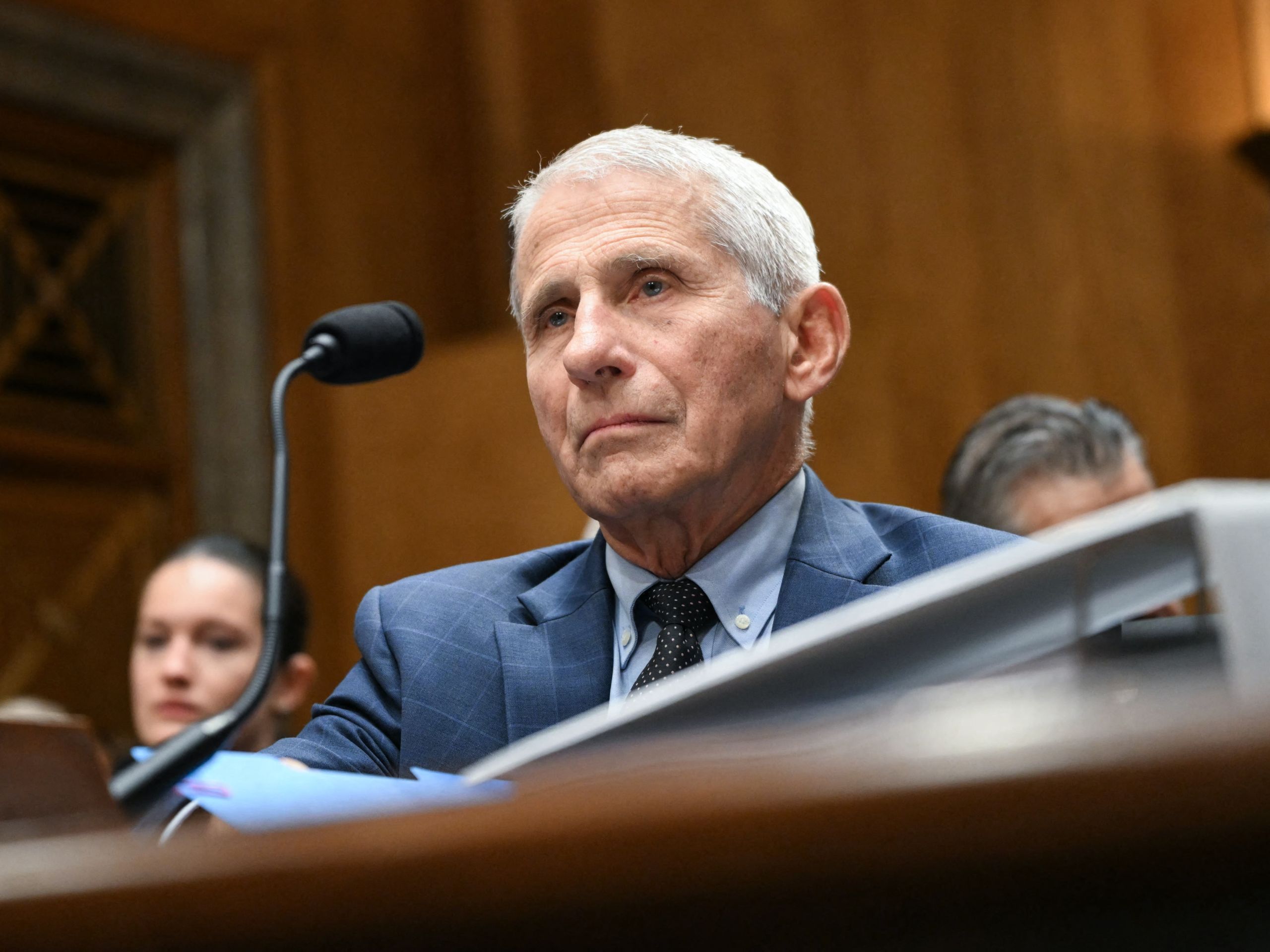
Senator Rand Paul released 1,141 pages of them this week, ahead of a Senate hearing at which Fauci declined to answer questions. Among the material now public is a series of sharply worded assessments of reporting by Australian journalist Sharri Markson, whose work for News Corp helped push the laboratory-origin theory of COVID-19 into mainstream circulation.
His summary of one of her books, written privately at the time: a bunch of nonsense.
What the Entries Say
Two passages have drawn particular attention.
The first concerns a May 2021 article Markson published in The Australian reporting that Chinese military scientists had discussed weaponising SARS coronaviruses five years before the pandemic began, and had anticipated that a future global conflict would be waged with biological weapons.
Fauci’s reaction, recorded in his journal, was skeptical on practical grounds. He questioned why anyone would engineer a pathogen capable of infecting their own population as readily as an adversary’s, wrote that something about the report seemed wrong, and noted that he would need to look into it further.
The second entry addresses her book, published later that year. Fauci wrote that the same pattern of attacks from the political right was continuing, describing the author as an Australian writer who cast him as the father of gain-of-function research and quoted molecular biologist Richard Ebright accusing him of lying and misleading the public about it. He dismissed the whole framing and characterised it as an effort to discredit him.
Ebright, a researcher at Rutgers, is a prominent and vocal supporter of the laboratory-origin hypothesis and a long-standing critic of Fauci’s stewardship of research funding.
The Disputed Document
Markson’s May 2021 article was subsequently examined by Guardian Australia, which reported that the document at its centre — presented as a chilling internal assessment by Chinese military scientists — drew on a 2015 book that had been discredited and contained conspiracy theories about biological warfare. The book, according to that reporting, was freely available online rather than obtained through any exclusive access.
Several China analysts publicly criticised the piece as misleading and alarmist. James Palmer, a deputy editor at Foreign Policy who covers China, argued it connected to conspiracy narratives about the virus’s origins that had gained traction on the political right.
The article appeared as Markson was promoting her first book, which contended that no scientific consensus existed around a natural origin for COVID-19 and that Chinese authorities had orchestrated a cover-up.
Markson’s Response
Markson has not retreated. Asked about the diary entries, she told Guardian Australia that most of the intelligence community now assesses that COVID-19 likely emerged from a laboratory in Wuhan.
She also defended the substance of her work, saying she led international reporting on funding from Fauci’s agency that supported dozens of projects at the Wuhan Institute of Virology, routed through the nonprofit EcoHealth Alliance.
That funding relationship is not in dispute as a fact. What has been contested for years is its significance — whether any of the supported work qualified as gain-of-function research under the relevant policy definitions, and whether it bore any relationship to the virus that emerged. Fauci has consistently maintained that the NIH did not fund the research that produced the pandemic.
Where the Evidence Actually Stands
The honest answer is that the question remains open, and both sides tend to overstate the clarity of their position.
The scientific mainstream continues to favour natural emergence, or zoonotic spillover, with a wildlife market in Wuhan viewed as the most plausible early amplification site. Peer-reviewed analyses of early case clustering have supported that reading.
The American intelligence community is genuinely divided rather than aligned. The FBI concluded in 2023 that a laboratory-associated incident is the more likely explanation. The CIA reached a similar conclusion in 2025 but attached low confidence to it. Other agencies, along with the National Intelligence Council, either lean toward natural origin or remain undecided.
That split complicates Markson’s characterisation of a majority position, though it also undercuts anyone claiming the lab hypothesis has been ruled out. Both descriptions flatten a picture that is, by the assessing agencies’ own language, unresolved and held with varying degrees of confidence.
There is a further wrinkle visible in Fauci’s own journals. Notes from a January 2020 call with 11 leading virologists and evolutionary biologists record that only two were persuaded at that stage of a natural origin, with the remainder actively debating whether the virus might have been engineered. Critics read that as evidence of a gap between private doubt and public assurance. Supporters read it as a snapshot of scientists doing exactly what scientists should do with a novel pathogen — entertaining every possibility before the data arrives.
Why the Diaries Are Public at All
The journals became public because Paul released them, and their status is itself contested. Health Secretary Robert F. Kennedy Jr. has argued they constitute government records, produced by a federal employee on a government computer during a declared emergency and recovered from government premises.
Paul contends the entries reveal discrepancies between what Fauci said privately and what he told the public. Fauci’s defenders counter that private notes written in real time about an unfamiliar virus will inevitably contain uncertainty, revision and irritation, and that judging them against later polished testimony is unfair by construction.
The Larger Point
What the diaries offer is less a revelation about the virus than a window into how bitterly the origins fight was already being waged in 2021, and how personally Fauci experienced it.
Five years on, the underlying scientific question has not been settled, which is precisely why the political one refuses to close. A journalist and a scientist reading the same evidence reached opposite conclusions, and each remains convinced the other was operating in bad faith. That, more than any single diary entry, is the durable legacy of the origins debate.
Author
-
Lucienne Albrecht is Luxe Chronicle’s wealth and lifestyle editor, celebrated for her elegant perspective on finance, legacy, and global luxury culture. With a flair for blending sophistication with insight, she brings a distinctly feminine voice to the world of high society and wealth.