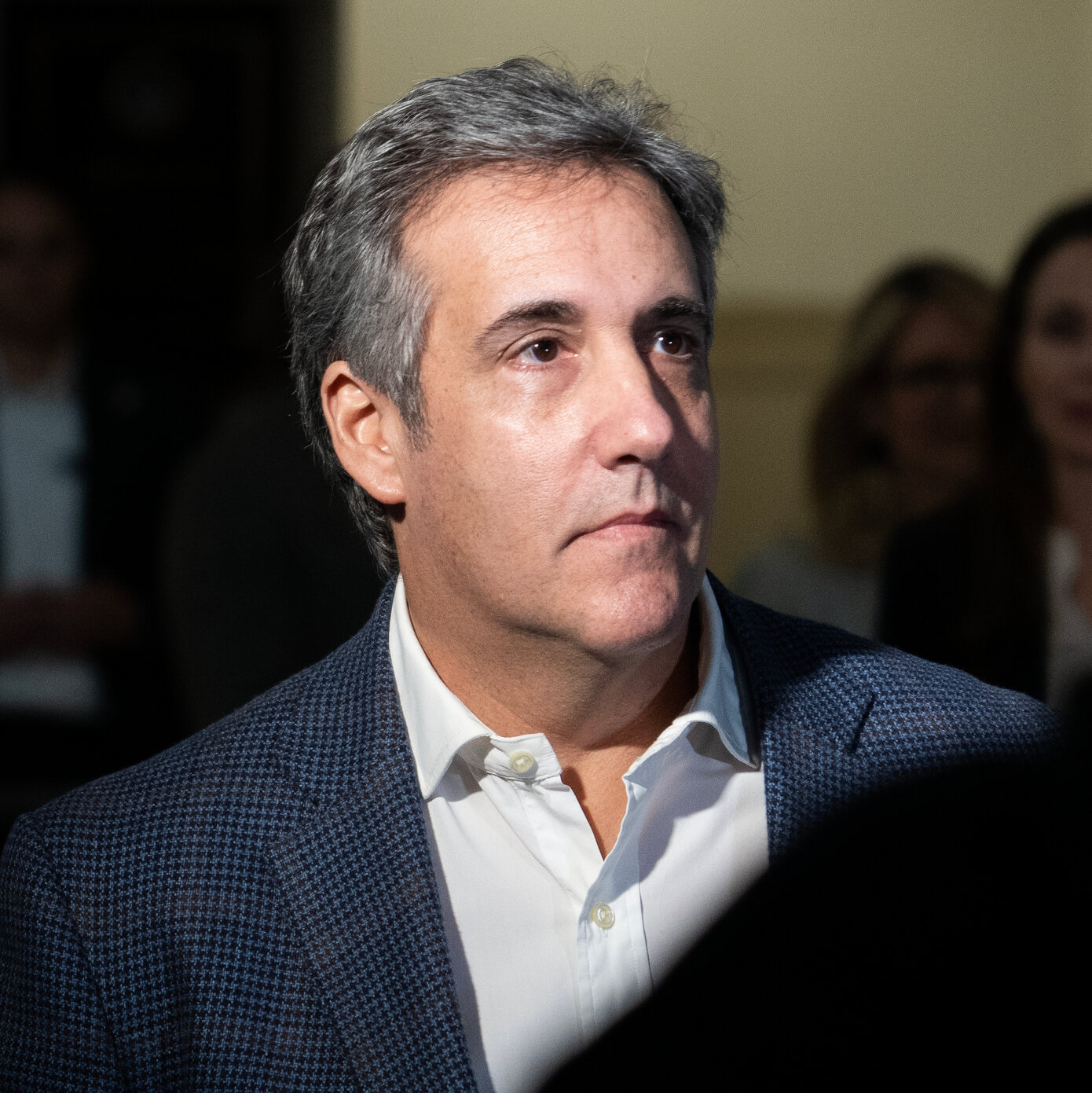
The Michael Cohen Trump interview that aired Thursday on New York’s 77 WABC managed something genuinely difficult: it made the reconciliation more uncomfortable than the feud ever was.
Cohen once described the president to Congress as a racist, a conman and a cheat, someone who conducted himself more like a mobster than a head of state. On Thursday he called him “boss” and “sir.”
An Introduction That Never Happened
Imagine the honest version. A host welcoming a guest by reading out the exact terms he himself once used under oath, then inviting him on air.
That is not what listeners got.
Instead, Cohen delivered what may qualify as one of the more deferential broadcast performances in recent memory. He laid out the welcome mat. He made encouraging sounds at the appropriate intervals. He let claims pass without a single follow-up.
This is the same man who arranged a $130,000 hush-money payment to adult film star Stormy Daniels, who said Trump courted white supremacists, and whom Trump in turn labeled a rat. The animosity between them had been genuine and public.
Not the First to Come Back
Cohen joins a long procession. Steve Bannon, Ted Cruz, Ron DeSantis, Lindsey Graham, Kevin McCarthy, Elon Musk, Marco Rubio and JD Vance all attacked Trump at various points before returning to the fold.
For most of them, the calculation involved proximity to power or money.
Cohen’s situation differs. He served prison time for his role in what he described as concealing Trump’s dirty deeds, and he has now submitted an application for a pardon.
He also, by every indication, enjoys the attention.
The Warm-Up Act
Before Trump came on the line, Cohen spent considerable airtime setting the scene.
He told listeners that perhaps no two people on the planet have had the Justice Department turned against them more than Trump and himself. He then reached for a historical comparison, suggesting no two figures had been pitted against each other so severely since Andrew Jackson and Aaron Burr.
He added that the only distinction was the absence of gunfire, with incarceration substituting for hot lead.
The analogy does not survive contact with history. Burr’s famous duel was with Alexander Hamilton, not Jackson. But nobody on air corrected it.
Trump Offers Absolution
When the president joined, he accepted the framing and expanded it.
He told Cohen that they had weaponized him along with many others, and said he respected the fact that Cohen had recanted everything he previously said. He characterized that as a significant act, repeating the point for emphasis.
That claim requires a correction. Cohen has not retracted his testimony. He has spoken instead about forgiveness that does not demand forgetting, a considerably narrower position.
Cohen did not clarify. He steered around the statement entirely, drifting into nostalgia about receiving one of those traditional Trump slaps on the shoulder, then complaining about television networks fixating on the president’s approval numbers.
Familiar Ground
The remainder followed a well-worn script.
Trump made his usual claims about the war in Iran going well. Cohen wondered aloud why people were not more appreciative, punctuating his questions with “sir.”
Trump mentioned a recent rally on Long Island. Cohen exclaimed that he had watched it.
Trump complained about the border and the absence of credit for fixing it.
Then came a moment of pure reunion. Cohen, addressing him as “boss,” began reminiscing about his old role analyzing polls at Trump’s side, recalling how carefully he examined methodology and how he would come in to demonstrate that unfavorable numbers were wrong.
Trump interrupted to declare the polls crooked.
Cohen agreed immediately.
Trump extended the charge to reporters, attacked the New York Times, and asserted the economy is booming.
The Sign-Off
No news emerged from the conversation. Nothing was challenged, clarified or revealed.
Cohen closed by quoting a 1978 Peaches and Herb song about being reunited and how good it feels, apparently framing the moment as a reunion of creative partners.
Over on CNN, criminal defense lawyer and former Apprentice contestant Stacy Schneider offered a less romantic reading. She compared it to Julius Caesar and Brutus getting back together.
What This Actually Illustrates
Strip away the specific personalities and a recognizable dynamic remains.
- Public criticism of a powerful figure carries costs that accumulate over time
- Those costs create incentives to revise, soften or abandon earlier positions
- Reconciliation is rarely presented as capitulation; it arrives dressed as forgiveness or shared victimhood
- The shared-persecution frame is particularly useful, since it lets both parties claim injury without either admitting error
Cohen’s pardon application sits in the background of every exchange. Nobody mentioned it on air.
The Uncomfortable Question
Whether Cohen’s earlier testimony or his current warmth represents the sincere position is unanswerable from outside. Both were delivered with apparent conviction.
What the Michael Cohen Trump interview demonstrated is simpler and more depressing: in American politics, almost no denunciation is permanent, and almost every critic has a price, whether that price is measured in influence, money or freedom.
Author