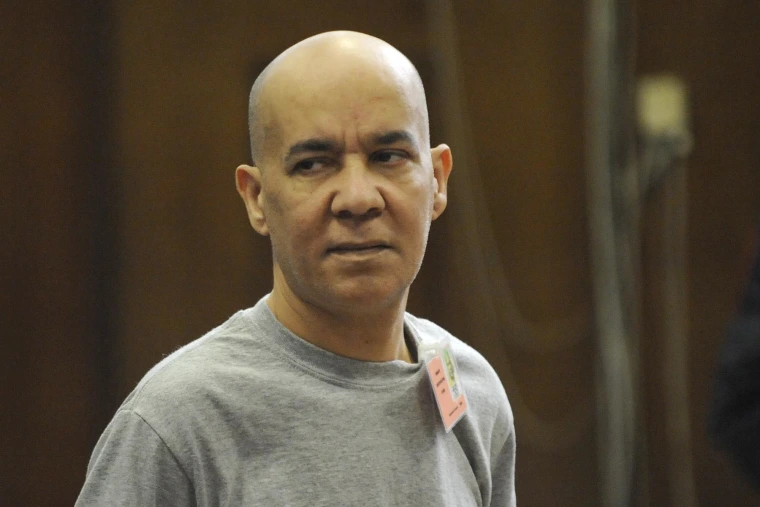
The Etan Patz murder case has taken yet another dramatic turn, this time at the highest level of the American legal system. In an unsigned opinion issued Monday, the Supreme Court restored the conviction of Pedro Hernandez, the man found guilty in the 1979 disappearance and killing of the six-year-old boy whose case haunted New York for decades.
The ruling reverses a lower court decision from last year that had granted Hernandez the possibility of a new trial. With this order, the nation’s highest court has effectively closed one avenue of appeal while reigniting debate over a case that has gripped the public imagination for more than four decades.
What the Supreme Court Decided
At the heart of the ruling is a question about the limits of federal authority over state-court matters. The Supreme Court concluded that the U.S. Court of Appeals for the Second Circuit had overstepped its bounds when it undid Hernandez’s state conviction.
In its 10-page opinion, the majority acknowledged that the lower court’s reasoning appeared to reflect genuine doubt about the reliability of Hernandez’s confessions. However, the justices emphasized that federal law places strict limits on the power of federal judges to grant relief to prisoners convicted in state courts. Under the relevant statute, they said, federal courts simply cannot overturn a state conviction based on that kind of reevaluation of the evidence.
The three liberal justices — Sonia Sotomayor, Elena Kagan, and Ketanji Brown Jackson — registered their objection to the decision, though they did not explain the reasoning behind their disagreement. The ruling came as part of the court’s routine orders and without oral arguments.
Reactions From Both Sides
The decision drew sharply contrasting responses.
Harvey Fishbein, a defense lawyer for Hernandez, expressed deep frustration, saying the order meant his client would not receive a new trial. He described his team as terribly disappointed and reaffirmed their belief that an innocent man remains imprisoned for a crime he did not commit.
On the other side, Manhattan District Attorney Alvin L. Bragg framed the outcome as a vindication. He noted that the case had shaped a generation of New Yorkers and pledged that his office would continue standing by the conviction in its pursuit of justice for Etan and the Patz family.
A Case That Defined an Era
To understand the weight of this ruling, it helps to revisit how the case unfolded. Etan Patz vanished while walking just two blocks from his SoHo home to a school bus stop, a routine trip that ended in tragedy. His disappearance triggered enormous public attention and, alongside the killing of six-year-old Adam Walsh two years later, ushered in a new era of caution among American parents.
For years, the case stumped investigators. Etan’s body was never recovered, and in 2001 he was formally declared legally dead. The mystery seemed destined to remain unsolved.
The Break in the Investigation
The turning point arrived in 2012, when one of Hernandez’s relatives reached out to investigators. New York police traveled to his home in Camden, New Jersey, and after roughly seven hours of questioning, authorities said Hernandez confessed. He reportedly did so once before being read his rights and twice afterward.
At the time of Etan’s disappearance, Hernandez was 18 and worked at a bodega where investigators believed the boy had been killed. Yet the case against him was far from straightforward. There was no scientific evidence linking him to the crime, and his confessions were quickly challenged.
His attorneys argued that the statements were fabricated to satisfy the police, pointing to Hernandez’s low IQ and what they described as psychotic delusions. They sought to have the confessions suppressed, but the judge ruled they could be admitted as evidence.
The Legal Road to the Supreme Court
Hernandez’s path through the courts was long and uneven. The timeline includes several pivotal moments:
- He was arrested in 2012 and first tried in 2015, but that trial ended in a hung jury after 18 days of deliberations.
- A second trial in 2017 resulted in a conviction for kidnapping and murder following nine days of deliberations.
- In July of last year, an appeals court overturned that judgment, ordering that Hernandez either be released from his 25-years-to-life sentence or granted a new trial.
The dispute that reached the Supreme Court centered on the jury instructions during the 2017 trial. While deliberating, jurors asked the judge whether they should disregard one of Hernandez’s later confessions if they found his first confession was not voluntary. The judge, Maxwell Wiley, answered with a single word: no.
The Second Circuit later found that the judge should have explained a Supreme Court precedent governing such serial confessions. Prosecutors, led by Bragg, countered that the conviction rested on no error in the investigation, the admission of the confessions, or the evidence presented at trial.
What Happens Next
While Monday’s ruling ends the litigation over the jury instructions, it does not completely close the door for Hernandez. The Supreme Court’s order leaves him free to raise other objections to his conviction in the future.
For now, Hernandez remains held at Elmira Correctional Facility. His case is scheduled to return to State Supreme Court in Manhattan on June 30, where the next phase of the legal battle will begin.
A Case Still Unsettled in the Public Mind
The Etan Patz murder remains one of the most emotionally charged cases in modern American history, not only because of the tragedy at its core but also because of the lingering questions surrounding the evidence. Supporters of the conviction see it as long-awaited justice for a family that endured decades of uncertainty, while Hernandez’s defenders insist the confessions were unreliable and the verdict flawed.
As the case heads back to the lower courts, several questions will continue to draw attention:
- Whether Hernandez’s legal team can mount additional challenges to the conviction.
- How the upcoming Manhattan court proceedings will unfold.
- What this ruling signals about the broader limits of federal intervention in state cases.
For the Patz family and the public alike, the Supreme Court’s decision offers a measure of finality on one legal question while leaving the deeper debate over guilt and justice very much alive. This remains a developing story, and further updates are likely as the case returns to court at the end of June.
Author