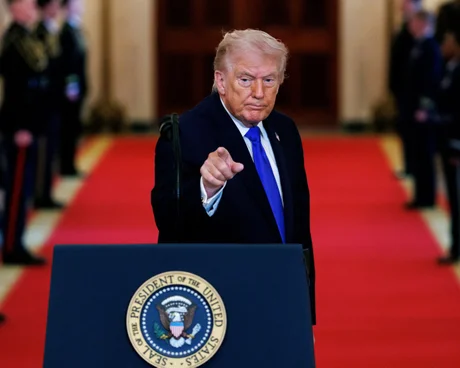
The Trump Iran deal has entered one of its most sensitive phases yet, as President Donald Trump prepares to gather his Cabinet in Washington on Wednesday to discuss a potential agreement that could finally bring the ongoing conflict with Iran to a close. With negotiations still shifting by the hour, the meeting comes at a moment when the stakes—political, economic, and strategic—could not be higher.
Trump has publicly stated that his administration and Tehran have “largely negotiated” the framework of a settlement. Yet behind the confident tone lies a far messier diplomatic reality, where several major issues remain unresolved and tensions continue to simmer on multiple fronts.
A High-Stakes Cabinet Meeting
As Trump sits down with his top advisers, he is hoping to secure a deal that accomplishes two major goals: reopening the Strait of Hormuz, which has become a flashpoint for global oil flows, and presenting a credible case that Iran’s nuclear capabilities have been significantly weakened.
If achieved, the president could declare a strategic victory and wind down a war that has grown increasingly unpopular among Republicans and the broader American public.
But the risks of an unsatisfying outcome are real. Critics, including members of Trump’s own party, fear that the emerging deal leaves too many critical questions for later and could allow Iran’s leadership to walk away wounded but more emboldened than before.
Political Pressure as Midterms Loom
Adding to the urgency is the political calendar. With midterm elections approaching and control of Congress hanging in the balance, Republicans are watching public sentiment closely. Rising fuel prices, ongoing inflation worries, and economic anxiety are darkening the national mood—putting more weight on the president to deliver a clean conclusion to the conflict.
A messy ending could become a political liability, while a strong agreement could revive momentum for the GOP heading into election season.
Tensions Spike After US Strikes in Southern Iran
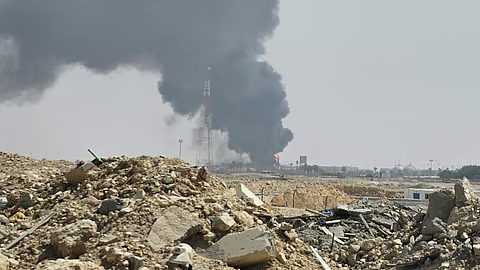
The negotiations were thrown into deeper uncertainty this week after US forces carried out what the Pentagon described as “defensive” strikes on missile launch sites and mine-laying boats in southern Iran on Monday. American officials said the action was carried out with restraint, given the weekslong ceasefire in place.
Tehran, however, condemned the move, calling it a sign of “bad faith and unreliability.” The strikes have made an already delicate diplomatic environment even more fragile.
Secretary of State Marco Rubio said Tuesday that talks aimed at reopening the Strait of Hormuz and extending the ceasefire will require several more days. He emphasized that Trump is determined either to walk away with a strong deal—or no deal at all.
Trump Pushes Back at Media Coverage
Even as talks continue, Trump publicly expressed frustration on social media, suggesting that no matter how favorable the outcome, the media would still portray Iran as the winner. He claimed that even a full surrender from Tehran would be spun as a “masterful and brilliant victory” for Iranian leaders.
Republican Allies Raise Concerns
Despite Trump’s confidence, several Republican lawmakers, including Senators Roger Wicker, Lindsey Graham, and Ted Cruz, have voiced concerns. They argue that early terms of the deal appear too lenient on Tehran and bear an uncomfortable resemblance to the 2015 Iran nuclear agreement reached under former President Barack Obama—a deal Trump himself dismantled during his first term.
Their core worry is simple: that the United States may be granting Iran too much room to recover, rebuild, and reassert influence in the region.
Uranium Handover at the Center of the Deal
Among the most significant terms emerging from negotiations is Iran’s potential agreement to surrender its stockpile of highly enriched uranium in exchange for sanctions relief. The handover would unfold over a 60-day period, with portions of the uranium possibly diluted and the rest moved to a third country.
According to the International Atomic Energy Agency, Iran currently holds around 440.9 kilograms of uranium enriched to 60% purity—dangerously close to weapons-grade levels of 90%. While Iran has not publicly committed to giving it up, Trump has hinted at flexibility, suggesting the material could either be transferred, destroyed in place, or relocated under international supervision.
This marks a softer stance compared to his earlier insistence that the US take direct control of the stockpile.
The Lebanon Question and Israel’s Role
Another major sticking point involves Israel’s ongoing operations in Lebanon. Iran has demanded that any ceasefire agreement must include protections for Hezbollah, its key proxy in the region.
The emerging memorandum of understanding allows for a ceasefire between the US, its allies, and Iranian-backed groups—but also preserves Israel’s right to defend itself against imminent threats. Prime Minister Benjamin Netanyahu announced this week that Israel is actually deepening its military operations in Lebanon, signaling that the conflict on that front is far from over.
Former IDF spokesperson Jonathan Conricus warned that Iran is likely to channel any sanctions relief into rebuilding its military and strengthening proxy groups such as Hezbollah and Hamas.
Trump Pushes for Expanded Abraham Accords
In a surprising move, Trump has tied the Iran deal to a broader Middle East vision—pressing Saudi Arabia, Qatar, and Pakistan to join the Abraham Accords, his signature foreign policy achievement from his first term.
However, regional analysts say this push may be overly optimistic. Saudi Arabia, in particular, has continued to insist that a clear path to Palestinian statehood must be part of any normalization—a condition Israel firmly opposes.
Reports suggest the proposal was met with “stunned silence” during a recent weekend call with Middle Eastern leaders, though some officials disputed that account.
A Region Searching for a Way Out
Veteran diplomats note that despite their concerns, US allies in the region largely support Trump’s push to end the war—not because they trust Iran, but because they see no better alternative.
As the Cabinet convenes, the world watches closely. Whether Trump emerges with a historic agreement or an unsatisfying compromise may shape not only the future of US–Iran relations but the broader balance of power across the Middle East for years to come.
Author