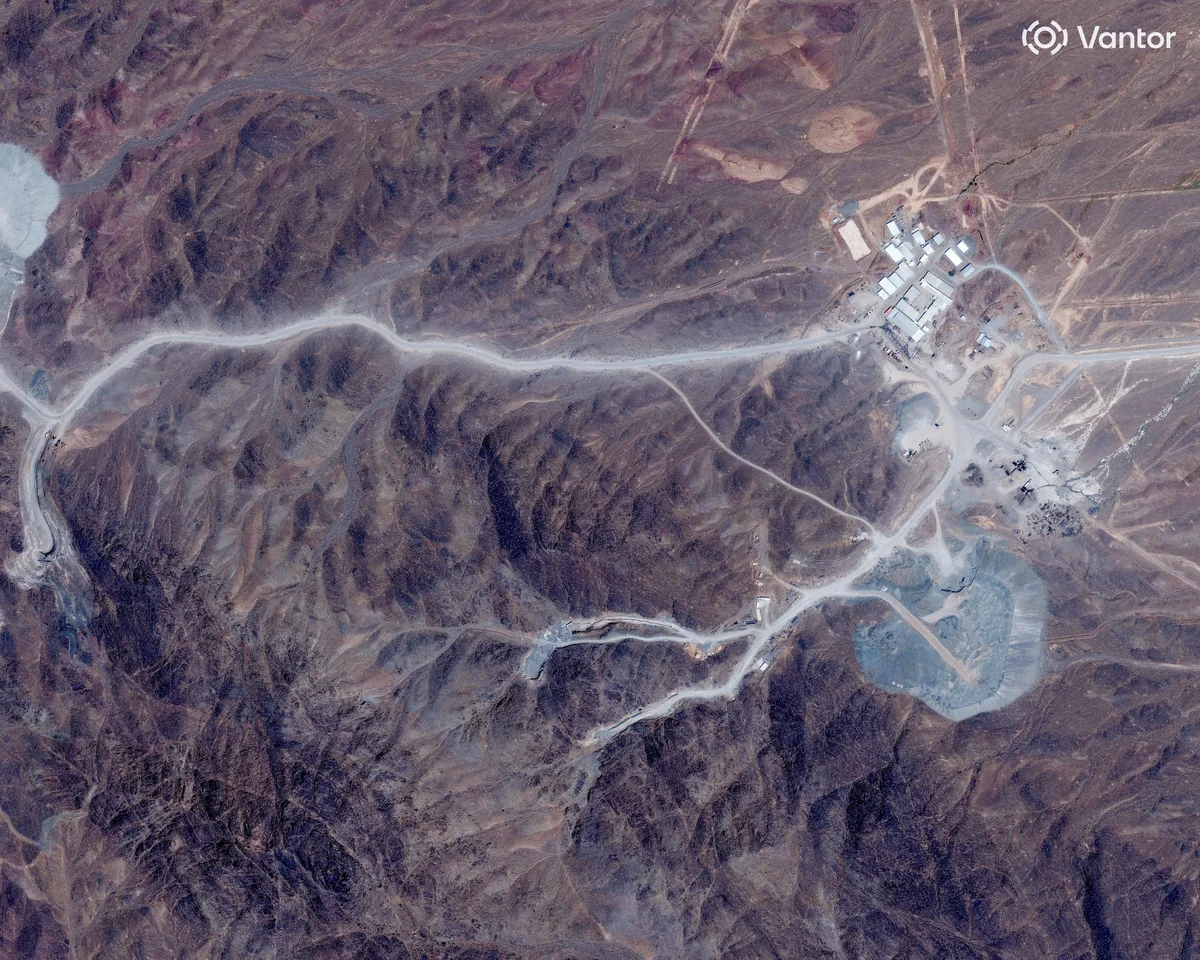
Pickaxe Mountain has become the most talked-about target in a war that already has plenty of them. President Trump has threatened repeatedly to strike it. Nobody outside Iran knows with certainty what’s inside it. And there’s a real possibility that America’s most powerful conventional bomb cannot reach it.
The site’s Persian name is Kuh-e Kolang Gaz La. It sits on the southern edge of Iran’s Natanz nuclear complex, roughly 140 miles south of Tehran.
Why Iran Started Digging
Natanz has drawn international scrutiny since its existence became public two decades ago. It combines above-ground and underground facilities, and it has been struck repeatedly.
The sabotage campaign is the key to understanding Pickaxe Mountain. One attack, widely attributed to Israel, destroyed a centrifuge manufacturing site at Natanz. That pattern of successful strikes convinced Iranian officials that anything they built at conventional depth was vulnerable.
So they went deeper.
The United States bombed Natanz during Operation Midnight Hammer in the 12-day war between Iran and Israel in 2025. Pickaxe Mountain, however, has never been hit. Construction there has continued throughout.
What’s Actually Down There
The honest answer is that nobody outside Iran knows. The United Nations nuclear watchdog has never been granted access to the site.
What exists is inference, and some of it is significant.
Speaking to reporters in the Oval Office on Tuesday, Trump acknowledged that Iran may have relocated centrifuges to the site, possibly at depths that would challenge the strongest weapons in the American arsenal. A CNN report the same day, citing an Israeli source, indicated that part of Iran’s stockpile of 60-percent-enriched uranium may also have been moved there.
Trump was blunt about the intent.
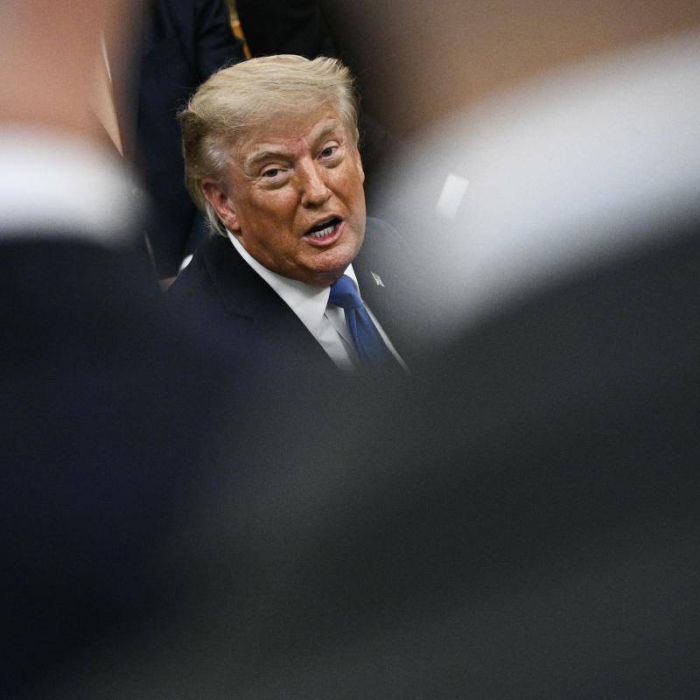
“We’ll be hitting that area, probably pretty soon. And there’s not a thing they can do about it,” he said.
The Scale of the Site
Pickaxe Mountain is not a bunker. It’s closer to an underground industrial complex.
The facility covers roughly one square mile, or 2.7 square kilometers, in Iran’s arid Central Plateau. Satellite imagery shows multiple entrances. Its defenses include anti-aircraft batteries, extensive fencing and personnel from Iran’s paramilitary Revolutionary Guard.
Analysts at the James Martin Center for Nonproliferation Studies assessed in 2023 that Iran was likely constructing a facility somewhere between 260 and 328 feet underground. Excavation has continued since then, and some experts believe the depth may now exceed those estimates.
The sheer scale of the project tells experts something about its purpose. A complex that size is consistent with both enriching uranium and manufacturing centrifuges.
Why Centrifuges Matter
Centrifuges are tube-shaped machines arranged in cascades of dozens of units. They spin uranium gas at extreme speed to concentrate the fissile isotope.
Add more cascades and enrichment accelerates. Put those cascades under hundreds of feet of rock and they become extraordinarily difficult to stop from the air.
That combination, capacity plus protection, is what makes Pickaxe Mountain strategically significant regardless of what’s currently installed there.
The Bunker-Buster Problem
The United States built the GBU-57 specifically for targets like this one. According to the American military, it can penetrate at least 200 feet of earth before detonating.
Compare that figure to the estimated depth of the Pickaxe Mountain facility and the arithmetic gets uncomfortable.
US officials have reportedly discussed dropping two GBU-57s in sequence, using the first to open a path for the second. Whether that approach would actually reach and destroy a facility as deep as this one is unclear.
This is the core problem with the threat Trump keeps making. Announcing a strike on a target that may survive the strike carries obvious risk. If the bombs land and the facility keeps operating, the demonstration cuts the wrong way.
Trump’s Shifting Framing
Speaking alongside Lebanese President Joseph Aoun on Tuesday, Trump initially downplayed the site by redirecting attention to Iran’s uranium stockpile.
Iran had enriched uranium to nearly 60% before the 2025 strikes. It is not known to have restarted enrichment since, and the stockpile is believed to remain at the bombed enrichment sites.
“We follow the material, that’s where the action is,” Trump said.
Then he pivoted back to the threat.
“Normally I wouldn’t say that,” he added. “If I thought they could do something about it, I would never say that, but we’ll be hitting that area pretty soon. And very heavily.”
The Widening Target List
Pickaxe Mountain is not the only nuclear-adjacent site drawn into the conflict.
- Iran says areas around its Bushehr nuclear power plant have been attacked, though the Russian-operated reactor was not damaged
- Tehran says the US struck the cleared site where it plans to build the Darkhovin plant, though the IAEA reported no nuclear material there at its last inspection
- The UAE’s four-reactor Barakah facility, that country’s only nuclear power plant, has also been targeted during the war
Iran has warned it will take unspecified required actions in response to the Darkhovin strike.
The Longer Nuclear Story
In 2025, the United States bombed Iranian nuclear sites at Fordo, Isfahan and Natanz. All three had been enriching uranium.
Both Washington and Israel stated the same objective then that they state now: preventing Iran from ever building a nuclear weapon.
Iran, which has vowed to destroy Israel, denies pursuing an atomic bomb. Two facts complicate that denial. It has enriched uranium far past any level a civilian program requires, and it has obstructed international inspectors seeking access to its sites.
The IAEA estimated Iran held about 972 pounds of uranium enriched to 60% before the current conflict began, material now thought to be buried within damaged underground facilities. Weapons-grade enrichment sits at 90%, and by IAEA measures that quantity would suffice for roughly ten weapons.
A Fatwa That May No Longer Apply
One political detail deserves attention.
The late Supreme Leader Ayatollah Ali Khamenei, killed Feb. 28 in the opening moments of the war, had issued a verbal fatwa declaring nuclear weapons un-Islamic. That ruling functioned as a religious constraint on Iranian policy, at least rhetorically.
His son, Mojtaba Khamenei, now serves as Supreme Leader. He has said nothing publicly about his own view of nuclear weapons.
That silence is its own kind of signal.
How Far Iran Actually Is
Building a functional weapon requires more than enriched material.
Iran would need to push enrichment to 90% purity, then construct an actual device, then likely miniaturize it and fit it to a ballistic missile. That sequence takes months or years, and every stage carries the risk of detection by Israeli or American intelligence.
Which brings the story back to the mountain.
Pickaxe Mountain matters because depth buys time and concealment. A program conducted hundreds of feet underground, beyond inspection and possibly beyond bombing, changes the calculation for everyone watching it.
That’s why Trump keeps threatening it, and why the threat may be harder to carry out than it sounds.
Author
-
Lucienne Albrecht is Luxe Chronicle’s wealth and lifestyle editor, celebrated for her elegant perspective on finance, legacy, and global luxury culture. With a flair for blending sophistication with insight, she brings a distinctly feminine voice to the world of high society and wealth.