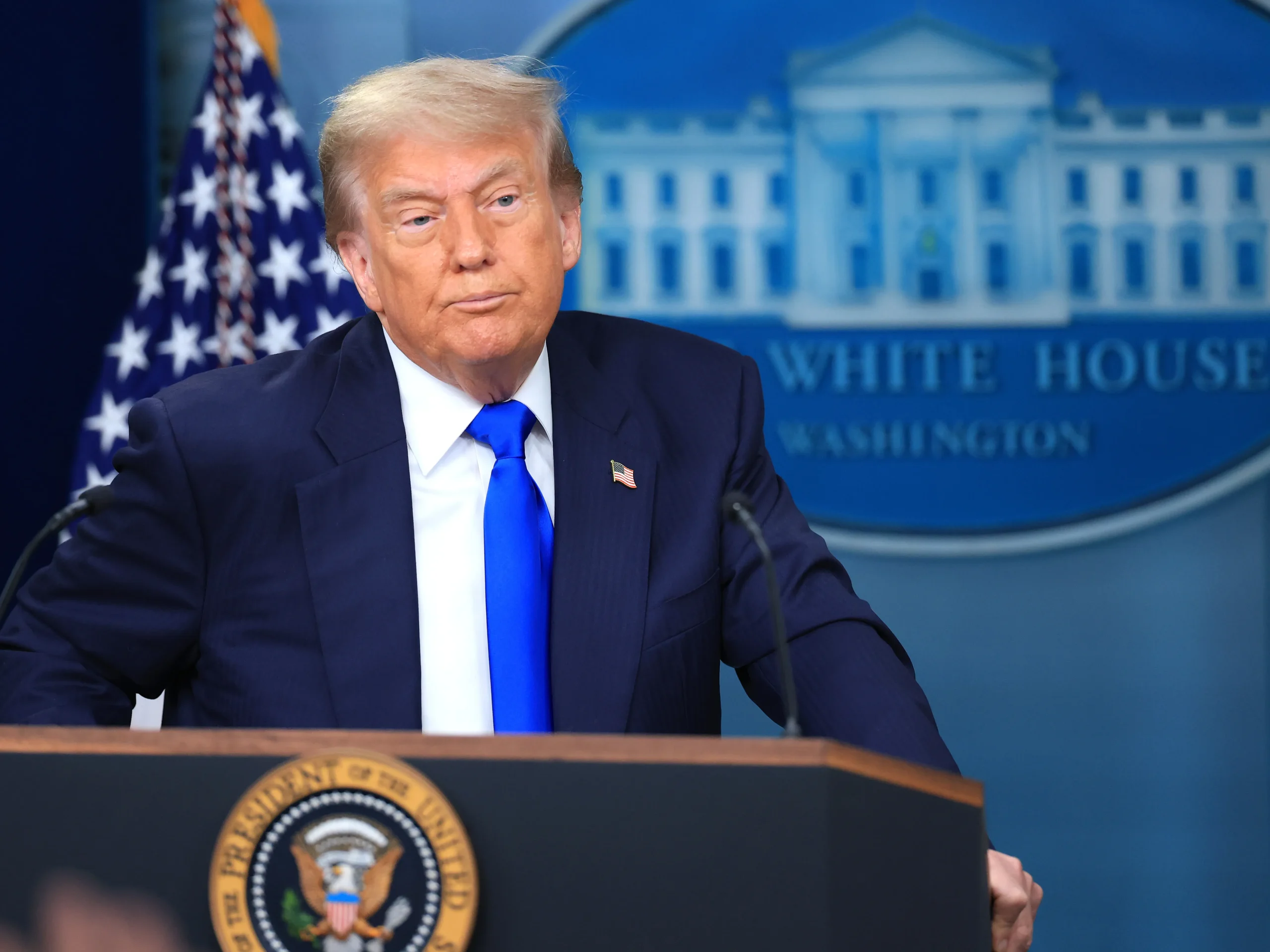
The Supreme Court’s decision in Trump v. Slaughter has emerged as one of the most consequential rulings of the term, granting the president sweeping authority to fire members of independent federal agencies. To its critics, the ruling rests on a theory of democracy that is not just flawed but fundamentally dishonest. In this analysis, legal commentators argue that Chief Justice John Roberts wrapped a dramatic expansion of executive power in a justification that simply does not hold up.
A Vision of Power That Alarmed Critics
In the end-of-term blockbuster, Chief Justice Roberts, writing for the conservative supermajority, embraced a view of executive authority that critics describe as extraordinarily expansive. According to these commentators, Roberts claimed the Constitution compelled him to broaden Trump’s power, while promising that the result would be a government more accountable to the people.
The core of Roberts’ argument was that allowing the president to fire the heads of nearly any agency would make him, in Roberts’ words, responsible to his country. Voters, the theory goes, could then reward or punish the president based solely on his decisions. Critics contend that the chief justice presented this as a restoration of democratic accountability, even as, in their view, the ruling dismantled the very safeguards that make democratic governance work.
The commentary that follows draws from a discussion on Slate’s Amicus podcast, featuring co-hosts Dahlia Lithwick and Mark Joseph Stern, along with two experts on executive power: Jed Shugerman of Boston University School of Law and Sam Bagenstos of the University of Michigan Law School.
Bad History, According to the Dissent
Lithwick opened by noting that the Slaughter decision will produce ripple effects many people have not yet begun to grasp, framing it as another instance of flawed history distorting American law.
Bagenstos praised Justice Sonia Sotomayor’s dissent as especially strong. In his account, Sotomayor worked extensively through the amicus briefs and underlying scholarship to demonstrate that the historical narrative Roberts constructed was, in his words, made up and already debunked.
Beyond the history, Bagenstos highlighted what he saw as the dissent’s warning about the decision’s broad implications. He pointed out that Roberts left open a potential challenge to the entire civil service system, when he could easily have limited his ruling to the highest-level political appointees. That restraint, Bagenstos suggested, was notably absent.
The Political Theory Under Attack
For Bagenstos, the ruling rested not only on shaky history but also on a questionable political theory. He described Roberts’ view as one in which a single president is responsible for everything that happens within the executive branch, and therefore accountable to the people for all of it.
Bagenstos argued this proposition collapses under scrutiny. He noted that presidents can be elected at most twice and face reelection only once, leaving voters with a very narrow window to hold them accountable. Meanwhile, countless decisions are made throughout the executive branch, most of which ordinary voters will never even know about, let alone be able to judge.
The mechanism itself, he argued, is far too blunt. A voter’s choice essentially comes down to Democrat or Republican, and it is unrealistic to think such a binary decision sends any meaningful signal about any specific policy.
He also emphasized a point he felt Roberts ignored: that democratic accountability does not occur only once every four years. Congress, whose members face election every two years, is the body that passes the statutes creating protections for agency officials in the first place. The public, Bagenstos suggested, appears to want those protections because they tend to produce better government.
Roberts’ Contradiction on Accountability
Shugerman built on that critique, agreeing fully as a matter of originalism. He observed that Roberts has long promoted a theory casting the president as the most directly democratically accountable officer in government, having written in a 2020 opinion that the president is accountable to the people through regular elections and is the most democratic and politically accountable official.
Yet Shugerman pointed to a striking inconsistency. Roberts wrote those words the same week the Court handed down an important decision about the Electoral College, an institution the founders deliberately designed so that the president would not simply represent the nation directly.
In fact, Shugerman argued, one could make the case that presidents are among the least representative officials, sometimes winning with only a narrow share of the vote. By contrast, the leaders of independent agencies serve staggered terms, are appointed by different presidents, and are confirmed by different Senates. On that logic, he suggested, such agencies may actually reflect a broader cross-section of Americans over time than any single president does.
The Charge of “Gaslighting”
Stern reserved his sharpest criticism for what he saw as the ruling’s normative claims. It was not enough, he argued, for Roberts to rely on debunked history or present a contested constitutional theory as obviously correct. Roberts also insisted that the system he was creating is genuinely good for democracy.
Stern found this especially hard to accept given one glaring exception: the Federal Reserve. Under the ruling, he noted, independent agencies are stripped of protection, yet the Fed is carved out. If concentrating authoritarian control over every agency were truly beneficial, Stern reasoned, Roberts would not have made that exception.
To Stern, the carve-out reveals that Roberts himself recognizes the dangers of unchecked presidential control, at least when it comes to an institution that safeguards wealth. He argued that unitary-executive theorists are attempting to convince the public that a system never envisioned by the Framers is somehow good for accountability, a claim he views as false and ultimately harmful to democracy.
Is the Ruling Truly Nonpartisan?
Stern then raised a pointed question. Defenders of the Court insist Slaughter is not partisan because it will benefit presidents of both parties. But many political scientists worry that even a theory that appears neutral on paper could create structural advantages for Republicans.
Bagenstos responded by drawing on recent experience. During the Biden administration, he argued, the Court found numerous ways to restrain executive power it disfavored. He fully expects that if a future Democratic president fired Trump appointees, the Court would uphold the firings and cite Slaughter, while simultaneously finding other tools to limit that president’s broader agenda.
As an example, he pointed to the major-questions doctrine, which he described as a powerful instrument the Court used to block Biden from applying statutes according to their text when the justices disliked the outcomes. In those cases, he explained, the Court acknowledged that the statutory text might support the president’s action but demanded more explicit authorization from Congress because the matter seemed significant.
The upshot, according to Bagenstos, is a kind of asymmetry. A future Democratic president may well be able to remove Trump appointees from agencies like the Federal Trade Commission or the National Labor Relations Board. But when their own appointees try to accomplish something meaningful, he predicted, they may find the courts standing firmly in the way.
The Bigger Picture
Taken together, these commentators paint the Slaughter decision as far more than a technical ruling about firing power. In their view, it represents a significant consolidation of authority in the presidency, justified by a historical and political theory they consider fundamentally false, and applied in ways that may prove uneven in practice.
Whether one accepts these criticisms or not, the debate underscores just how much is at stake. The ruling touches on the structure of the federal government, the meaning of democratic accountability, and the balance of power between the branches, questions that will continue to shape American governance well beyond a single case or a single administration. As always with contested constitutional decisions, defenders of the ruling offer their own justifications rooted in text and original meaning, and readers are left to weigh these competing visions for themselves.
Author