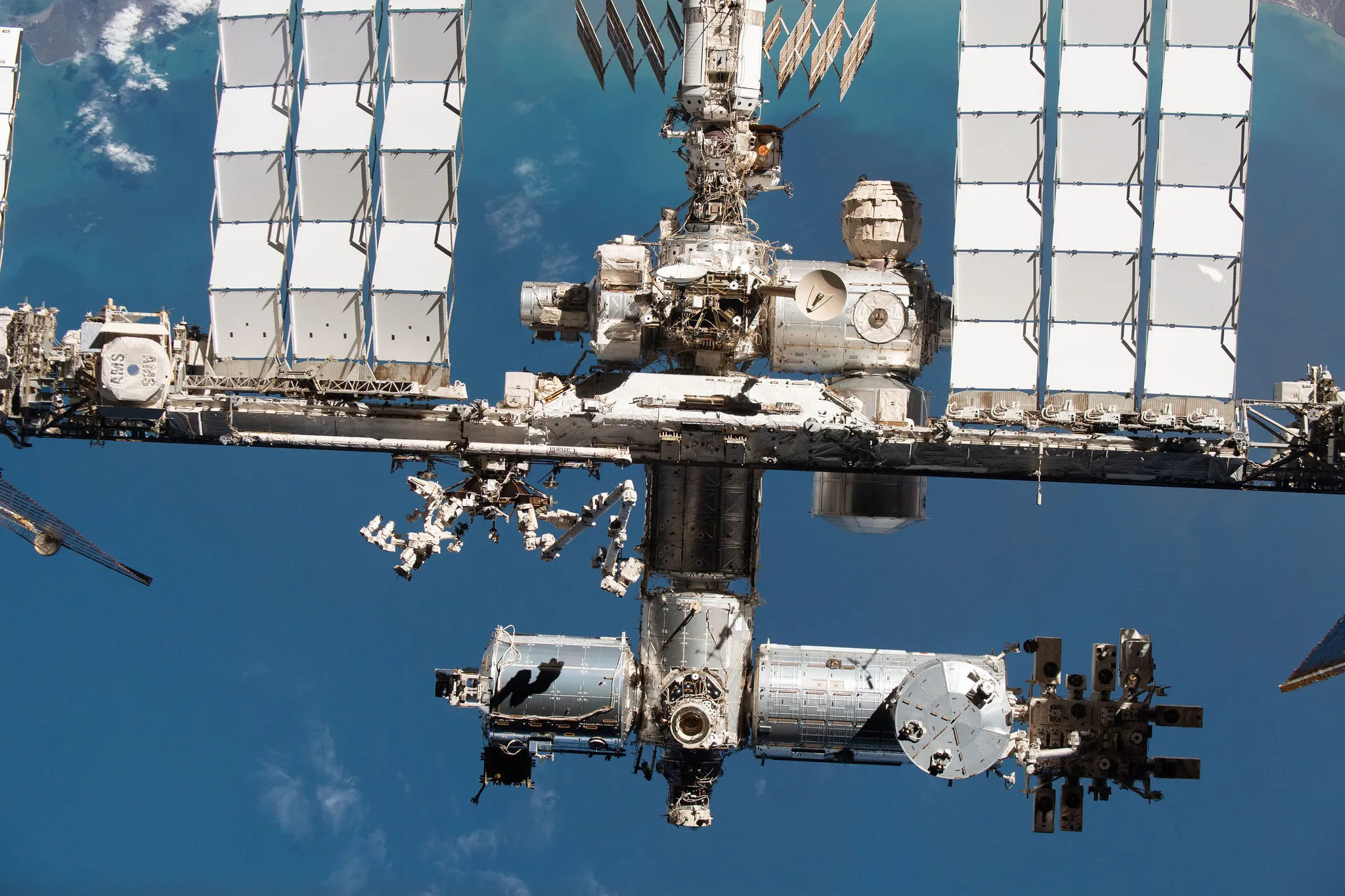
The ISS air leak that has nagged the International Space Station for years flared up again on Friday, prompting NASA to take an unusual precaution: ordering five astronauts to shelter inside an attached SpaceX Dragon capsule while Russian cosmonauts attempted a repair. The episode, though brief, offered a vivid reminder of just how old the orbiting laboratory has become.
A Precautionary Shelter Order
NASA directed all four members of the SpaceX Crew-12 mission, along with astronaut Chris Williams, to move into the Dragon spacecraft and assume what the agency called an “elevated safety posture” while the work was underway.
As NASA spokesperson Bethany Stevens explained, the move was taken out of an abundance of caution. The crew gathered inside Crew-12’s Dragon capsule, named “Freedom,” to wait out the repair effort.
Where the Leak Is Coming From
The trouble is centered in the PrK transfer tunnel, a passage leading to Russia’s Zvezda service module — one of the oldest sections of the entire station. According to Stevens, the persistent leak appears to stem from small cracks in the tunnel.
This is far from a new problem. The leak has been an issue for years, and Russia’s space agency, Roscosmos, has managed it through a combination of operational workarounds and periodic partial repairs. Those measures had been holding up reasonably well — until a few months ago, when the leak resurfaced. That return is what triggered Friday’s more extensive repair operation.
Who Was On Board
The five astronauts who took shelter represent an international roster.
The four Crew-12 members are:
- NASA’s Jessica Meir and Jack Hathaway
- Sophie Adenot of the European Space Agency
- Cosmonaut Andrey Fedyaev
They arrived at the ISS in mid-February for a planned six-month stay. Joining them in the Dragon was NASA’s Chris Williams, who reached the station in late November aboard a Russian Soyuz spacecraft.
Williams had flown up with two crewmates — cosmonauts Sergey Kud-Sverchkov and Sergei Mikaev — who are presumed to be the ones who attempted Friday’s repair, though NASA’s update did not specify exactly who carried it out or what the operation involved.
A Short-Lived Repair Attempt
The fix didn’t get far. Just about an hour after announcing the shelter order, NASA reported that Roscosmos had paused the structural repair work inside the Zvezda transfer tunnel so that additional measurements and data could be assessed.
With the repair on hold, the situation was deemed stable enough to stand down. NASA instructed the crew to end the safe haven procedures and return to their normal operations aboard the station.
A Symptom of an Aging Station
The recurring leak is more than an isolated glitch — it’s a sign of the ISS’s advanced age. Construction of the complex began in 1998, and it has been continuously occupied by rotating crews since November 2000. The Zvezda module is among its oldest components, having launched into orbit back in July 2000.
A quarter-century in the harsh environment of space takes a toll, and small cracks in older hardware are exactly the kind of wear that engineers have to watch closely.
Still Years Left in Orbit
Despite its age, the station is far from finished. It is slated to operate through at least 2030, and potentially until 2032. That extended timeline matters: it buys breathing room for the private space stations being developed to eventually take over operations in low Earth orbit.
The Bottom Line
Friday’s ISS air leak scare ended without incident, with the crew safely returning to routine work after the repair was paused for further study. But the event underscored a larger reality facing the International Space Station. As its hardware ages, episodes like this are likely to become more common, and they highlight why the push to develop the next generation of orbital outposts has taken on real urgency. For now, the station keeps flying — older, leakier, but still very much operational
Author