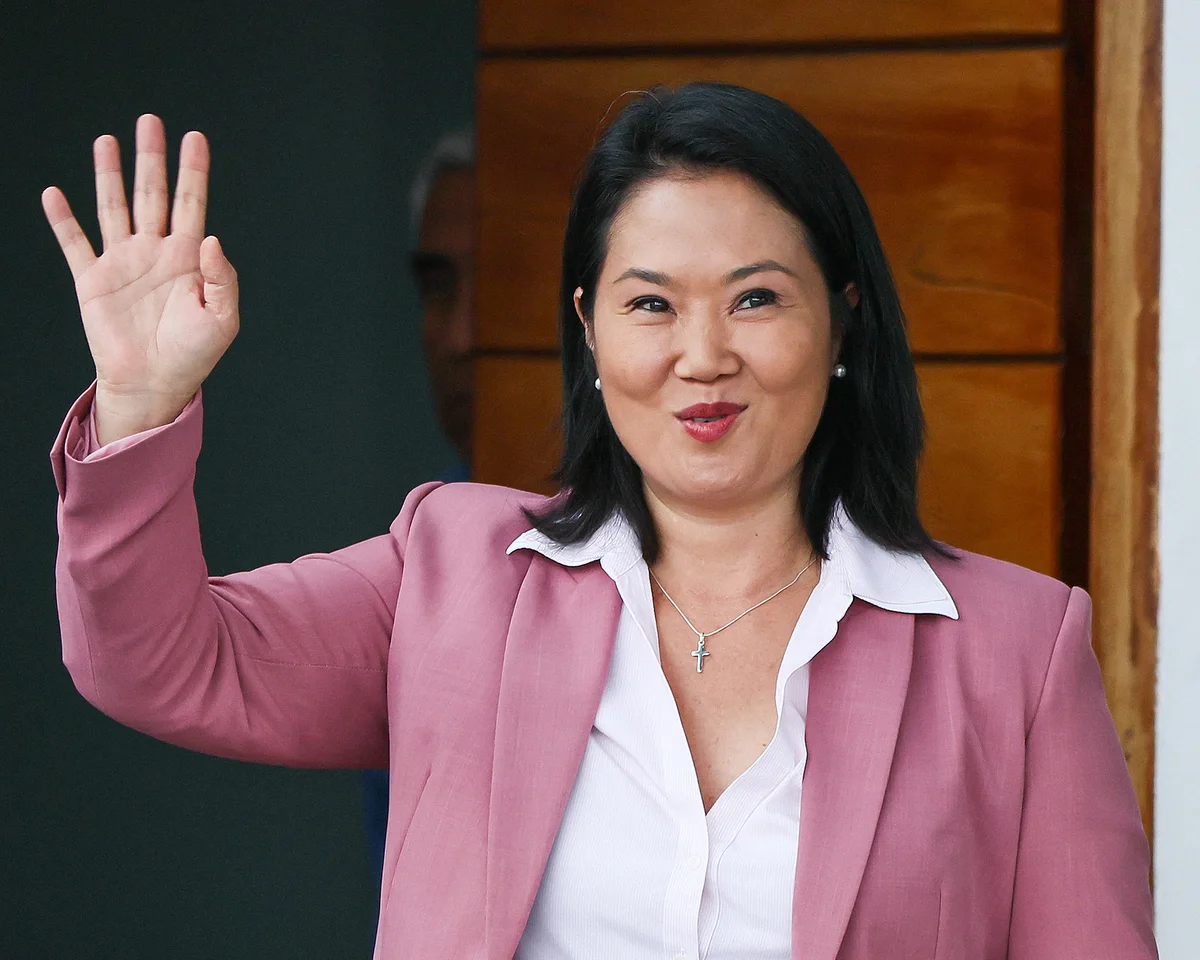
Keiko Fujimori has finally reached the summit of Peruvian politics, capturing the presidency by one of the slimmest margins in the country’s recent history. After weeks of street protests, accusations of fraud, and the painstaking review of disputed ballots, Peru’s electoral authority declared the conservative leader the winner on Friday — closing the book on a nail-biting contest and opening a new chapter for a deeply divided nation.
A Victory Measured in Fractions
The numbers tell the story of just how close this race truly was. Fujimori secured 50.135% of the vote in the June 7 runoff, edging out leftist congressman Roberto Sanchez, who claimed 49.865%. The gap amounted to roughly 49,641 votes out of some 18 million cast — a margin thin enough to keep the entire country on edge for weeks.
For Fujimori, the triumph carries deep personal significance. This marked her fourth bid for the nation’s highest office, and the outcome reversed the heartbreak of 2021, when she lost by around 45,000 votes to former leftist president Pedro Castillo. Castillo was later impeached and imprisoned after attempting to dissolve Congress in 2022.
Speaking from her party headquarters surrounded by her staff, Fujimori struck a hopeful tone. She pledged to identify the initiatives and projects that had already delivered results so they could continue, framing the moment as the dawn of a new era built on responsibility, dialogue, and a renewed effort to rebuild trust in the country’s battered institutions.
A Contested Result
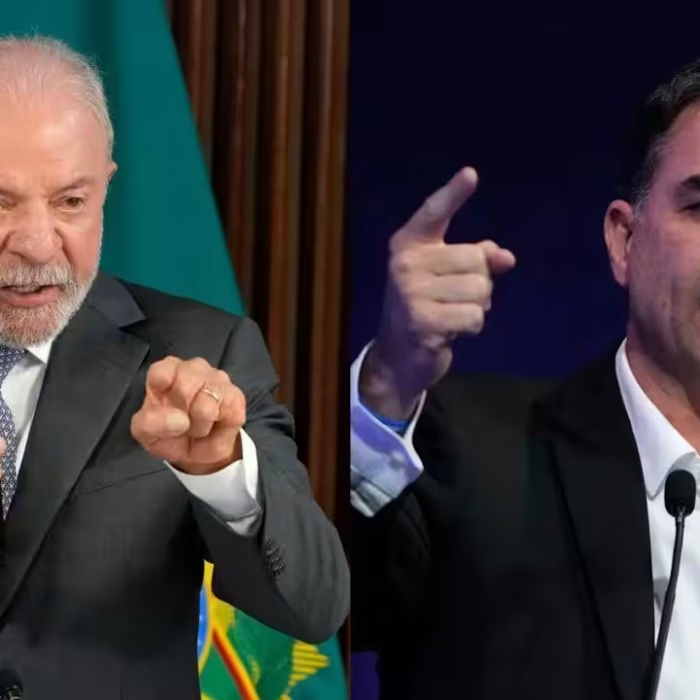
Not everyone is prepared to accept the outcome. Sanchez, widely regarded as Castillo’s political successor, has refused to recognize a Fujimori government. He has alleged electoral fraud without offering evidence to support the claim.
The geographic split behind the vote reveals the fractures running through Peruvian society:
- Sanchez drew heavy support from Peru’s rural regions and led the count in its early stages.
- He also narrowly won among ballots cast inside the country.
- Fujimori was propelled by voters in the capital region of Lima.
- She dominated among overseas ballots, which ultimately pushed her across the finish line.
Sanchez has not gone quietly. He has led protest marches challenging the results and filed a complaint with the Inter-American Commission on Human Rights contesting the election.
A Nation Defined by Instability
This drawn-out, bitterly close contest laid bare the profound polarization that has come to define Peruvian politics. When Fujimori takes office on July 28, she will become the country’s tenth president since 2016 — a staggering figure that reflects a decade of turmoil.
She will succeed interim President Jose Balcazar, who stepped into the role in February following a string of presidential dismissals tied to accusations of corruption or abuse of power. Governing amid such chronic instability will be no small task.
Conservative Allies Rally Around Her
Fujimori’s win reinforces a broader rightward shift sweeping across Latin America, and regional conservative leaders wasted little time welcoming her to their ranks. Congratulations poured in from figures including Argentina’s Javier Milei, Chile’s Jose Antonio Kast, and El Salvador’s Nayib Bukele.
The support extended beyond the region. U.S. Secretary of State Marco Rubio also offered his congratulations, signaling that the Trump administration hopes to deepen cooperation with Peru on security, investment, and trade.
Markets Breathe a Sigh of Relief
Financial markets, which had grown jittery at the prospect of a Sanchez presidency, greeted the result with clear approval. A report from Moody’s suggested that a Fujimori government would preserve policy continuity, strengthen investor confidence, and help sustain the country’s economic growth.
That optimism carries real-world stakes. The report noted that Fujimori’s victory could help unlock stalled mining projects — a significant development given that Peru ranks as the world’s third-largest copper producer. For an economy hungry for investment, restarting those delayed ventures could prove transformative.
The Weight of a Divisive Dynasty
At 51, Fujimori steps into office carrying a complicated inheritance. She is the daughter of the late President Alberto Fujimori, who ruled Peru with an iron grip from 1990 to 2000. Her father earned praise in some quarters for defeating Maoist insurgents and taming runaway hyperinflation, yet his legacy remains fiercely contested.
The Fujimori name still stirs strong emotions across the country. Alberto served 16 years behind bars for human-rights abuses, and Keiko herself spent years under investigation over campaign financing allegations. Those charges were ultimately dropped last year, but not before she endured multiple stints in jail between 2018 and 2020, spending nearly a year and a half incarcerated during the ordeal.
The Challenges Ahead
Winning the presidency may prove easier than governing it. Fujimori now faces the formidable task of uniting a polarized nation saddled with a fragmented Congress that has shown little hesitation in ousting its leaders.
The divide is not merely political but economic and geographic. A vast gulf separates the relative prosperity of Lima from the struggles of rural Peru, where fierce protests and clashes with security forces claimed more than 60 lives in the aftermath of Castillo’s removal from office.
Those same rural regions formed the backbone of Sanchez’s support. His party, Together for Peru, now controls the second-largest bloc in Congress, while Fujimori’s party holds the largest share of seats. That balance of power sets the stage for a potentially contentious relationship between the incoming president and the legislature.
A New Era Begins
As Peru prepares for yet another transfer of power, Keiko Fujimori inherits a country yearning for stability after years of upheaval. Her narrow mandate, the lingering objections from her rival, and the deep societal divisions she must bridge all point to a challenging road ahead.
Whether she can deliver on her promise of a new era of dialogue and results remains to be seen. But for now, after three previous defeats and a career shadowed by both her family’s legacy and her own legal battles, Fujimori has achieved the prize that eluded her for so long — the presidency of Peru.
Author