The Milei Lula diplomatic row erupted after Argentina’s president travelled to Brazil and used a campaign rally to call his counterpart a thief and a convict — remarks that prompted Brasília to recall its ambassador from Buenos Aires within hours.
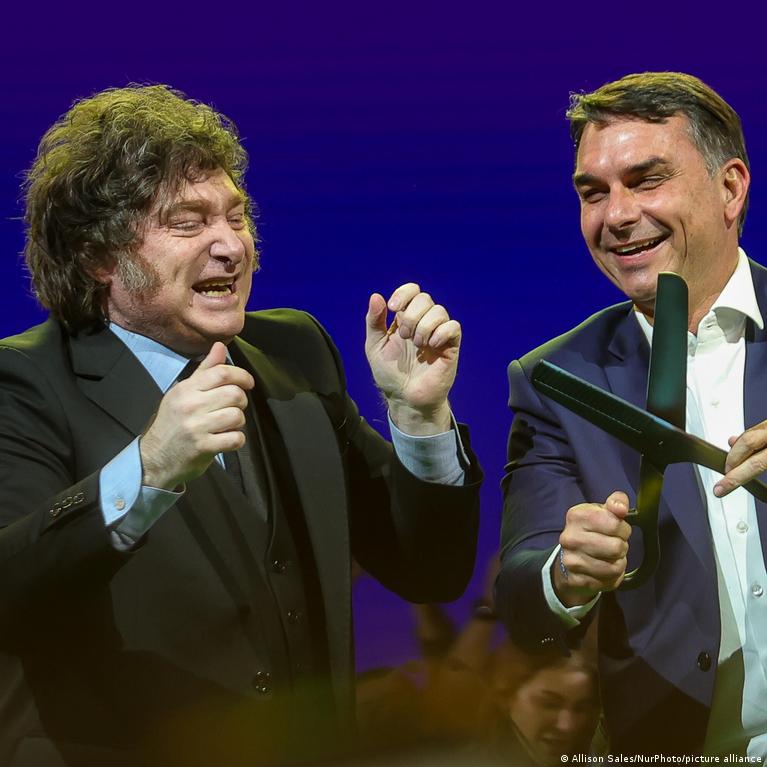
Javier Milei made the comments on Sunday in São Paulo, where he appeared to launch the presidential campaign of right-wing candidate Flávio Bolsonaro ahead of October’s election.
What Was Said
Milei did not name Luiz Inácio Lula da Silva directly, but the target was unmistakable. Speaking alongside Bolsonaro, he used the derogatory terms while arguing that his host was the only candidate capable of stopping Lula.
He also turned on the Brazilian judiciary, describing Supreme Court Justice Alexandre de Moraes as “bald trash.”
That second insult carries its own history. Moraes presided over the conviction of former president Jair Bolsonaro, and had previously refused Milei permission to visit the former leader while he was under house arrest in Brasília.
Brazil’s Response
Brazilian diplomats said the Argentine president had insulted the country’s government, its people and its democracy.
Ambassador Julio Bitelli was due to return home between Sunday and Monday, according to AFP.
Recalling an ambassador is one of the strongest signals available short of severing relations. It is deliberately visible, temporary in principle, and designed to register displeasure without closing the door entirely.
Lula addressed the episode later on Sunday without engaging directly with the insults. He said he would continue governing without anyone’s interference, and that Brazil does not accept anyone sticking their nose where it does not belong.
The Family at the Centre
Flávio Bolsonaro is the son of Jair Bolsonaro, who was sentenced last year to more than 27 years in prison for plotting a coup intended to keep him in power after losing the previous election to Lula.
That conviction sits underneath the entire confrontation. Milei’s appearance at the rally amounts to an endorsement of the political movement built around a man serving a lengthy sentence for attempting to overturn an election result — which is why Brazilian officials framed the remarks as an attack on democracy rather than merely on a president.
The Legal Histories in Play
The word “convict” was chosen deliberately, and it has a basis that Lula’s opponents return to frequently.
In 2018, Lula was sentenced to 12 years over a sprawling corruption and bribery scandal. He served slightly more than 18 months before his release.
Those convictions were annulled by Brazil’s Supreme Court in 2021, clearing him to run again. In the following year’s presidential election, he narrowly defeated the incumbent Jair Bolsonaro, taking 50.9% of the vote.
Supporters of Lula argue the annulment vindicated him and that the original prosecutions were politically driven. Critics counter that the cases were dismissed on procedural grounds rather than on the underlying facts. That dispute has never been settled in Brazilian public opinion, which is precisely why the label still functions as an attack line.
Why a Foreign Leader Campaigning Abroad Is Unusual
Heads of state occasionally express preferences about elections elsewhere, usually in carefully hedged terms. Appearing at a rival country’s campaign rally and insulting its sitting president is a different order of intervention.
Latin American diplomatic practice has traditionally placed heavy emphasis on non-interference, partly because the region’s history includes extensive outside meddling. That norm makes Milei’s appearance especially provocative, and it explains why Lula’s response focused on interference rather than on the specific insults.
There is also a practical dimension. Argentina and Brazil are each other’s major trading partners and the two largest economies in Mercosur, the regional trade bloc. Their relationship shapes everything from tariffs to energy agreements to regional negotiating positions.
The Ideological Divide
The clash reflects a broader realignment across the region.
Milei, a libertarian who took office promising radical economic restructuring, has positioned himself as part of an international right-wing network with close ties to Donald Trump and to the Bolsonaro family. Lula, a veteran of the Latin American left, represents the opposite pole.
Their disagreement is not merely stylistic. It touches trade policy, environmental commitments, relations with China and the United States, and the future direction of Mercosur itself.
Milei has criticised Lula repeatedly since taking office, but Sunday’s remarks escalated from commentary to direct participation in Brazilian electoral politics.
What Happens Next
The immediate question is how long the ambassador stays home. Recalls of this kind often last days or weeks and end quietly once tempers cool, particularly between countries with deep economic interdependence.
The larger question concerns October. Brazil’s election will determine whether Lula faces a Bolsonaro-aligned successor, and Milei has now publicly staked himself to that outcome.
If Flávio Bolsonaro wins, Sunday’s rally becomes an early investment in an ally. If he loses, Argentina will spend the following years dealing with a Brazilian government whose president was called a thief by his neighbour on Brazilian soil.
Author
-
Lucienne Albrecht is Luxe Chronicle’s wealth and lifestyle editor, celebrated for her elegant perspective on finance, legacy, and global luxury culture. With a flair for blending sophistication with insight, she brings a distinctly feminine voice to the world of high society and wealth.