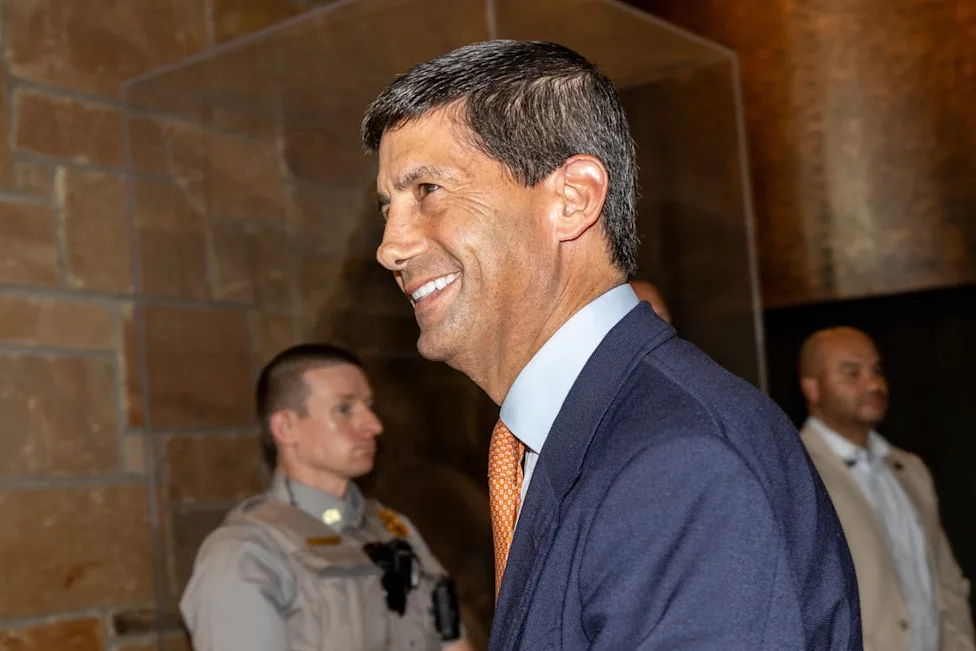
Kevin Warsh Federal Reserve leadership has been defined so far by an unusual quality in modern central banking: silence.
For roughly two decades, the trend has run firmly in the opposite direction. Central bankers around the world have progressively said more about where they believe interest rates are heading, treating transparency as a tool of policy rather than a risk to it.
Warsh, who took over as Fed chairman in May, has largely declined to participate in that convention. He has kept his views to himself.
On August 28, at the Fed’s annual gathering at Jackson Hole, Wyoming, that approach reached its limit. Surrounded by the Teton mountains and an audience of economists, officials and market participants who had come specifically to hear him, Warsh had little choice but to speak.
The Communication Era He Inherited
To understand why his reticence stands out, it helps to remember how thoroughly the norms changed.
There was a time when central banks considered opacity a feature. Markets were meant to guess. Officials avoided commitment, and ambiguity was thought to preserve flexibility.
That view collapsed gradually across the 1990s and 2000s. Central banks began publishing forecasts, releasing minutes, holding press conferences, and eventually offering explicit guidance about the likely path of rates.
The logic was that monetary policy works through expectations. If markets understand what the central bank intends, borrowing costs across the economy adjust in advance, and policy becomes more effective rather than less.
By the 2010s, forward guidance had become a primary instrument in its own right — a way of easing or tightening conditions without moving rates at all.
Why Silence Is a Choice
Against that background, saying little is not passivity. It is a deliberate position.
Restraint in communication carries a specific argument behind it. Detailed guidance can bind a central bank to expectations it later needs to abandon, forcing an awkward choice between credibility and correct policy. It can also flatten the market’s own price discovery, leaving investors positioned entirely on official signals rather than independent judgment of the data.
There is a further concern about volatility. When markets take guidance as commitment, any deviation produces a sharper reaction than the underlying change in outlook warrants.
A chairman who withholds views is, in effect, arguing that the institution should regain some of the flexibility it traded away — and that markets should do more of their own work.
Why Jackson Hole Forces the Issue
The Jackson Hole symposium occupies a peculiar place in the calendar precisely because it is where this kind of restraint becomes untenable.
The conference exists to discuss economic questions at a level above immediate policy decisions. But its audience and its history have made the chairman’s address one of the most closely parsed events of the year. Previous chairs have used the setting to signal significant shifts.
Attending and saying nothing of substance is not really available as an option. The venue carries an expectation that the person leading the Fed will offer some account of how they see the situation.
What Was at Stake in the Setting
The optics of the moment were notable. A chairman who had built his early tenure around not talking, standing before the one audience most attuned to every word, in the setting most associated with consequential statements.
Whatever he chose to say would be read not only for content but for what it revealed about whether the silence had been strategy or simply caution during a settling-in period.
The Broader Question
Warsh’s approach touches a genuine and unresolved debate about how central banks should operate.
The transparency consensus has real support. Communication reduces uncertainty, anchors expectations, and gives the public a claim to understanding decisions that affect their mortgages, savings and employment.
The counterargument has gained ground more recently. Extensive guidance issued during periods of stability proved difficult to unwind when conditions shifted, and some central banks found themselves defending predictions that had stopped making sense.
There is also a democratic dimension worth noting. Central banks exercise substantial power with limited direct accountability, and explanation is part of what legitimizes that arrangement. Reducing communication reduces that legitimizing function, whatever it does for policy flexibility.
What Comes Next
The Jackson Hole appearance marks a transition point for the Warsh chairmanship regardless of its specific content.
Having spoken, he establishes a baseline against which subsequent silence or statement will be measured. Markets will now read his future reticence differently, interpreting absence of comment against whatever framework he laid out in Wyoming.
For an institution that spent twenty years learning to talk, the arrival of a chairman inclined to say less represents a real change in practice. Whether it proves to be a durable philosophy or a temporary posture is the question the coming months will answer.
Author