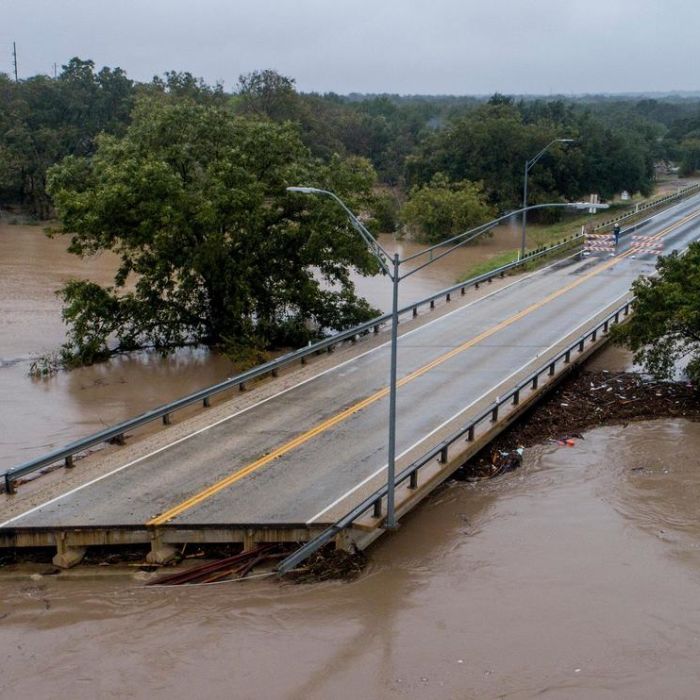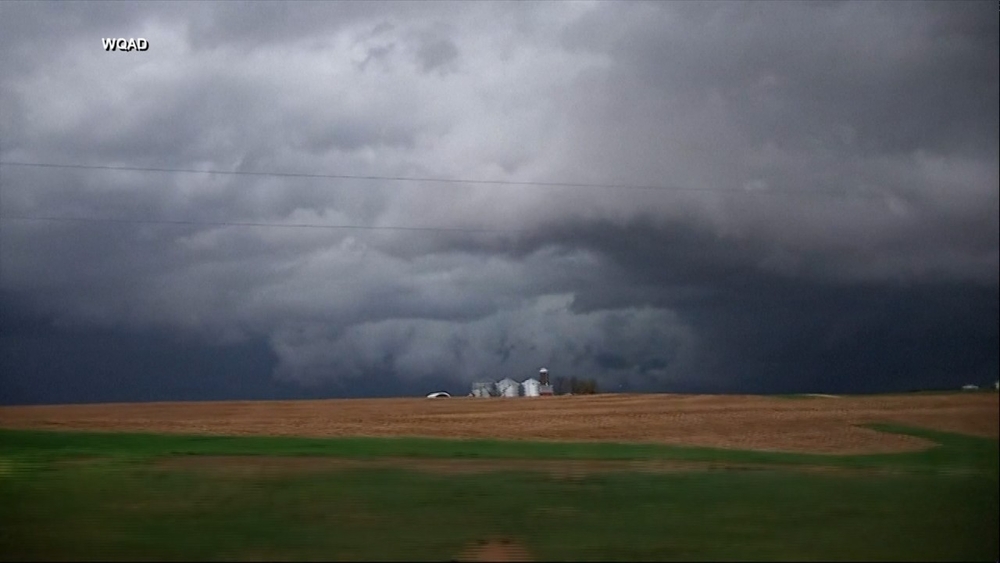
Midwest severe storms swept across four states Tuesday with a ferocity that left nearly a million homes and businesses in darkness, grounded flights at Chicago’s airports, and produced at least three suspected tornadoes across suburbs south of the city and into northwest Indiana.
By Tuesday evening, more than 991,000 customers across Illinois, Indiana, Ohio and Kentucky had lost electricity, according to utility tracker PowerOutage.us.
What Drove the Outbreak
National Weather Service meteorologist Scott Baker said the region sat on the outer edge of a pattern known as a ring of fire.
The setup occurs when a large zone of high atmospheric pressure establishes itself and generates waves of heavy rain and thunderstorms along its perimeter. Moisture and instability pile up at the boundary, and storms fire repeatedly along the same corridor.
The weather service’s warning earlier in the day left little room for interpretation, describing the storms plainly as dangerous.
Wind gusts exceeding 80 miles per hour were reported at numerous personal weather stations.
Chicago Under Sirens
Tornado warning sirens sounded as the sky darkened over the metropolitan area.
Both of Chicago’s major airports temporarily halted all flights. According to FlightAware, 45 percent of flights in and out of O’Hare International were delayed Tuesday, with 10 percent cancelled outright. Officials warned that clearing the backlog would extend delays further.
Images circulating from the Chicago area showed flooded roadways, trees tangled into power lines, and homes with sections torn from their roofs.
Accounts From the Ground
In Flossmoor, a village south of Chicago, downed power lines and fallen trees blocked streets.
Resident Gilbert Casillas described the moment conditions turned. Wind began blowing and debris struck every side of the house simultaneously. Visibility dropped to less than two feet beyond his window, at which point he moved his family to the basement.
In nearby Homewood, 54-year-old Javid Jenkins spent the aftermath searching for gasoline to run a generator and save the food in his refrigerator. He and his family had sheltered in the basement during the storm. His summary captured something many residents felt: the region is built for snow and cold, not for this.
In Tinley Park, Kerry Hourigan stood outside the home she has lived in for 25 years and described total devastation with no roof remaining. She acknowledged the oddness of her own focus, admitting she kept thinking about a barbecue grill she had recently purchased and could no longer locate anywhere.
A Fatal Explosion in Indiana
In Portage, in northwest Indiana, a house explosion during the storm killed at least one person, city officials told CBS News Chicago.
Aerial footage showed an extensive debris field surrounding the burning remains of the structure. Whether the explosion resulted from the severe weather had not been established.
Across Indiana
In Crown Point, residents faced significant tree damage.
Hailey Mogan described barricading herself and her co-workers inside a bathroom as the storm passed. Within seconds, she said, wind was pushing hard enough to force the door open. They held it shut and eventually padlocked it. Afterward she was uncertain she could even reach home, with roads reportedly closed throughout the area.
The fifth day of the ten-day Lake County Fair was cancelled.
In LaPorte County, Commissioner Joe Haney reported a tremendous amount of tree damage.
Ohio’s Losses and Ongoing Risk
Governor Mike DeWine confirmed that a resident of Roseville died during a medical emergency when first responders could not reach the location because roads had flooded.
That death illustrates a danger often overlooked during severe weather. Storms do not only cause direct injury. They sever access, and emergency medicine depends entirely on the ability to reach people quickly.
DeWine warned that flood dangers would continue, saying the situation would not resolve overnight.
Forecasters supported that assessment, projecting multiple additional rounds of rain producing flood hazards throughout the Ohio Valley into early Friday.
Columbus officials sent local government employees home early ahead of another round of storms. In Westerville, the library closed after rain poured into its atrium.
What Residents Face Now
Recovery from an event of this scale unfolds unevenly.
Power restoration for nearly a million customers takes days rather than hours, particularly where trees have brought down distribution lines across wide areas. Crews must clear debris before they can begin repairs, and priority typically goes to critical facilities and to the repairs that restore the most customers at once.
For anyone in the affected zone, several practical concerns apply:
- Treat every downed line as energized and stay well clear
- Never operate generators indoors or in attached garages
- Avoid driving through standing water of unknown depth
- Discard refrigerated food after roughly four hours without power
- Watch for additional rounds of rain rather than assuming the threat has passed
Still Not Over
The most important detail in Tuesday’s reporting may be DeWine’s warning that the weather is not finished.
Communities are entering cleanup with power still out, roads still blocked, and more rain forecast for ground that has already absorbed as much as it can hold. Flooding risk tends to increase with each successive round, not decrease.
For now, the tally stands at one confirmed storm-related death in Ohio, one fatality in the Portage explosion under investigation, hundreds of thousands still without electricity, and a region bracing for several more days of unsettled weather.
Author