The Kenya Ebola case has put East Africa on alert. On Tuesday, Kenyan authorities confirmed the country’s first infection, after a Kenyan citizen who had travelled from the Democratic Republic of Congo died in Nairobi. Kenya is now the fourth country to record a case linked to the epidemic in eastern Congo.
How the Patient Reached Nairobi
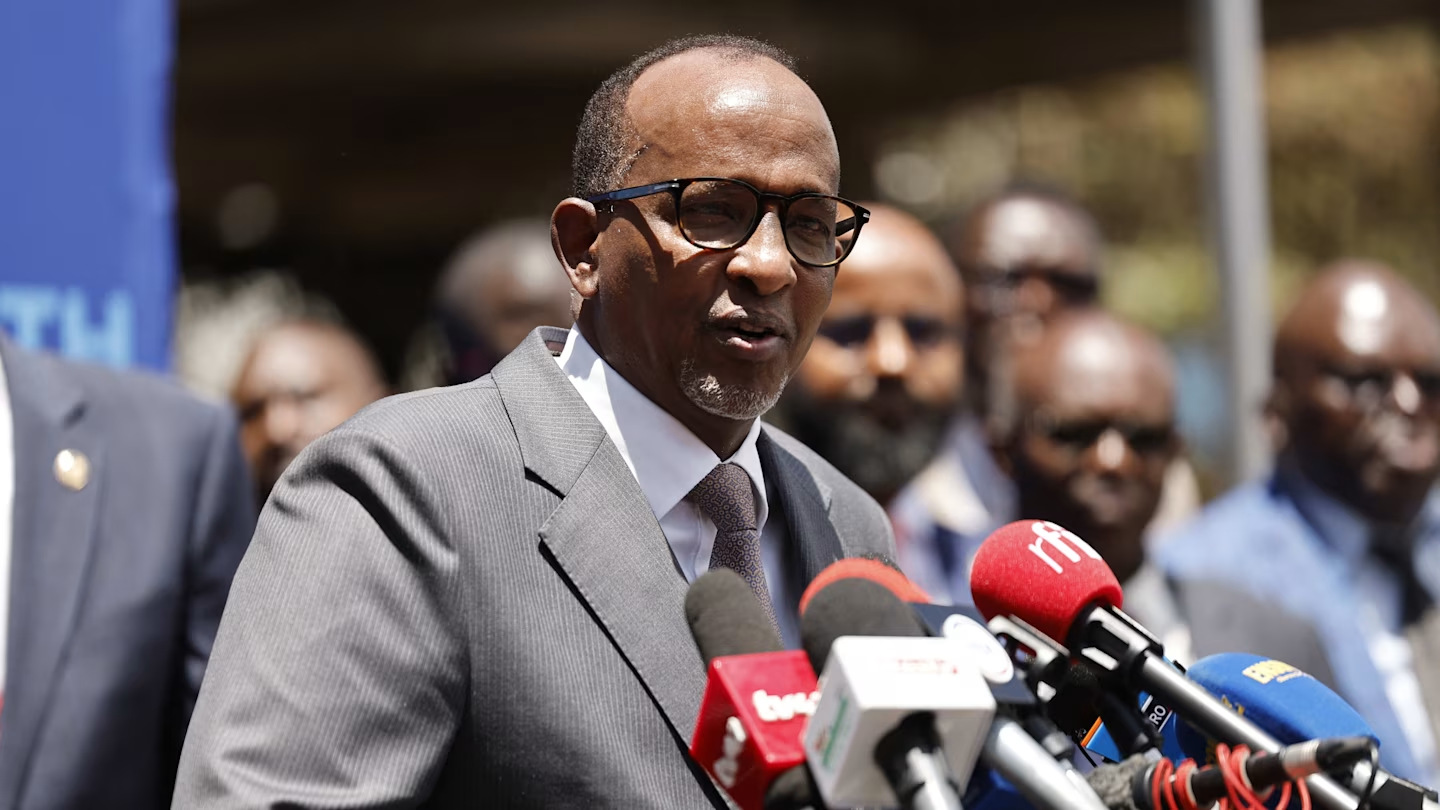
The man had lived in Congo for seven years and had been unwell for about a month. Health Minister Aden Duale said he travelled by road from Congo to Kampala, Uganda’s capital, and then flew to Nairobi on Saturday.
After landing, he passed airport health screening and was taken by a relative to Nairobi Hospital. Doctors admitted him with fever, chills and bleeding beneath the skin, and he was placed in isolation quickly. He died late on Monday.
Containment Steps
Officials moved fast once the case was confirmed:
- Eight family members and 21 health workers who treated him are quarantined and being monitored
- He was buried under strict protocols designed to prevent the virus from spreading
- Authorities are trying to trace 23 passengers and four crew members who were on his Jambojet flight
- Kenya says it has trained nearly 5,000 health workers on prevention and management
The UN’s senior Ebola coordinator, Julien Harneis, said he expects a solid health response from Kenya.
Questions About Screening
The case has raised doubts about border controls. Kenya’s health ministry director-general, Patrick Amoth, said medication may have masked the man’s symptoms and helped him pass airport screening. Uganda’s health ministry said teams saw a normal temperature when he went through Entebbe airport.
It is also unclear how he crossed from Congo into Uganda, since that border has been closed since May. The Africa CDC said he spent a night in Uganda before flying on. A Ugandan government spokesperson, when asked, said Uganda has no Ebola and asked to be left out of the conversation.
International Response
The Africa CDC is sending a high-level team to Kenya, saying the case underscores the need for sustained regional preparedness. The World Health Organization is supporting Kenya and Uganda, and its director-general recommended against travel restrictions on affected countries.
The United States built a 50-bed Ebola quarantine camp for its citizens on an air force base in central Kenya. It has housed only seven people so far and is empty now. Kenyan officials say it could take Kenyans and other nationalities, though Washington has not confirmed that.
The Wider Outbreak
The Congo epidemic, caused by the rare Bundibugyo strain, was declared in mid-May but may have begun months earlier. It has infected more than 8,000 people and caused over 4,000 deaths, making it the second largest on record. Uganda reported 20 cases and two deaths earlier this year and was declared Ebola-free in August. A doctor returning to France in June also tested positive, with no further spread.
Ebola spreads through direct contact with the bodily fluids of infected people, living or dead, and can cause fever, vomiting, diarrhoea and, in severe cases, internal and external bleeding.
What to Watch Next
- Whether any of the flight passengers or contacts develop symptoms
- Findings on how the patient crossed borders and passed screening
- Whether tighter airport and border checks follow
- The Africa CDC team’s support on the ground
The Bottom Line
One imported case does not mean an outbreak in Kenya, and early isolation and quarantine are encouraging signs. But the way the patient slipped through screening shows how hard it is to stop the virus from crossing borders, and the next few weeks of contact tracing will be critical.
Author