La Bola Negra Cannes Ovation: A Historic Moment for Penélope Cruz and Spanish Cinema
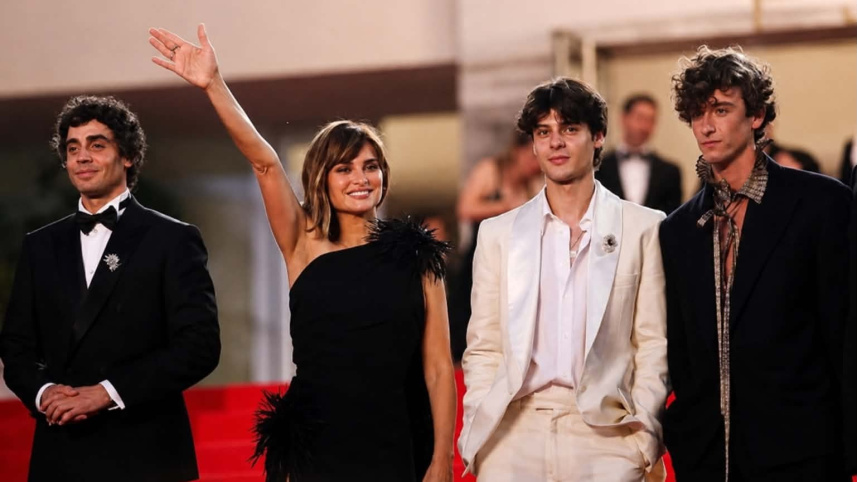
La Bola Negra Cannes ovation has become one of the most talked-about moments of the 2026 Cannes Film Festival, after Penélope Cruz’s emotional new film received a powerful 20-minute standing ovation in the iconic Grand Théâtre Lumière. The reception was so passionate that it came close to breaking the legendary Cannes ovation record set nearly two decades ago.
The film, known internationally as The Black Ball, was directed by the celebrated Spanish duo Javier Calvo and Javier Ambrossi. Its premiere drew an enthusiastic audience response that not only honored the artistry of the film but also celebrated the message of love, identity, and inheritance at its core.
A Near-Record Standing Tribute
The 20-minute ovation places La Bola Negra in elite company. Only one other Spanish film has come close to such a powerful reception at Cannes, that being Guillermo del Toro’s beloved Pan’s Labyrinth, which earned a remarkable 22-minute ovation in 2006.
For nearly two decades, that record has stood as a benchmark for emotional Cannes premieres. Now, La Bola Negra has come within striking distance, signaling its potential as one of the most important Spanish films of the modern era.
The Heart of the Film
At its core, La Bola Negra tells the interconnected stories of three men living in three very different time periods, 1932, 1937, and 2017. Their lives are linked through emotional themes that include:
- Sexuality and desire
- Personal and historical pain
- Family inheritance and identity
- The legacy and unfinished works of Spanish poet Federico García Lorca
The film weaves these timelines together to explore how love and identity transcend generations and historical contexts, with Lorca’s poetic spirit acting as a thread that ties everything together. The result is a deeply emotional, layered narrative that left audiences in Cannes both moved and energized.
A Powerful Statement From Its Creators
Following the standing ovation, co-director Javier Ambrossi turned the audience’s attention to a deeper message. Speaking to the cheering crowd, he addressed the global political climate around LGBTQ rights with a defiant and passionate statement:
“To everyone who thinks that we’re gonna step back in our LGBTQ rights, I have bad news.”
The crowd responded with another wave of applause, reinforcing the moment as not just a celebration of cinema, but a strong cultural and political statement at the world’s most influential film festival.
An Impressive Ensemble Cast
La Bola Negra brings together one of the most striking ensemble casts in recent Spanish cinema. Penélope Cruz leads the way, joined by a remarkable group of performers:
- Glenn Close, in a much-anticipated international collaboration
- Miguel Bernardeau, known for his strong dramatic performances
- Spanish musician Guitarricadelafuente, marking a major acting role
- Other supporting Spanish talents who contribute richly textured performances
The chemistry across the cast was widely praised by attendees, with many singling out Cruz’s performance as especially emotionally resonant.
Behind the Camera: A Visionary Creative Team
Javier Calvo and Javier Ambrossi co-directed the film and also co-wrote the screenplay together with Alberto Conejero. The duo is no stranger to acclaim. Their last major project, the Movistar Plus+ series La Mesías, premiered at the San Sebastian Film Festival and made its way to Sundance.
La Bola Negra marks their first full-length feature since their breakout 2017 film Holy Camp! With this new project, they’ve moved into more ambitious creative territory, blending personal, political, and historical themes into a singular cinematic experience.
The film was shot on 35mm by director of photography Gris Jordana, giving it a rich, textured visual style. The 12-week shoot took place across multiple Spanish regions, including:
- Castile
- León
- Cantabria
- Andalusia
- Madrid
This wide geographic scope gave the film a strong sense of place, deeply rooted in Spanish identity.
A Strong Below-the-Line Team
In addition to the directors and cast, La Bola Negra benefits from a strong technical and design team. Standout contributors include:
- Roger Bellés as art director
- Ana López Cobos as costume designer
- Eva Leira and Yolanda Serrano as casting directors
- Rodrigo Madrigal as sound engineer
- Pablo Morillas as hairstylist
- Mariló Osuna handling makeup
- Belén Martí Lluch as movement director
- Alberto Gutiérrez as editor
Together, this team created a film that audiences described as visually rich, emotionally precise, and deeply moving.
A Major Spanish Production Effort
La Bola Negra was produced by Movistar Plus+ and Suma Content Films, the production company founded by Calvo and Ambrossi. It was developed in co-production with two of Europe’s most respected film houses:
- El Deseo, the production company founded by legendary Spanish filmmaker Pedro Almodóvar
- Le Pacte, a long-standing French production and distribution company
This collaboration brings together major Spanish creative power with strong international production support, making the project one of the year’s most strategically positioned films.
Distribution and Global Reach
For audiences eager to see the film, distribution plans are already in motion:
- Elastica will handle distribution in Spain
- Goodfellas is overseeing international sales
Given the ovation and global press attention, La Bola Negra is expected to perform strongly across European and global markets in the months ahead.
The Third Spanish Film in Cannes Competition
La Bola Negra is the third Spanish film to debut in Competition at Cannes this year, highlighting the country’s increasingly powerful presence at the festival. Spanish cinema has been enjoying a creative renaissance, with directors like Calvo, Ambrossi, and Almodóvar pushing storytelling boundaries while maintaining deep cultural roots.
This year’s strong showing reinforces Spain’s growing influence in global filmmaking, particularly when it comes to films that mix personal storytelling with broader cultural conversations.
Why This Ovation Matters
A 20-minute standing ovation at Cannes is more than just a sign of audience excitement. It often signals that a film could become a major contender during awards season, both internationally and across European film circuits.
For Penélope Cruz specifically, this kind of reception adds another major moment to her already extraordinary career. For Calvo and Ambrossi, it validates years of artistic risk-taking and creative passion. And for Spanish cinema as a whole, it places another major film on the global stage.
The reception also signals a wider cultural moment, where audiences are clearly hungry for emotionally rich stories that explore identity, history, and human connection.
Final Thoughts
La Bola Negra Cannes ovation will likely be remembered as one of the defining moments of the 2026 Cannes Film Festival. With Penélope Cruz delivering a powerful performance, a deeply personal directorial vision from Calvo and Ambrossi, and a strong political message from the filmmakers themselves, the film has positioned itself as a serious contender for major awards. Whether it walks away with the Palme d’Or or not, the response from audiences makes one thing clear: La Bola Negra is destined to be talked about for a long time.
Author